How to Hit a Lob in Pickleball
Quick Answer: Hit an offensive lob by disguising it as a dink, then brushing the paddle low to high with topspin, aiming over the opponent’s backhand shoulder near the baseline. Hit a defensive lob by prioritizing height and depth over placement to buy recovery time. Skip the lob in wind, against tall opponents, or when the sun favors your side.
The lob is one of the most misread shots in pickleball. Hit well, it changes the pace of a rally and buys time to recover position. Hit poorly, it turns into an easy overhead for the other team. For the basics of the shot, see the guide to what a lob is in pickleball. What follows covers the mechanics: how to swing, where to aim, and when to leave the shot alone.
How Do You Hit an Offensive Lob From the Kitchen Line?
An offensive lob starts at the non-volley zone line, usually off a dink exchange, and the setup is the whole point. Use the same stance as a normal dink: paddle low, knees bent, weight forward. If an opponent can read the difference between dink prep and lob prep, they are already moving back before the ball leaves your paddle.
The swing changes from there. Instead of a short push, brush the paddle from low to high through contact, generating topspin as the ball leaves the face. Topspin pulls the ball down after it clears the opponent, so it lands in the court instead of sailing long. A flat or backspin lob tends to float, which gives the opponent more time to track it down.
Aim over the backhand shoulder of whichever opponent is closer. Most players move slower going backward on the backhand side than the forehand side, so this angle costs the most time. The target zone is roughly two to three feet inside the baseline. Short of that, the opponent can run it down for an overhead; past the baseline, it is simply out.
Building the disguise off a pattern of aggressive dinking helps, since an opponent already anticipating a hard, low dink has less time to register the shift in swing path.
What Grip and Swing Path Work Best for a Topspin Lob?
Most players hit the lob with the same continental grip used for dinking and volleys, rather than switching grips mid-point, since a grip change takes time and telegraphs the shot. The topspin instead comes from the wrist and forearm brushing up and through the ball.
Keep the paddle face slightly closed through contact rather than wide open. A face that is too open sends the ball up without forward rotation, producing a lob that hangs and gives the opponent time to retreat and set up an overhead. Follow through high, finishing near shoulder height, in the direction the ball should travel. A short, chopped finish tends to shorten the shot and drop it into the middle of the court, exactly where the opponent wants it.
How Do You Hit a Defensive Lob From the Transition Zone or Baseline?
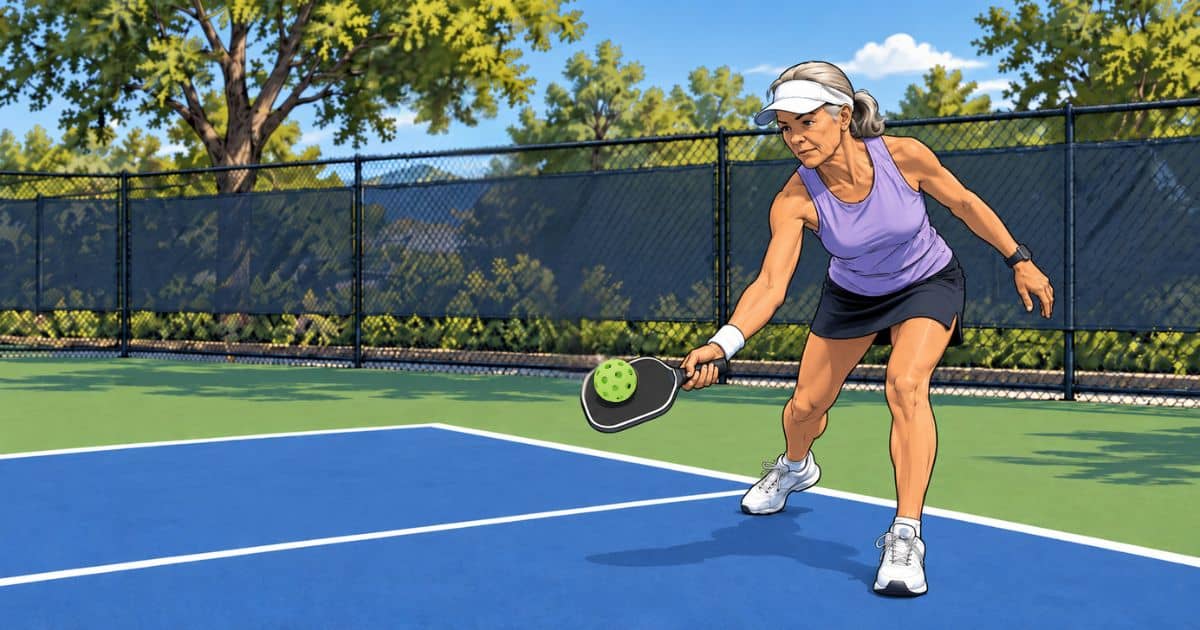
A defensive lob has a different goal. It usually comes up when you are pulled out of position in the transition zone or pinned at the baseline by a hard drive, and you need time more than precision. Height matters more than topspin here. A high, deep ball gives you time to recover to the kitchen line before the point continues; a low, flat return does not.
Getting under the ball is the main technical challenge. Bend the knees, drop the paddle below the ball’s flight path, then push upward through contact with an open face. Depth matters as much as height, since a lob that is high but shallow still gives an opponent an easy smash.
Footwork is what makes this shot possible under pressure, since a player who is one step slow to the ball ends up popping up a shallow lob instead of a deep one. Working on footwork for pickleball pays off here, since most defensive lobs are hit off balance rather than from a comfortable ready position.
When Should You Not Lob in Pickleball?
The lob is not right for every situation, and knowing when to leave it alone is as much a part of shot selection in pickleball as knowing how to hit it.
Wind changes the calculation. A lob hit into the wind tends to fall short, and one hit with the wind at your back tends to carry long past the baseline. Reading conditions before committing, and adjusting or skipping the shot outright, is covered in the guide to playing pickleball in the wind.
Tall opponents, or ones with strong overhead smashes, change the math too. A lob that clears a shorter opponent’s reach may sit right in a taller player’s strike zone. Watch how an opponent handles the first lob of a match before leaning on the shot against the same pair repeatedly.
Sun position matters as well. A lob is harder to track when the sun sits behind the hitter and in the opponents’ eyes; when the sun is neutral or behind the opponents instead, that edge disappears.
Finally, skip the lob when already out of position or reaching for the ball. A rushed lob from an off balance stance tends to come out shallow, the outcome that costs the most against a team standing at the net.
What Should You Do After You Hit a Lob?
The lob is not the end of the point. What comes next depends on how the opponent handles it.
If the opponent has to retreat and play the ball on the run, or lets it bounce, that is the signal to move up. Advance to the kitchen line while they recover, since a scramble rarely produces a shot with enough pace to punish closing the distance. One player moving up while the other stays back opens gaps at the net, so coordinating that move with a partner is part of basic doubles strategy in pickleball.
If the opponent tracks the lob down cleanly and resets, treat the point as reset rather than won. Get back to a balanced ready position at the kitchen line or transition zone, whichever is reachable first, rather than assuming the lob created an advantage it did not.
Either way, avoid lobbing again right away in the same point. A second lob immediately after the first is easier to anticipate, since the opponent has already seen the setup once.
Frequently Asked Questions About Hitting a Lob in Pickleball
What is the difference between an offensive lob and a defensive lob? An offensive lob is hit from the kitchen line, usually off a dink, and relies on disguise and topspin to catch an opponent moving forward. A defensive lob is hit from the transition zone or baseline under pressure and prioritizes height and depth over disguise, since the goal is buying time to recover position.
Can you hit a lob without topspin? Yes. Defensive lobs often come out flatter simply because the priority is getting the ball up and deep under pressure. Offensive lobs benefit more from topspin, since it helps the ball drop into the court instead of carrying long.
How do you disguise a lob so an opponent cannot see it coming? Set up exactly as for a dink: same stance, same paddle position, same backswing. The disguise comes from delaying the change in swing path until the last possible moment, so the opponent commits to defending a dink before recognizing the lob.
What happens if an opponent smashes a lob? A shallow or poorly disguised lob often gets smashed, since it gives the opponent time to move back and set up an overhead. A lob landing two to three feet inside the baseline, hit with real height, is harder to attack than one that lands mid-court.
Should you lob on a windy day? Use caution. Wind changes both the distance and direction of a lob, and a shot that lands in bounds on a calm day can sail long or fall short in gusty conditions. Many players cut back on outdoor lobs on windy days and lean on lower shots instead.
Is the lob a beginner shot or an advanced shot? Both. A basic defensive lob, getting the ball up and deep to buy time, is something newer players use early on out of necessity. The offensive topspin lob off a disguised dink takes more repetition, since the setup and swing path have to look identical to a normal dink until the last moment.
How high should a defensive lob go? High enough to clear both opponents’ paddles with margin and allow time to recover to the kitchen line before the return comes back. Court conditions, wind, and opponent reach all vary, so height is judged by the result rather than by one fixed number.
Do tall opponents change how often you should lob? Yes. A lob that clears a shorter opponent comfortably may still be reachable for a taller player with a longer wingspan, turning a defensive shot into an easy putaway.
Working the lob into a practice session with a coach who teaches shot selection is one of the faster ways to get the disguise and topspin timing right, since swing path and contact point are hard to self-diagnose from video alone.
Written by the Pickler Junction Team.