What Is a Double Hit in Pickleball and When Is It Legal?
Quick Answer: A double hit in pickleball is legal when one player strikes the ball twice during a single continuous, single-direction stroke. Rule 10.D of the 2026 USA Pickleball rulebook allows this. A second intentional hit, a paddle that changes direction between contacts, or a hit involving both partners on one return is a fault under Rules 10.D.1 and 10.D.2.
What Counts as a Double Hit in Pickleball?
A double hit happens when a paddle makes contact with the ball twice before the ball crosses the net or goes out of play. Under the rulebook, Rule 10.D states that a ball can be hit more than once as long as the stroke stays continuous, moves in a single direction, and only one player touches it. The rule exists because a paddle face sometimes holds the ball an instant longer than a clean, single strike, especially on a soft dink or a shot that clips the edge of the paddle. That accidental second contact does not end the rally as long as it happens inside one continuous swing.
When Is a Double Hit Legal?
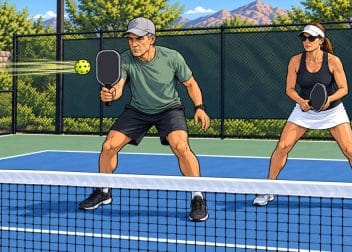
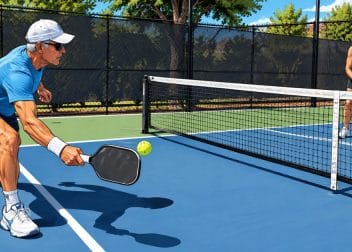
A double hit stays legal when three conditions hold at the same time: the same player makes both contacts, the paddle never changes direction between them, and the whole motion reads as one continuous stroke rather than two separate actions. Picture a low volley where the ball catches the throat of the paddle and rolls forward for a moment before releasing toward the net. Because the paddle keeps moving forward the entire time, that counts as one legal stroke even though the ball technically touched the paddle twice.
When Does a Double Hit Become a Fault?
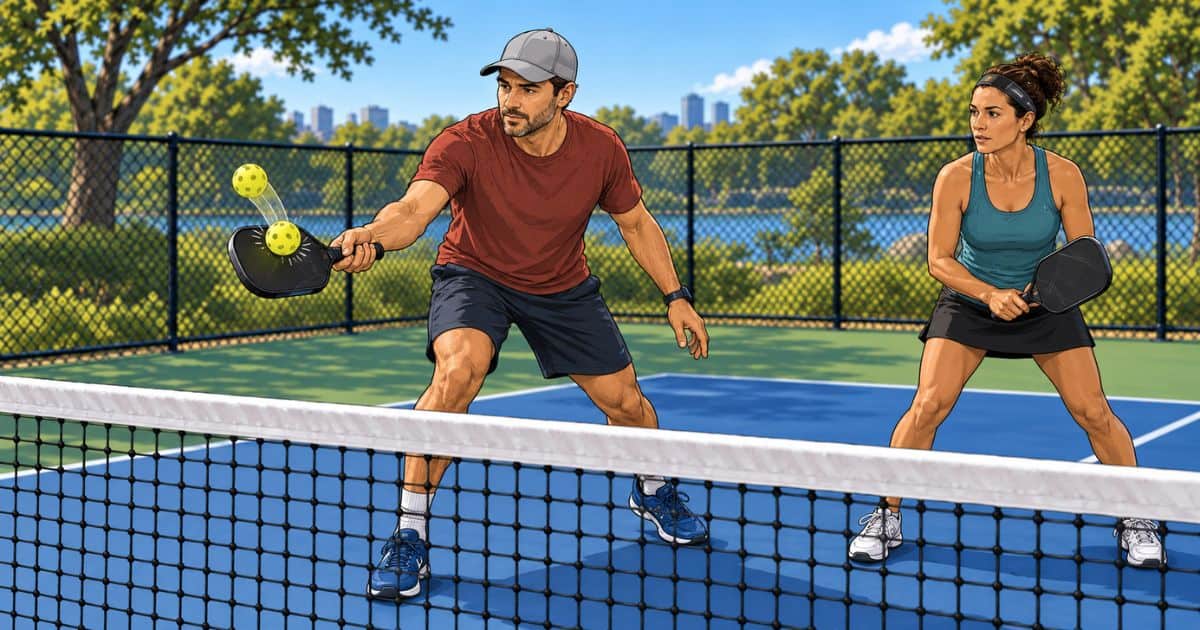
Two situations turn a double hit into a fault. A player who hits the ball once, stops or reverses the paddle, then strikes it a second time loses the rally under Rule 10.D.1, because the motion is no longer continuous and single-direction. In doubles, a player and a partner both making contact with the ball while returning a single shot is a fault under Rule 10.D.2, no matter how clean either individual contact looked. The rulebook treats both scenarios the same way: the point ends the moment the contact stops meeting the definition of one continuous stroke by one player.
How Is a Double Hit Different from a Carry?
A double hit involves two separate moments of contact inside one swing. A carry involves a single prolonged moment where the ball never leaves the paddle face cleanly. Under Rule 12.C.1 of the rulebook, catching or carrying the ball on the paddle during a rally is its own fault, separate from the double hit rules in Section 10. The clearest example is a player scooping a low lob and guiding it upward. Because the ball stays pinned to the paddle while its direction changes, that is a carry, not a double hit. The guide to what happens when a shot becomes a carry in pickleball breaks down how the two calls get told apart on court.
Does a Double Hit Count as the Ball Hitting a Player’s Body?
No. A double hit only involves contact between the ball and the paddle. If the ball touches a player’s body, clothing, or anything other than the paddle face during a live rally, the point ends immediately as a separate fault, regardless of how the ball got there. That mix-up comes up often enough in rec play that it has its own explainer on what happens when the ball hits your body in pickleball.
How Do Referees Judge a Double Hit During a Rally?
A double hit happens fast, often inside a fraction of a second, so referees watch the path of the paddle rather than trying to count contacts. A paddle that keeps moving forward in one line reads as legal even if the ball catches the frame or throat along the way. A paddle that hesitates, stops, or reverses direction before the ball leaves it reads as a fault. Because a double hit and a carry both fall under the same fault framework described in what counts as a fault in pickleball, a referee calling either one is applying the same underlying test: did the shot involve one clean release, or did the paddle control the ball longer than a single continuous motion allows.
What Should Rec Players Do Without a Referee?
When a rec game has no official on the court, a disputed double hit comes down to the players involved. The player who made the contact has the clearest view of whether the paddle stayed in one continuous motion, so calling a fault honestly on a shot that clearly stopped or changed direction keeps the game fair for both sides. Players who keep disagreeing about the same type of call can bring the question to a certified referee or a coach who has trained on the rulebook instead of replaying the same argument every match.
Where Else Should Players Check the Rulebook for Faults?
Double hits sit inside a broader set of rally faults that also cover volleys, the two-bounce rule, and switching paddle hands mid-point. A shot that lands outside the marked lines, a serve that breaks form, or a paddle that crosses the net can all end a rally the same way a double hit or a carry does. Players sorting out where a specific shot fits can check the breakdown of when a shot counts as a volley in pickleball, the mechanics of the two-bounce rule in pickleball, or the rules on switching hands mid-rally in pickleball.
Frequently Asked Questions
Is a double hit legal in pickleball? Yes. A double hit is legal when one player strikes the ball twice within a single continuous, single-direction stroke, a standard confirmed in the rulebook.
What is the rule number for a legal double hit? Rule 10.D of the rulebook covers the legal double hit, allowing a ball to be struck more than once as long as one player’s stroke stays continuous and moves in a single direction.
What makes a double hit a fault? A double hit turns into a fault when the paddle stops, hesitates, or changes direction between contacts, which is Rule 10.D.1, or when a player and a partner both touch the same return, which is Rule 10.D.2, both faults under the rulebook.
How is a double hit different from a carry? A double hit is two separate contacts inside one continuous swing, while a carry is a single prolonged contact where the ball stays pinned to the paddle face instead of releasing cleanly, a distinction the rulebook draws between Section 10 and Rule 12.C.1.
Is an unintentional double hit still a fault? No. An unintentional double hit is legal as long as it happens during one continuous, single-direction stroke by one player, which is exactly the scenario Rule 10.D of the rulebook protects.
Can both players on a doubles team hit the ball on the same return? No. If a player and a partner both make contact with the ball while returning a single shot, the return is a fault under Rule 10.D.2 of the rulebook, regardless of how clean either individual contact looked.
How do referees spot an illegal double hit during a match? Referees watch the path of the paddle rather than trying to count contacts, since a double hit happens in a fraction of a second. A paddle that keeps moving in one line reads as legal, while a paddle that hesitates or reverses direction before the ball leaves it reads as a fault.
What should players do about a disputed double hit in a rec game with no referee? When there is no official on the court, the player who made the contact is the one who knows whether the paddle stayed in one continuous motion, so an honest self-call keeps the game fair. Players who keep disagreeing about the same type of shot can ask a certified referee or a coach to walk through the rule together.
Is a double hit the same as the two-bounce rule? No. The two-bounce rule requires each side to let a serve and the return bounce once before volleys start. A double hit refers to a paddle contacting the ball twice within one stroke, a completely separate part of the rulebook.
Players who want hands-on feedback on double hits, carries, and other close calls can work with a coach who reviews real rally footage and points out the difference between a legal continuous stroke and a fault. The directory of pickleball coaches lists instructors who cover rules and technique together, which helps rec players stop guessing on borderline calls.
Written by the Pickler Junction Team.