How to Block a Drive in Pickleball
Quick Answer: To block a hard drive in pickleball, treat it as a volley, not a swing. Keep the grip loose, the wrist firm, and the paddle out in front at chest height. Let the ball come to the paddle rather than swinging at it, then angle the face down so the return drops into the kitchen instead of flying long.
What Is a Block in Pickleball?
A block is not really a shot with its own swing pattern. It describes what a player deliberately chooses not to do. When an opponent hits a fast, flat groundstroke, the shot covered in the guide to what a drive in pickleball is, a player can try to match that pace and drive it back, or absorb the pace with a short volley and drop it into the kitchen.
The mechanics come from the volley, the shot explained in the guide to what a volley in pickleball is: no backswing, no follow-through, paddle out in front, let the ball do the work. A block adds one idea on top of that: the paddle face angles down so the return dies short, ideally landing in the non-volley zone, the 7-foot area on each side of the net, where a hard-hitting opponent cannot volley it back.
How Do You Block a Hard Drive in Pickleball?
Start with the grip. A firm wrist and a loose grip sound contradictory, but they work together. The wrist stays stable so the paddle face does not collapse or twist on contact, while the hand and forearm stay relaxed so the paddle absorbs pace instead of adding to it. A tight, white-knuckle grip sends the ball rocketing off the paddle at nearly the same speed it arrived, often long or into the net.
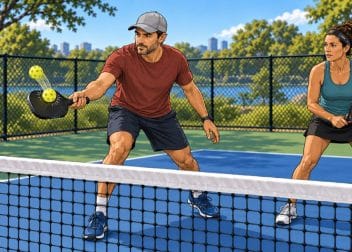
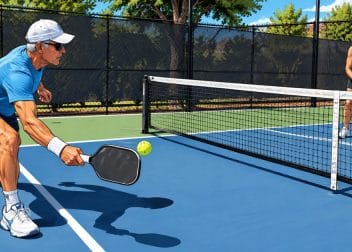
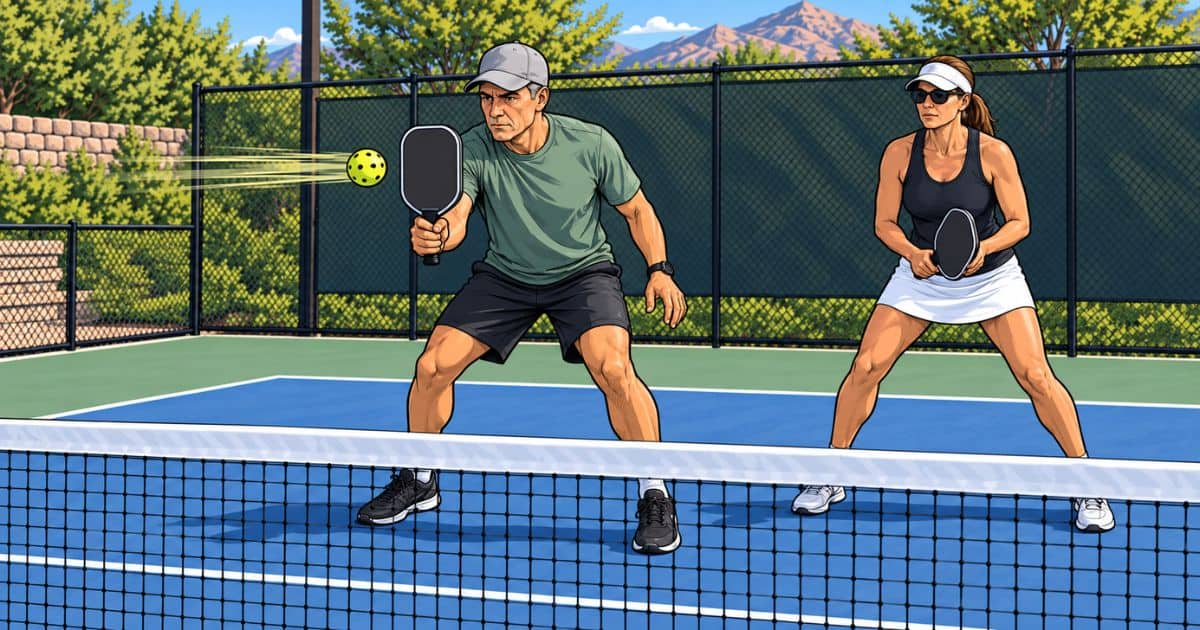
Hold the paddle out in front of the body, roughly chest height, with the face tilted slightly downward before contact happens. Many players wait too long to get the paddle up, then rush a last-second adjustment and mishit. Setting the paddle position early, then simply reacting, cuts out that scramble.
On contact, resist the urge to swing. Let the ball arrive at the paddle rather than moving the paddle toward the ball, like a wall that redirects pace downward rather than a bat that generates it. The angle of the face decides where the ball goes: too flat and it sails deep, too closed and it dives into the net, angled correctly and it drops just over the net into the kitchen.
Contact point matters as much as angle. Blocking a drive before it rises past waist height gives more margin than blocking a ball that has already climbed to shoulder level, one reason a two-handed backhand block, covered below, helps against a drive aimed at the backhand side.
When Should You Block Instead of Counter a Drive?
Not every drive calls for a block. Blocking is the higher-percentage choice against a ball with real pace, especially one arriving above the waist or at the body, where trying to match that pace with a counter risks a mishit or a ball that sails long. Countering, or speeding the ball back up, fits a slower or higher drive that sits up enough to attack, a decision covered in the guide to countering a speed-up in pickleball.
A simple way to decide in the moment: if there is time to load up and swing, there is probably time to counter. If the ball is on top of the paddle before a full motion is possible, block it instead. Many players default to swinging at everything, which works against a slow drive and breaks down against a fast one.
What Footwork Keeps You Ready to Block?
Footwork for the block starts before the ball is hit. Staying at the non-volley zone line, in the stance described in the guide to pickleball ready position, keeps both feet set and the paddle up rather than drifting backward. Retreating from a hard drive feels like the safer instinct, but backing up gives the ball more time to rise and gives up court position at the net.
Small adjustment steps, rather than one big lunge, keep the body balanced enough to block cleanly. A split step as the opponent makes contact, weight on the balls of the feet, allows a shift left, right, or slightly back without lunging off balance.
If a hard exchange does push a player off the line, the priority shifts from blocking to simply getting the ball up and buying time, the situation covered in the guide to resetting from the transition zone. A block only works from a stable position, and once that is lost, resetting the point matters more than forcing a block from an awkward stance.
How Does the Two-Handed Backhand Block Work?
A two-handed backhand block adds the off hand to the paddle for extra stability against a hard-hit ball, particularly one driven at the backhand hip or shoulder, a common target because a one-handed backhand volley is harder to control under pace. Both hands on the handle create a firmer, more compact base, similar to a two-handed backhand in tennis, with no extra swing added.
The setup mirrors the one-handed block: paddle out front, wrist firm, grip loose enough to absorb pace. Adding the second hand mainly restricts extra wrist movement and gives more control over the paddle angle on a fast ball, particularly on balls at or below shoulder height directed to the backhand side. Above shoulder height, the two-handed grip can restrict reach, so many players switch back to a one-handed block.
What Drills Help You Block Against a Banger?
Practicing the block against a partner who feeds soft, predictable balls does not build the reflex needed for a real match. Useful repetition comes from facing a hard hitter, the type of opponent covered in the guide to beating a banger in pickleball, and blocking drive after drive until the paddle-out, no-swing habit becomes automatic.
A few drills build that habit:
Drive-and-block feeding drill. One player stands at the baseline and drives balls at a partner standing at the non-volley zone line. The partner’s only job is to block every ball into the kitchen without swinging. Start at moderate pace and increase it once blocks land consistently short.
Body-target drill. The feeder aims drives directly at the blocker’s chest and hip, forcing quick decisions between a one-handed and two-handed block. This builds the split-second read needed against a real banger, who rarely gives a clean, comfortable ball to work with.
Reset-under-pressure drill. After five clean blocks, the feeder mixes in one deliberately awkward, high-bouncing drive. The blocker practices recognizing when a clean block is not possible and resetting instead, reinforcing the decision point described earlier in this guide.
Repetition against real pace, not a slow feed, is what makes the block reliable in an actual match.
Frequently Asked Questions
What is the difference between a block and a counter in pickleball? A block absorbs pace with a stationary paddle and drops the ball into the kitchen, while a counter meets pace with pace and drives the ball back with speed.
Why do blocks keep flying long? Usually the paddle face was too flat or too open at contact, or the grip was too tight, transferring incoming pace back into the ball instead of absorbing it.
Should a drive be blocked with two hands or one? Either can work. Two hands add stability on a ball driven hard at the backhand side, especially at or below shoulder height, while one hand allows more reach above shoulder height, where a two-handed grip can feel restrictive.
How do you stop backing up when a hard drive comes in? Staying in a low, balanced ready position with weight forward on the balls of the feet reduces the instinct to retreat, since backing up only gives a fast ball more time to rise.
What grip pressure works well for blocking? A loose grip, sometimes described as holding the paddle the way someone might hold a bird, lets the paddle absorb pace rather than reflect it, while a firm wrist keeps the face stable.
Can beginners learn to block hard drives? Yes, though it typically takes deliberate repetition against pace rather than casual play, ideally with a partner or coach who can control the speed and placement of drives.
Where should a blocked ball land? The target is the non-volley zone, close to the net, where an opponent cannot immediately attack it with another hard drive.
What is a common mistake when blocking a drive? Swinging at the ball out of instinct is a common one, turning a block into a mistimed drive. Gripping too tightly under pressure is another, sending the ball off the paddle instead of absorbing it.
Do you need a specific paddle to block hard drives well? No specific paddle is required. Grip pressure and paddle angle matter far more than paddle choice.
Blocking a hard drive is a skill that improves quickly with feedback from someone who can control pace and placement on purpose. A coach who runs volley and blocking drills can spot small habits, like a rising paddle or a grip that tightens under pressure, that are hard to notice alone, and a coach found through the directory of pickleball coaches can build a session around exactly this shot.
Written by the Pickler Junction Team.