What Is a Lob in Pickleball and When Should You Use It?
Quick Answer: A pickleball lob is a high, arcing shot you hit over opponents standing at the net, forcing them to turn and scramble back for it. Used well, it resets a point or catches a team leaning in. Used badly, it floats up as an easy overhead smash. Timing and disguise are everything.
The lob is one of the most tempting and most misused shots in the game. A lob shot in pickleball is simply a ball lifted high enough to sail over the players at the kitchen line and land deep behind them. It looks easy on video. It is much harder to land under pressure, and a bad one hands your opponent a free point.
When should you use a pickleball lob?
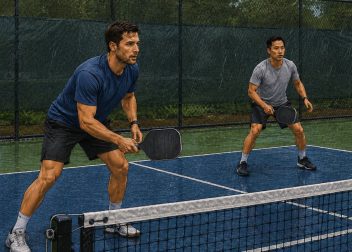
Hit it when your opponents are crowding the net and leaning forward. That forward weight is the whole reason the shot works. If both players are pressed up to the kitchen line, watching the ball low in front of them, a well-placed lob over their outside shoulder is very hard to recover.
The best lobs share a few traits:
- They go over the backhand shoulder, the slowest side to turn and chase.
- They come off a motion that looks like a dink, so the shot is disguised until the last second.
- They land in the back third of the court, deep enough that a runback overhead is awkward.
I like the offensive lob most on a windless indoor court, where the ball does exactly what I tell it. Outdoors in a breeze, I lob far less, because a gust can drop it short into a smash.
Why do most lobs fail?
They fail because players lob off balance, too short, or at the wrong moment. A lob that lands mid-court sits up like a birthday present for an overhead. A lob attempted while you are stretched wide usually floats, because you cannot control the height.
There is a decision cost too. Every lob you hit is a ball you did not drive or dink, so throwing up a hopeful lob when you are already in a neutral rally often gives away an edge. A cleaner offensive option in many spots is a speed-up shot that catches an opponent’s paddle down, rather than a risky ball over the top.
How do you defend a lob?
Defending the lob starts before it goes up. Read the setup, then move. If you see a player drop their paddle head and open the face under the ball, expect the lob and start dropping back.
Three habits make defending the lob much easier:
- Communicate. The player with the best angle calls “back” or “mine” so nobody collides.
- Turn and run, do not backpedal. Backpedaling is slow and it is how kitchen-line falls happen.
- Let a partner switch. Whoever chases the lob is now deep, so the other player slides across to cover.
If the lob is good and you have to scramble, a soft reset back into the kitchen buys time to recover your position. This is the same defensive instinct behind a good third shot drop, just from a tougher spot.
Is the lob a beginner shot or an advanced shot?
Both, and that is the trap. Beginners love the lob because it wins points against players who cannot hit overheads yet. As opponents improve, those same lobs get crushed, so the shot has to get more precise and more disguised to keep working at higher levels.
Think of the lob as a change-of-pace tool, not a go-to. Used once or twice a game at the right moment, it keeps opponents honest and stops them from crowding the net. Leaned on too heavily, it becomes the shot your opponents wait for. Advanced players also blend it with net skills like the erne to keep the other team guessing about where the next ball goes.
FAQ
Is a lob legal in pickleball?
Yes. A lob is a fully legal shot at any time during a rally. There is no rule against hitting the ball high, as long as it stays in bounds.
Can you lob on the serve or return?
You can hit a high, deep return of serve, and many players do to push the serving team back. A true offensive lob, though, is most useful later in the rally once opponents are pinned at the net.
Where should a good lob land?
In the back third of the court, ideally over your opponent’s backhand shoulder. Deep placement makes the runback overhead awkward and buys you time to take the net.
How do you stop lobbing so short?
Most short lobs come from hitting off balance or decelerating. Set your feet, brush up through the ball with a longer follow-through, and aim higher than feels natural. Height buys depth.
What is the best way to defend a lob?
Read it early, turn and run rather than backpedal, and let whichever partner has the angle take it while the other rotates to cover. Talking to each other prevents the messy collisions.
Should beginners learn to lob?
Yes, but as one tool among many. Rely on it too much and better opponents will punish it. Learn placement and disguise so the shot still works as you move up.
Does wind affect the lob?
A lot. Outdoors, wind can push a lob long or drop it short into an easy smash. On breezy days, most players lob less and trust their dinks and drives more.
Want to sharpen the rest of your shot toolbox? The coaching and clinics categories in the Pickler Junction directory list instructors who drill lobs, resets, and overheads in person.
Written by the Pickler Junction Team.