What to Eat After Playing Pickleball
Quick Answer: What to eat after pickleball is less urgent than it feels standing on the court. A 2017 International Society of Sports Nutrition position stand found that protein eaten anywhere from right after exercise to about two hours later supports muscle repair, and total daily intake matters more than speed. A normal meal within a few hours covers most recreational sessions.
Recovery nutrition means the food and fluid taken in after exercise to restore what the session used. The real debate is not what to eat. It is how fast a player has to eat it.
What should you eat after playing pickleball?
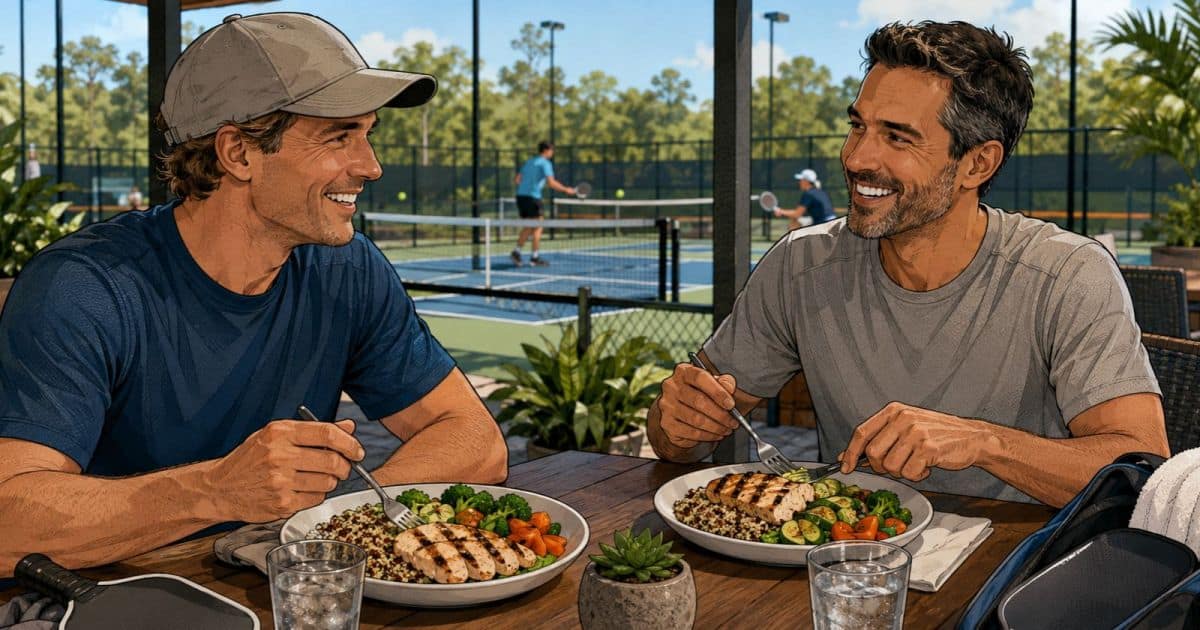
A normal mixed meal. That is the unglamorous answer the evidence supports for most recreational play.
Exercise draws down stored carbohydrate and creates a stimulus for muscle repair, so meals containing both carbohydrate and protein are the ones sports nutrition research has focused on for the hours after activity. For someone playing once a day, that restocking happens through ordinary eating, no special protocol required. What a player eats before the match matters just as much as what comes after; see what to eat before playing pickleball for that half of the picture.
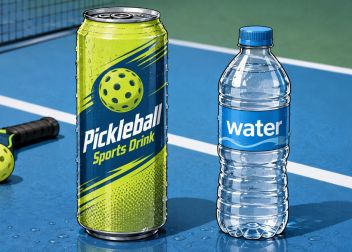
Fluid is the other half, and on a hot day it is the half people neglect. The comparison of sports drinks and water for pickleball covers what actually helps there.
Is there really a 30 minute anabolic window?
This is the claim that has aged worst, and it is worth being direct about it.
The popular version says a player must eat protein within about 30 minutes of walking off the court or lose the benefit of the session. A 2017 International Society of Sports Nutrition (ISSN) position stand on nutrient timing does not support that framing. It found that protein eaten anywhere from immediately after exercise up to roughly two hours later stimulates a strong rise in muscle protein synthesis, a window measured in hours, not minutes. The same position stand treats meeting total daily protein intake, spaced across the day in feedings roughly every three hours, as the priority, ahead of hitting any specific post-workout window.
The jump from “protein supports muscle repair after exercise” to “a player has 30 minutes” was a shortcut, not a finding from that research. It survives because it is easy to remember and easy to sell.
Rushing food down the moment a match ends can backfire, because it can spoil the appetite for a better meal an hour later. The research has moved the same direction: the narrow post-workout window matters far less than what the whole day contains.
When does post-exercise timing actually matter?
In narrower circumstances than the general advice implies.
- Two sessions close together. The ISSN position stand notes that strategic timing carries more weight when a recovery window is compressed, because there is less time left for a normal meal to restock carbohydrate before the next match.
- Multi match tournament days. Same logic. The gap between matches is the real constraint, covered in snacks for a pickleball tournament.
- Training in a fasted state. Starting a session with an empty stomach changes the calculation, covered separately in can you play pickleball while fasting.
- Very high training volume. Most of the research behind nutrient timing comes from athletes training at volumes well beyond a few recreational pickleball sessions a week.
A player who plays a few mornings a week and goes about the day normally does not run into any of those constraints.
How much does one pickleball session actually take out of you?
Less than the recovery drink marketing implies, and more than nothing.
The Centers for Disease Control and Prevention classifies moderate intensity aerobic activity as 3 to 5.9 METs, a range that includes recreational doubles tennis, a racket sport with a stop-start pattern similar to pickleball doubles. That is a solid workout that raises heart rate and breathing. It is not a multi-hour endurance event, and treating it like one leads people to eat back more afterward than the session actually used. Is pickleball good exercise looks at the fitness case in more depth.
What about soreness and recovery?
No specific food or supplement has been shown to prevent or erase the soreness that shows up a day or two after a long session on the court.
Sleep and how hard and how often a player trains carry more consistent support than any single eating pattern for managing that soreness. Gentle movement helps some people, which is why a stretching routine for after you play exists. For a fuller recovery plan beyond food, see how to recover after pickleball.
Saying the evidence on recovery food is limited and mixed is the honest summary, not an excuse to sell a shortcut.
Who should get individual advice first?
General findings from studies of healthy adults are not a personal plan.
Anyone who is pregnant or nursing, living with diabetes, kidney disease, or a heart condition, managing a diagnosed eating disorder or a history of one, or taking medication that has to be timed with meals should talk to a doctor or a registered dietitian before changing how they eat around exercise. Protein intake in particular is something people with kidney disease need individualized guidance on, not general sports nutrition advice.
Frequently asked questions
How soon should someone eat after playing pickleball? There is no evidence supporting a strict deadline for recreational play. The 2017 ISSN position stand on nutrient timing points to a window measured in hours, not minutes, with total daily intake mattering more than speed.
Does a player need a protein shake after pickleball? No. A shake is a convenient format, not a requirement. Food and shakes both just add protein to the day’s total.
Should someone eat carbohydrate after playing? Carbohydrate is what most post-exercise nutrition research has focused on, since exercise draws down the body’s stored carbohydrate. For a single daily session, a normal meal generally handles restocking it.
What if someone is not hungry after playing? That is common, especially after play in the heat. Waiting until real hunger shows up is reasonable for most healthy adults playing recreationally.
Does chocolate milk work for recovery? It contains both carbohydrate and protein in one package, which is why it shows up often as a recovery suggestion. That makes it convenient, not uniquely effective compared with other food combinations supplying the same nutrients.
Will eating after playing prevent cramping? The causes of exercise-related cramping are still debated, and no specific food has been shown to prevent it.
Do older players need to eat differently after exercise? Protein needs in older adults are still actively studied and debated. How much protein do pickleball players need covers what that research actually looks at.
Is it bad to eat right before bed after evening play? There is no strong evidence that eating late harms recovery. Caffeine timing has clearer effects on sleep, covered in does caffeine help pickleball performance.
Eat a real meal when hungry, drink enough to replace what was lost, and stop optimizing a 30 minute window the research does not support. Anyone dealing with a medical condition that affects diet or recovery can find a physician or therapist through the Pickler Junction directory. This article is general information, not medical advice.
Written by the Pickler Junction Team.