How to Recover After Playing Pickleball
Quick Answer: To recover after pickleball, replace fluids, eat protein and carbohydrate within a couple of hours, walk or stretch gently rather than collapsing, and protect your sleep that night. Sleep does more for recovery than any product. Soreness usually peaks 24 to 48 hours after a hard session.
Recovery is the period where your body repairs the load you just applied, and it is the part of training most recreational players skip entirely. The basics are dull and they work.
What matters most after a session?
Sleep, food, fluid and gentle movement, in roughly that order of impact.
Sleep is the highest value recovery tool available and the cheapest. Growth hormone release concentrates in deep sleep, and athletes with heavy loads notice performance drops quickly when sleep gets cut. Most guidance points to seven hours as a floor for active adults.
Food supplies the raw material. A meal with protein and carbohydrate within a couple of hours of finishing covers both muscle repair and glycogen replacement. Our guide to what to eat after playing pickleball covers the specifics.
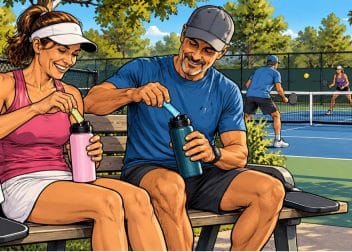
Fluid replacement matters more than most players think, especially in summer. Whether plain water is enough depends on how much you sweat and for how long, which our comparison of sports drinks and water works through.
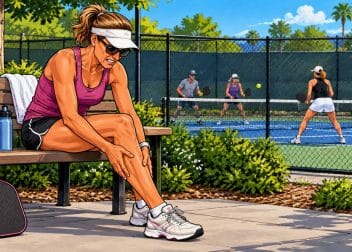
Why are you sore two days later?
That is delayed onset muscle soreness, and it peaks 24 to 48 hours after the session that caused it.
It comes from microscopic muscle damage and the inflammatory response that follows, not from lactic acid. Lactic acid clears within about an hour of finishing. The stiffness that greets you on Wednesday morning after Monday night open play is a repair process, not a waste product.
It hits hardest after unfamiliar movement. First session back after a layoff, first outdoor session of the spring, first time playing three hours instead of one. Those are the sessions that produce the memorable soreness.
What actually helps and what is oversold?
The evidence is uneven, and being honest about that is more useful than a list of hacks.
- Sleep. The strongest support of anything on this list. Protects performance, mood and injury risk.
- Protein and carbohydrate. Well established for repair and refueling.
- Easy movement the next day. Walking, easy cycling or light mobility work. Generally reported as helpful for how you feel.
- Active cool downs. Popular, but most evidence shows they do not significantly reduce soreness or markers of muscle damage. Harmless, just not the lever people think it is.
- Static stretching after play. Feels good, helps maintain range of motion, and has weak evidence for preventing soreness.
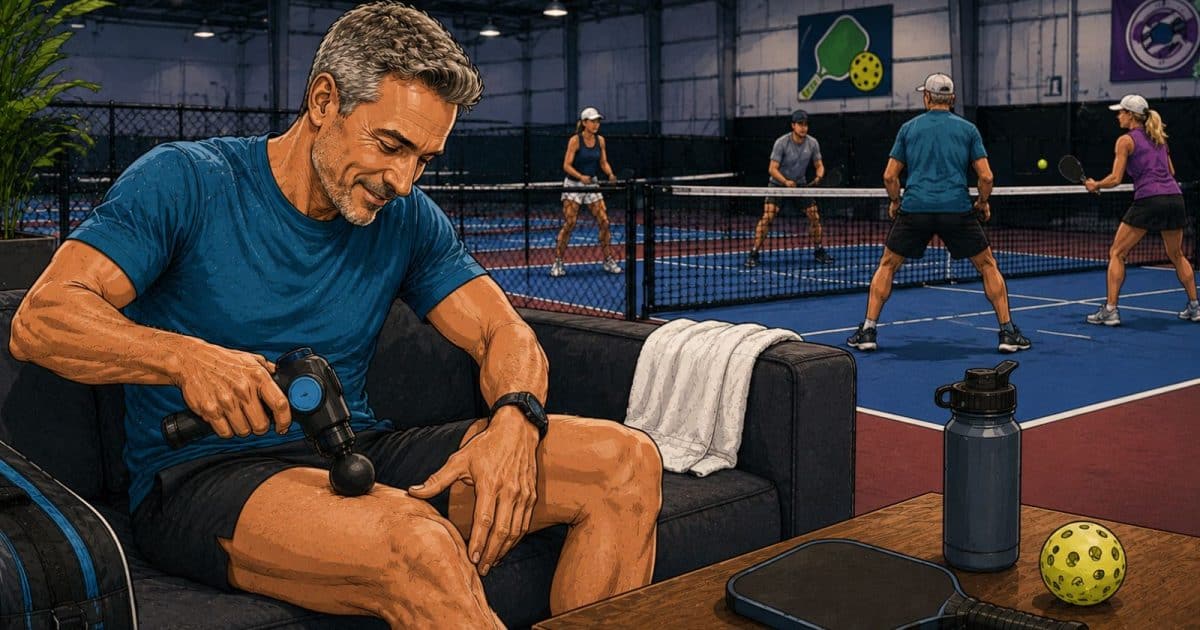
- Massage and foam rolling. Reasonable evidence for reduced perceived soreness, less for changed recovery of function.
- Cold water immersion. Reduces soreness in some studies, though it may blunt some training adaptations. A reasonable tool during heavy competition blocks, less useful as a habit.
How much rest do you need between sessions?
It depends on the intensity and on your training history, which is an unsatisfying answer that happens to be the true one.
A general pattern that works for most recreational players is alternating harder days with easier days rather than stacking three hard sessions in a row. The players who get hurt are usually the ones who went from twice a week to six times a week in a fortnight, a pattern our article on how often to play without getting hurt covers in detail.
Age changes the math. Tissue repair slows, and the same schedule that worked at 35 can produce a nagging Achilles at 60.
What should you do in the 30 minutes after you finish?
Keep moving briefly rather than sitting down immediately. Walk a lap of the court complex. Drink something. Do a few easy stretches for calves, hip flexors and shoulders, which our routine of post play stretches lays out.
Then eat within a couple of hours and get to bed at a reasonable time. That is the entire protocol, and it beats anything sold in a bottle.
Of everything on this list, sleep is the one worth protecting first. Session length and intensity matter less to how you feel the next day than whether you got a full night beforehand, and no supplement, garment, or stretching routine compensates for a short one.
When is soreness a problem instead of normal?
Normal soreness is diffuse, symmetrical, and improves with gentle movement. It fades within about three days.
Concerning signs are sharp localized pain, pain in a joint rather than a muscle, swelling, pain that worsens rather than eases over several days, or anything that changes how you walk. Sudden severe calf or heel pain during play needs prompt evaluation, since Achilles injuries in this sport are common and time sensitive.
Frequently asked questions
How long should I rest between pickleball sessions? Most recreational players do well with at least one easier or off day between hard sessions. Consecutive hard days are where overuse problems start.
Should I ice after playing? Ice is reasonable for a specific painful area. Whole body cold immersion for routine recovery has mixed evidence and may blunt some adaptations.
Does stretching after pickleball prevent soreness? The evidence for soreness prevention is weak. Stretching still helps maintain the range of motion the sport asks for.
What should I drink after playing? Water covers most sessions. Longer or hotter sessions with heavy sweat losses are where electrolyte containing drinks earn their place.
Is it bad to play through soreness? General muscle soreness usually improves with easy activity. Joint pain, swelling or an altered gait are different and should be checked.
Do compression garments help recovery? They are widely used after play and are low-risk. The performance evidence is modest, and most of the benefit reported in studies is in how sore people say they feel rather than in measured function.
How much protein do I need after a session? There is no required post-session dose. Meals after exercise commonly land somewhere around 20 to 40 grams depending on body size, but total intake across the day matters far more than what lands in any single meal.
Does a nap help? Short naps are generally reported to help perceived recovery and alertness, especially when night sleep has been short.
Recovery is where the fitness actually happens, and most of it is free. If soreness has turned into a pain that keeps returning to the same spot, that is the point to have someone look at it, and our physicians and therapists directory lists clinicians who treat paddle sport athletes.
Written by the Pickler Junction Team.
*This article is general information, not medical advice. Talk with your doctor about your own health before starting a new sport.