
Best Stretches After Playing Pickleball: Cool Down and Recovery Routine
Quick Answer: The best post-pickleball stretches are static holds for the calves, hamstrings, quads, hips, shoulders, and forearms, done while your muscles are still warm. Walk for a few minutes to cool down, then hold each stretch about 30 seconds, according to the Mayo Clinic. This routine eases stiffness and supports flexibility before your next game.
Why stretch after playing pickleball
A cool-down is the light activity and stretching you do right after a match, before you head home. It works differently than the dynamic warm-up routine you use before play, which relies on moving stretches to prepare cold muscles. After play, your muscles are already warm. The Mayo Clinic says that is the better time for static stretches, the kind where you hold a position without moving.
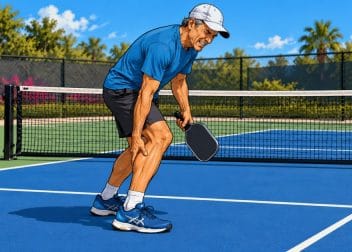
Pickleball loads your body with repeated lunging, quick direction changes, and overhead reaches. Those movements work the calves, hamstrings, quads, hips, shoulders, and forearms hardest. A short cool-down helps ease the tightness that follows a session. The Mayo Clinic notes that regular stretching can improve flexibility and joint range of motion, which may help lower injury risk over time.
Stretching is not a guarantee against injury. The Mayo Clinic is direct about this: stretching does not mean you cannot get hurt, and it does not prevent overuse injuries from playing too often or too hard.
What a good cool-down does for you:
- Brings your heart rate down gradually with a few minutes of easy walking before you stretch.
- Builds flexibility over time, according to the Mayo Clinic, when you stretch two to three times a week.
- Gets you ready for the next session instead of leaving you stiff and sore in the car.
A five to ten minute cool-down is easy to skip on the way to the parking lot. It is a small habit that adds up over a season of play.
A post-pickleball stretching routine
Start with light movement, then move into static holds for the muscles pickleball works hardest. The Mayo Clinic recommends holding a static stretch for about 30 seconds, and up to 60 seconds for an especially tight area. Stretch to a point of gentle tension. Stop well short of pain.
A simple routine to follow after you leave the court:
- Walk for two to three minutes to bring your heart rate down.
- Hold each stretch below for about 30 seconds without bouncing, per Mayo Clinic guidance.
- Repeat any spot that still feels tight.
- Calf stretch: Press your palms against a fence or wall with your back leg straight and heel down, to lengthen the calf and Achilles.
- Hamstring stretch: Fold gently forward from the hips, or sit and reach for your toes, to release the back of the thigh.
- Quad stretch: Stand on one leg, pull your heel toward your glute, and hold something steady for balance.
- Hip and glute stretch: Try a seated figure-four position or a gentle lunge to open the hips you use for split steps.
- Shoulder stretch: Bring one arm across your chest and hold it there, to release the shoulder that swings your paddle.
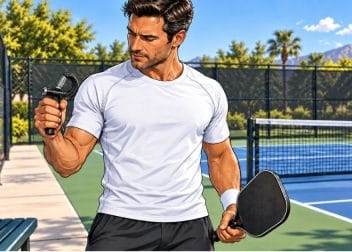
- Forearm and wrist stretch: Extend your arm, then gently pull your fingers back and down, for the forearm that grips the paddle.
- Torso twist: Seated or standing, rotate gently from side to side to release your lower back.
Hold each stretch at a level of mild tension, never to the point of pain. This routine pairs well with the dynamic warm-up you already do before stepping on the court.
How stretching fits recovery overall
Stretching is one part of a full recovery plan. It works best paired with a few other habits, especially once you start playing several times a week.
Round out your recovery with these habits:
- Refuel with water and a snack after play. See the guide on what to eat after playing pickleball for specifics.
- Take rest days between hard sessions so your muscles and tendons have time to adapt.
- Add off-court strength and mobility work, covered in the off-court workouts guide.
- Pay attention to soreness that lingers. Mild next-day stiffness is normal, but pain that does not ease within a few days is worth a closer look. The guide on feeling sore after pickleball walks through when to act.
Stretching has limited evidence behind it for preventing delayed muscle soreness on its own. The Mayo Clinic states plainly that stretching does not prevent overuse injuries, so treat it as one piece of a broader plan rather than a fix for every ache.
If you are returning to the game after a hip or knee replacement, a physical therapist can build a stretching and strength plan suited to your recovery stage. Generic advice may not fit a surgical joint. The guide on pickleball after hip or knee replacement covers what to expect.
Frequently asked questions
Should you stretch after playing pickleball? Yes. The Mayo Clinic recommends static stretching after exercise, while your muscles are still warm, to help maintain flexibility and joint range of motion.
What stretches are best after pickleball? Focus on the calves, hamstrings, quads, hips, shoulders, and forearms, since these are the muscle groups a pickleball session works hardest. Hold each stretch for about 30 seconds, per Mayo Clinic guidance.
Is static or dynamic stretching better after playing? Static stretching, where you hold a position, fits best after play. The Mayo Clinic advises against stretching cold muscles before intense activity, so save dynamic, moving stretches for your warm-up instead.
How long should you hold each stretch? About 30 seconds per stretch, or up to 60 seconds for an especially tight spot, according to the Mayo Clinic. Stretch to mild tension, not pain.
How often should you stretch to see results? The Mayo Clinic recommends stretching at least two to three times a week to improve flexibility over time. Stretching after every session you play is fine too.
Does stretching prevent soreness the next day? Stretching will not guarantee a soreness-free morning. The Mayo Clinic states that stretching does not prevent overuse injuries, so pair it with rest, hydration, and a sensible playing schedule.
What if a muscle stays sore for days? Mild next-day stiffness is normal, but soreness that lingers past a few days, or gets worse, deserves attention. A physical therapist can assess the area and build a targeted plan.
Should you stretch differently after a hip or knee replacement? Possibly. A physical therapist can tailor hold times and stretch choices to your recovery stage, since generic advice may not fit a surgical joint.
A short cool-down and a few minutes of stretching keep you limber for the next match. Pair it with a solid warm-up and steady off-court conditioning to support how you feel over a full season. For nagging tightness, an old injury, or questions specific to your body, search the Pickler Junction directory of physicians and therapists to find a professional near you. This article is general information, not medical advice.
Written by the Pickler Junction Team.