Can You Play Pickleball While Fasting?
Quick Answer: Many people do play pickleball while fasting, and research on exercising in a fasted state is limited and mixed. The considerations that matter on court are low blood sugar, dehydration, and heat. If you have diabetes or take glucose-lowering medication, talk to your doctor before playing fasted.
Fasting here means going without food, and sometimes fluid, for a defined period. This article is not about whether to fast, which is a personal and medical decision. It is about what the research says regarding playing while you are.
What does the research say about exercising while fasted?
Less than you would hope, and what exists does not point one direction.
Reviewers have noted that only a few studies have examined fasting and physical performance, and that results so far are inconclusive. The research is limited and mixed.
Much of the available evidence comes from studies conducted during Ramadan, which comes with a complication. Ramadan fasting involves abstaining from both food and fluid during daylight hours, and it also shifts sleep and meal timing. Researchers have identified energy restriction, sleep deprivation, circadian disruption, dehydration, and changes in training load as the factors driving observed effects. Untangling which one caused what is difficult.
What did those studies actually find?
Mixed results, with a pattern worth noticing.
Some findings reported reductions. A study of young female athletes found the largest deterioration in the fourth week, specifically at late-afternoon testing, measuring simple reaction time, choice reaction time, vigilance and mental rotation. Reviewers have noted that reduced muscle glycogen and fluid reserves could be expected to limit anaerobic effort, endurance, and strength, and that lower blood glucose may affect mood and increase perceived effort.
Other findings were neutral. In young soccer players, when training, fluid balance, energy intake, and sleep were all maintained as before, Ramadan fasting showed no detrimental effect on aerobic performance or body composition. Wingate testing in power athletes who maintained those same factors showed no change in anaerobic power or capacity.
The recurring theme is that sleep, fluid, and total intake appear to explain much of what gets attributed to fasting itself.
What are the real risks on a pickleball court?
Three, and they are the ones worth planning around.
- Low blood sugar. Symptoms can include shakiness, sweating, confusion, dizziness, weakness, and difficulty concentrating. On court that can mean a fall or a collision, not just a bad game. Anyone who has experienced it before should treat this as the central issue.
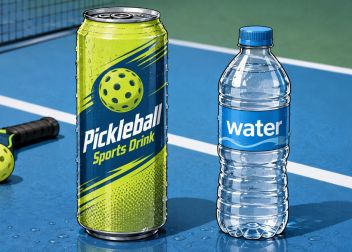
- Dehydration. Performance decrements have been documented at fluid losses of about 2 percent of body mass, and they are larger in heat. If your fast excludes fluid, this risk is higher. Our comparison of sports drinks and water covers hydration during play.
- Heat. Heat and dehydration compound each other through cardiovascular and thermoregulatory strain. Outdoor summer sessions are where a fasted player is most exposed, and midday courts are the worst of it.
Reported adverse effects of intermittent fasting more generally have included dizziness, dehydration, difficulty concentrating, irritability, and disrupted sleep. Several of those matter on a court because they affect balance and judgment.
Does the type of fast change the picture?
Considerably, and it is the distinction most articles skip.
A fast that permits water is a meaningfully different situation from one that does not. Since dehydration and heat are two of the three main on-court risks, a fast allowing fluid removes much of the concern. A fast excluding fluid, played outdoors in summer, is the highest-risk version.
Time of day matters for the same reason. That study found its worst results at late-afternoon testing, near the end of the fasting window rather than the start. All of its testing ran between 5 and 6 pm, with sunset around 7:10 pm.
An early-morning session before eating and a hot afternoon in the same state are very different propositions. Same body, different conditions.
Who needs to talk to a doctor before playing fasted?
This is the part to read carefully rather than skim.
If you have diabetes of any type, or take insulin or any other glucose-lowering medication, talk to your doctor before playing pickleball while fasting. Combining exertion with fasting while on medication that lowers blood glucose needs an individual plan from the person managing your treatment, not general guidance. People with type 1 diabetes who fast have been identified in the research as facing particularly high risk of acute complications including hypoglycemia.
Also talk to your doctor or a registered dietitian first if you are pregnant or nursing, if you have kidney disease, liver disease, a heart condition, low blood pressure, or adrenal insufficiency, if you have a diagnosed eating disorder or any history of disordered eating, or if you take medication that must be taken with food or timed around meals. Blood pressure medications and diuretics interact with fluid status and meal timing directly.
Nothing here recommends fasting or advises against it, and none of it is individual medical advice. What studies found applies to the participants they examined.
Frequently asked questions
Can you play pickleball while fasting? Many people do, and the research is limited and inconclusive. The considerations are low blood sugar, dehydration, and heat, and some people should check with a doctor first.
Will I perform worse playing fasted? Findings are mixed. Some studies showed reductions, others showed none when sleep, fluid, and energy intake were maintained.
What are the warning signs I should stop playing? Dizziness, confusion, shakiness, unusual weakness, feeling faint, or trouble concentrating are reasons to stop and seek help, particularly in heat.
Can I drink water while fasting for exercise? Whether fluid is permitted depends on the type of fast you are following. It makes a substantial difference to the dehydration and heat risks discussed above.
Does fasted exercise affect blood sugar? Blood glucose responses vary by individual and health status. Anyone managing blood glucose medically needs their own doctor’s guidance here.
What should I eat when I break my fast? That is individual, and worth discussing with a dietitian if you have any relevant condition. General patterns are in what to eat after playing pickleball.
Is it better to eat before playing? Neither option is universally better. Our guide to what to eat before playing pickleball covers the fed side of the question.
Whether to fast is your decision and your doctor’s. What this article can say is that the on-court risks are low blood sugar, dehydration, and heat, and that they are manageable for some people and not for others. To find a registered dietitian or nutrition professional near you, browse our pickleball nutrition and supplements directory.
Written by the Pickler Junction Team.
*This article is general information, not medical advice. Talk with your doctor about your own health before starting a new sport.