What Snacks to Bring to a Pickleball Tournament
Quick Answer: Good pickleball tournament snacks are portable, familiar, and safe to sit in a hot bag for hours, like bananas, pretzels, and sandwiches for longer gaps. Tournament days involve back-to-back matches with unpredictable breaks, so timing and food safety matter more than any single food choice. Save new foods for practice, not tournament day.
A tournament snack is just food you can eat between matches without it slowing you down. The hard part is that you rarely know how long the gap will be, especially once you have signed up for a bracket and the schedule starts to shift.
What snacks should you bring to a pickleball tournament?
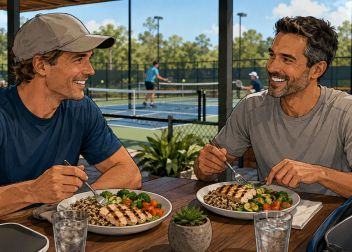
Things that survive a hot bag, travel without a mess, and that you have already eaten on a play day before.
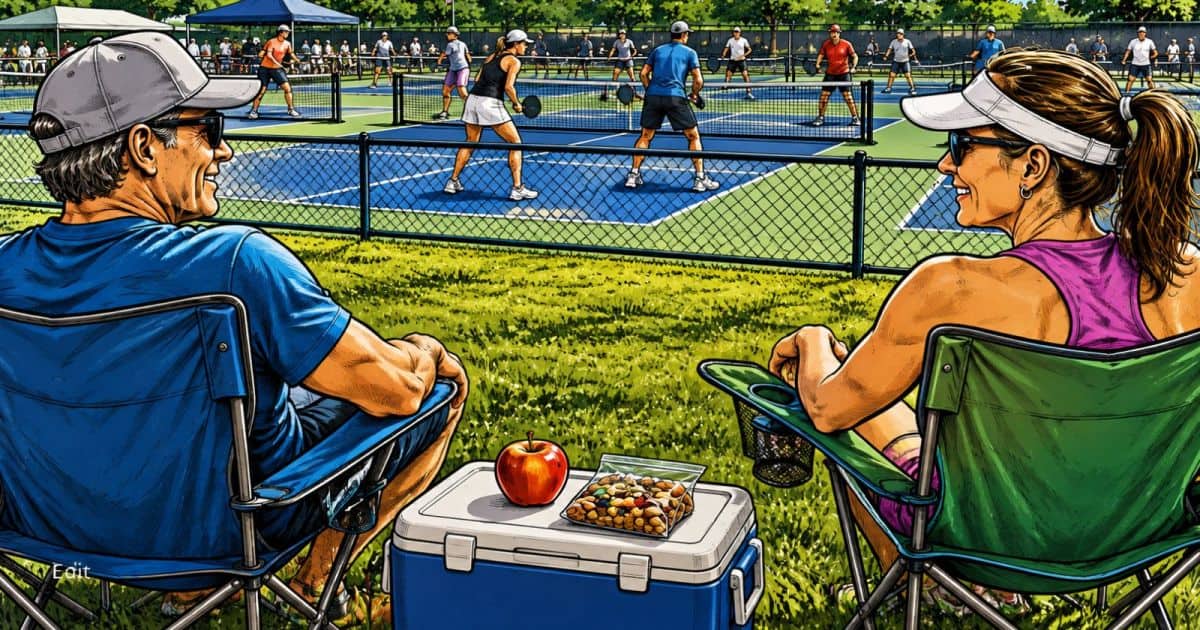
- Fruit that travels. Bananas, apples, oranges. Easy to carry, easy to eat between games.
- Dried fruit and pretzels. Shelf stable, no refrigeration worries, mostly carbohydrate.
- Sandwiches or wraps. Better suited to a longer known gap than a fifteen minute one.
- Nuts and trail mix. Convenient, though higher fat foods digest more slowly, worth knowing close to a match.
- Bars of some kind. Genuinely convenient, and often the first new food someone tries on tournament day, which is a mistake.
The list matters less than the rule behind it. Familiar beats optimal.
How do you eat across a long tournament day?
By matching the food to the size of the gap in front of you.
A tournament bracket packs several matches into one day with short breaks between them, unlike a single practice session where the next demand on your body is hours or a full day away, a difference covered in what to eat after playing pickleball. That makes eating between matches matter more on tournament day than it does on an ordinary one.
A simple approach works for most gaps: small and simple food when the break is short, a fuller meal when the break is long, and nothing new at any point during the day.
How much does a tournament day actually demand?
More than a single match, which is the part a bracket schedule hides until it does not.
A 2022 study in the Journal of Aging and Physical Activity measured 53 recreational pickleball players with an average age of 62 and found doubles play produced a mean heart rate of 111.5 beats per minute, about 71 percent of predicted maximum heart rate, with more than 70 percent of total playing time falling in moderate to vigorous heart rate zones. Stack several matches like that across a day, add outdoor heat and standing around between games, and the total looks different from one Tuesday morning session.
Fuel across the whole day rather than just the first two matches, especially once the bracket runs long into the afternoon.
What about drinks during a tournament?
Long, hot, multi-match days are exactly where drink choice starts to matter more than it does on a short practice session.
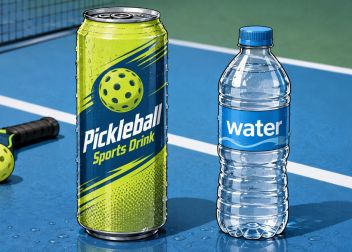
Water covers most needs for a single match, and the case for a carbohydrate-electrolyte drink strengthens as matches stack up and the day gets hot. The full comparison, including when each option makes more sense, is in sports drinks vs water for pickleball. Overdrinking carries its own risk, so more is not automatically better.
Pace fluid intake across the day instead of loading up before a single match.
What food safety issues come with a court bag?
The boring problem that actually ruins tournament days.
Perishable food left in a hot bag or a hot car for hours is a real risk, and outdoor tournaments sit in exactly those conditions for most of the day. Shelf-stable choices sidestep the problem entirely. Anything that needs to stay cold needs a cooler with ice, not just a shady spot in a court bag.
Shade helps on its own, for food and for a paddle sitting in direct sun.
Who should plan tournament eating with a professional?
Anyone whose eating already needs medical oversight should treat tournament day differently.
Talk with your doctor or a registered dietitian before setting a tournament eating plan if you are pregnant or nursing, if you manage diabetes, kidney disease, or a heart condition, if you have a diagnosed eating disorder or a history of one, or if you take medication timed around meals. A long day of irregular eating, heat, and repeated matches is a different situation from an ordinary routine. Anyone using insulin or another glucose-lowering medication should plan tournament day in advance with the clinician who manages that medication.
The patterns described in this article come from research in generally healthy adults and are not individual medical advice.
Frequently asked questions
What snacks are best for a pickleball tournament? Portable, familiar, shelf-stable food you have already eaten on a play day. The specific food matters less than tolerance and timing.
What should I eat between matches? That depends on the length of the gap. A short gap calls for something small and simple, while a longer gap can hold a full meal.
Should I bring protein bars? They travel well and need no refrigeration. Do not make tournament day the first time you try a new bar, since tolerance for any food varies by person.
How do I avoid feeling sluggish late in the day? Eat and drink on a steady schedule starting with the first match, instead of trying to catch up once the afternoon rounds begin.
Do I need sports drinks at a tournament? A long, hot, multi-match day is where a carbohydrate-electrolyte drink has its clearest advantage over water. See sports drinks vs water for pickleball for the full comparison.
What if there is no food at the venue? Plan as if there will not be anything you want to eat there. Bringing your own food is the reliable plan, especially outdoors.
Should I drink coffee between matches? Caffeine has real limits on who it helps and how much it can disturb sleep later. See does caffeine help pickleball performance.
What should I eat the morning of? Something familiar that has settled by the time you warm up. More detail is in what to eat before playing pickleball.
Pack familiar food, plan for the gaps between matches, and keep the bag out of direct sun. If your eating already needs medical oversight, loop a professional in before tournament day through the physicians and therapists directory. This article is general information, not medical advice.
Written by the Pickler Junction Team.