Sports Drinks vs Water for Pickleball: Which Is Better?
Quick Answer: For most pickleball sessions under about 45 to 50 minutes, plain water covers hydration needs about as well as a sports drink. A National Athletic Trainers’ Association position statement says carbohydrate-electrolyte drinks add value once a session runs longer than that or the heat climbs. Overdrinking water carries its own rare risk.
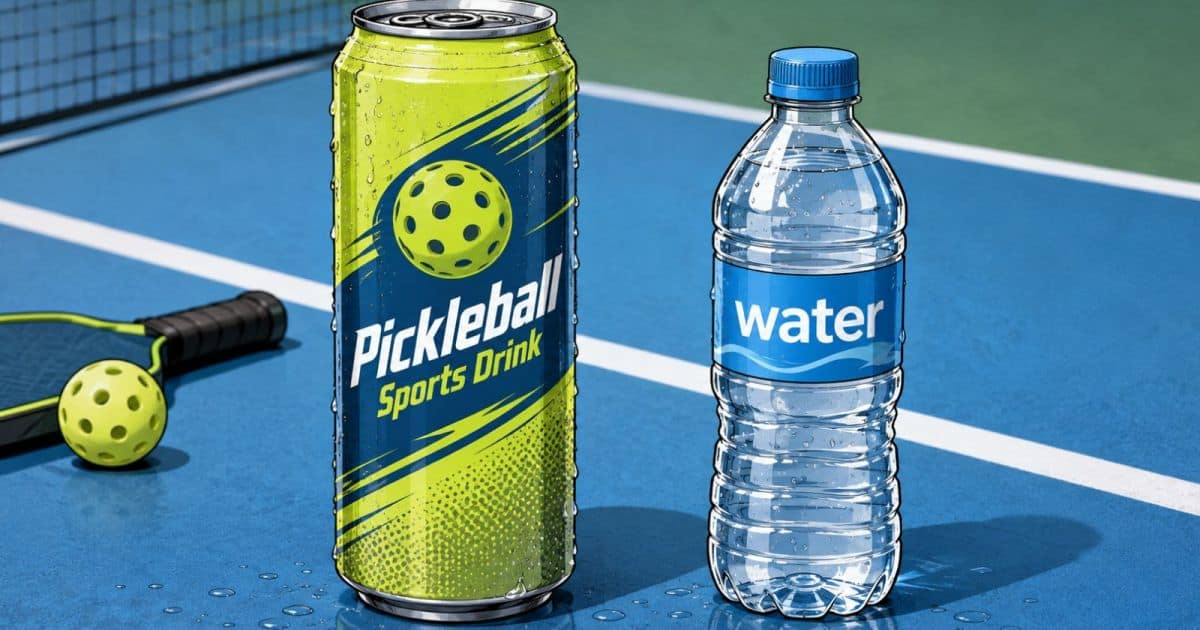
A sports drink is water with carbohydrate and electrolytes added, most often sodium. The real question in sports drinks vs water for pickleball is not whether either one works. It is whether your session is long enough, or hot enough, for the difference between them to show up.
Is water enough for a normal pickleball session?
For most recreational play, yes, and that comes from the research rather than a cost-saving shortcut.
A National Athletic Trainers’ Association position statement, published in the Journal of Athletic Training, says carbohydrate should be added to a rehydration drink once a session runs longer than about 45 to 50 minutes or turns especially intense. Below that window, the statement treats plain water as an adequate way to replace what is lost in sweat. A typical open-play rotation, or a single match, usually falls inside that range.
Pickleball also includes rest between points, serves, and side changes for most recreational players. That pattern sits closer to the shorter, less continuous effort the NATA guidance describes than to a nonstop endurance event.
When do sports drinks start to make a difference?
Past roughly that 45 to 50 minute mark, and sooner in the heat.
The same NATA position statement notes that a carbohydrate-electrolyte drink can help maintain blood glucose and support performance once exercise stretches past about 50 minutes. Long open-play sessions, back to back matches, and hot outdoor courts all push a day of pickleball closer to that territory.
- Under 45 to 50 minutes, moderate conditions: water is well supported by the NATA guidance above.
- Past that window of continuous play: a carbohydrate-electrolyte drink has documented support for maintaining performance.
- Hot or humid conditions: sweat and sodium losses climb faster, which pulls the crossover point earlier.
- Long tournament days with several matches: total fluid and calorie loss across the day matters more than any single game. See snacks for a pickleball tournament.
How much does dehydration actually affect play?
Enough to matter, at a threshold that shows up earlier than you might expect.
The NATA position statement says dehydration of 1 to 2 percent of body weight begins to compromise physiologic function and hurt performance, and it points to measurable loss of aerobic power at that level even in a cool environment. Heat makes the same fluid loss feel worse, because the body is also working harder to manage its own temperature.
On a hot court, that threshold rarely looks dramatic. Players do not usually collapse. Their feet get slower, their shots get sloppier, and they start blaming the paddle instead of the third game.
Can you drink too much water?
Yes, and this part gets left out of most hydration advice.
Mayo Clinic warns that drinking far more water than the body needs can dilute blood sodium to a dangerously low level, a condition called hyponatremia. Mayo Clinic also says the condition is rare and typically not a problem for healthy adults under normal conditions. The NATA position statement ties the larger hyponatremia risk to exercise lasting more than four hours combined with drinking well beyond what sweat actually removes, a pattern closer to an ultra-endurance event than a recreational pickleball session.
More fluid is not automatically better. That is true of water, and it is true of sports drinks.
What about electrolyte tablets and powders?
They are a delivery format, not a separate category of evidence.
Tablets, powders, and ready-made drinks are all ways of getting fluid with some combination of carbohydrate and sodium into the body. What the NATA guidance above cares about is how much of each a drink contains and how long the session runs, not how the product is packaged. Two products marketed the same way can still differ in what is actually inside.
Sports drinks also carry added sugar, worth knowing if intake is something you track. On a session short enough that water performs just as well, that becomes a real trade-off rather than a minor detail. For a broader look at fueling choices, see the pickleball food and drinks hub.
Who should talk to a doctor first?
Fluid and sodium are not neutral topics for every player.
Anyone pregnant or nursing, managing diabetes, kidney disease, heart failure, or another heart condition, or taking a diuretic or blood pressure medication should talk with a doctor or a registered dietitian before changing hydration habits. Each of those conditions changes how the body handles fluid and sodium, so a general guideline is not a substitute for individual advice. A sugar-containing sports drink is also worth discussing with a doctor for anyone managing blood glucose. A sports medicine doctor for pickleball is a reasonable place to start that conversation.
Frequently asked questions
Are sports drinks better than water for pickleball? Not for most sessions. A National Athletic Trainers’ Association position statement supports plain water for exercise under about 45 to 50 minutes, with the case for a carbohydrate-electrolyte drink growing after that.
What should you drink during a hot outdoor session? Heat raises fluid and sodium loss through sweat, which is when the electrolytes in a sports drink have more support behind them. The exact amount that suits a given player is individual, so treat this as a starting point rather than a fixed rule.
Does drinking a sports drink prevent cramps? No. The exact cause of exercise-related muscle cramps remains unsettled, and no drink has been shown to reliably prevent them.
Is coconut water a good sports drink? It contains natural electrolytes, but its composition is not the same as a formulated sports drink, particularly on sodium. It is an alternative, not a direct substitute.
Can you just drink when you are thirsty? Drinking to thirst is a recognized hydration strategy, though it is debated for long or hot sessions, where thirst can lag behind the fluid the body actually needs.
Do you need a sports drink for a one hour rec session? An hour sits right at the edge of the NATA threshold above. If the session is not especially intense and conditions are mild, water performs comparably. Once it turns hot or intense, a sports drink has more support behind it.
What about drinking after playing? Replacing lost fluid after a session still matters. See what to eat after playing pickleball for the rest of the recovery picture.
Should you drink something before you play? Arriving already hydrated works better than trying to catch up mid-session. The guide to what to eat before playing pickleball covers the rest of the pre-game picture.
Plain water covers most recreational pickleball sessions under about 45 to 50 minutes. Save the sports drink decision for long, hot, or multi-match days, and pair either choice with a proper warm-up. To find a physician or other health professional near you, browse the Pickler Junction physicians and therapists directory. This article is general information, not medical advice.
Written by the Pickler Junction Team.