How to Beat a Banger in Pickleball
Quick Answer: Beat a banger by taking pace off the ball instead of matching it. Block hard drives from the kitchen line, keep your paddle up, and force soft dinks. Bangers are strong in a power contest and weak in a slow one, so resets and blocks turn their pace against them.
A banger is a player who drives nearly every ball hard and flat instead of dinking, dropping, or resetting. The style beats most recreational opponents, right up until it runs into someone who slows the game down.
Why bangers win so often at recreational levels
Because the natural response to a hard ball is to back up and swing harder, and both reactions help the banger.
Backing up hands them more court to aim at and more time to load up on the next drive. Swinging back turns the point into a speed contest, which is exactly the contest a banger has drilled the most. The banger never has to hit a dink, a drop, or a soft third shot, because nobody makes them.
This style has a ceiling, and it is a low one. A player who cannot dink or drop has no answer once the ball goes soft. The real issue is that most opponents never force that adjustment.
What beats a banger
Take the pace off. That single idea is the whole strategy, and everything else is detail.
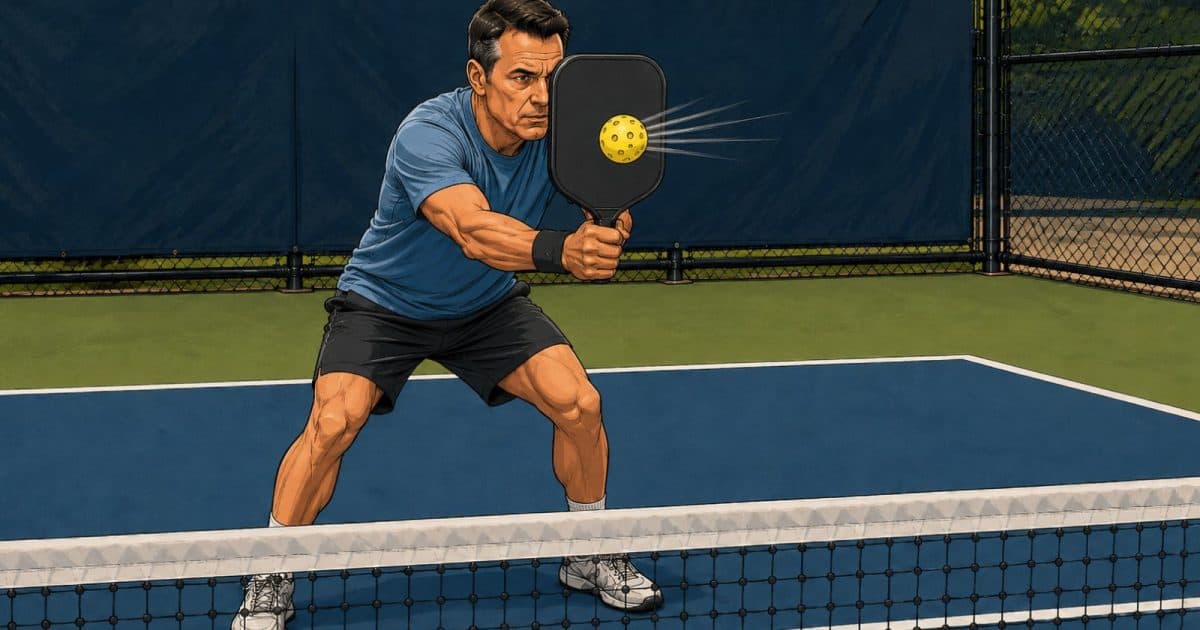
- Block, do not swing. A firm paddle held out in front absorbs a hard drive and drops it into the kitchen. No backswing needed. The pace already came from their paddle.
- Hold the kitchen line. Backing up is the instinct, and it is the wrong one. From the line you take the ball earlier and give the banger less angle to work with.
- Reset every hard ball. A ball that lands soft and low in the kitchen forces the banger to hit up instead of down. See what a reset is in pickleball for the mechanics.
- Make them dink. Once a rally turns soft and low, a banger is playing a game they have not practiced. That is where most points against this style actually turn.
Where to stand
At the kitchen line, and standing there is counterintuitive enough that it is the most commonly misplayed position against a hard hitter.
Standing back feels safer against pace. That feeling is wrong. From the baseline, a player covers the whole width of the court against someone who can aim anywhere, and the extra time is really just extra room for the ball to get past. Under Section 11 of the 2026 USA Pickleball rulebook, the non-volley zone runs 7 feet from the net on each side, which is the strip a player wants to occupy and defend rather than concede.
At the line, a player cuts off angles, takes the ball before it drops, and puts the banger under pressure to hit a smaller target. The one adjustment that matters is paddle position: chest height, out in front, ready to block rather than swing.
The transition zone is the dangerous stretch in between. Moving from the baseline to the line against a banger means covering ground during their backswing and stopping to split step the instant they make contact. The guide to the transition zone in pickleball covers that footwork in detail.
What to do with your paddle
Get it up, and keep it there.
The most common physical error against a banger is a low paddle. A paddle sitting at hip height cannot get to a body shot in time, and body shots are what bangers hunt for on purpose. Chest height, slightly in front, elbows in, is the starting position between every ball.
The second error is a tight grip. A firm wrist paired with a relaxed grip absorbs pace and drops the ball short. A death grip sends the ball back with most of its speed intact, and that ball usually sails long.
The banger who is actually good
Some hard hitters are not bangers in the dismissive sense. A player who drives with purpose, aims at feet, and follows the drive to the net is playing a modern power game, not just bashing the ball.
Against that player, the soft game still works, but it has to be sharper. Resets need to stay low. Dinks need to go crosscourt rather than straight ahead, where the net is lower and the margin is bigger. Third shots need to actually land inside the kitchen instead of sitting up. The guide to pickleball doubles strategy covers the positioning side of that adjustment.
The tell is what happens once the pace comes off. A true banger gets impatient and starts attacking balls that were never attackable. A skilled driver settles in and dinks patiently instead.
What not to do
- Do not back up. It is the single most common losing response to pace.
- Do not swing harder. That is playing the banger’s own game, on their terms.
- Do not lob out of desperation. A short lob against a player who wants to hit hard is a gift. The guide to what a lob is in pickleball explains when a lob actually works and when it backfires.
- Do not aim for the sideline. Under pressure, margin matters more than a sharp angle. The middle of the court is a fine target.
- Do not get visibly annoyed. Bangers win a lot of points off opponents who are irritated, not opponents who are actually outplayed.
FAQ
What is a banger in pickleball? A banger is a player who drives nearly every ball hard and flat instead of dinking, dropping, or resetting. The term describes a style of play rather than a skill level, though it is often used as an insult.
Should I back up against a banger? No. Hold the kitchen line instead. Backing up gives a hard hitter more court and more time, and the non-volley zone line is the boundary a player wants to control rather than give up.
How do I block a hard drive? Keep the paddle out in front at chest height with a firm wrist and a relaxed grip, and skip the backswing. The pace already on the ball does the work, and the goal is simply to drop it into the non-volley zone rather than attack it.
Why does slowing the game down beat a banger? Because it forces a shot they have not practiced. A banger’s whole advantage disappears once the ball arrives low and soft instead of fast and flat.
Is banging a bad strategy? It works well up to a point and then stops working against opponents who can reset. Players who rely only on driving tend to plateau, since the soft game is generally what separates stronger players from recreational ones.
Should I lob against a banger? Only when it is a genuinely well placed lob and the banger is crowding the net. A short lob against a player who wants to hit hard is close to the worst outcome available.
What if my partner keeps banging back? Talk about it between games. Two partners running different game plans against a hard hitter tend to lose more points than either plan would produce on its own.
Do bangers improve over time? Many do, once they run into enough opponents who consistently reset their pace. The style is often a stage in a player’s development rather than a fixed identity.
Resets are often the missing piece for players who only know how to drive, and that is a common thing to fix with a coach rather than alone. The Pickler Junction directory of pickleball coaches is a place to start that search.
Written by the Pickler Junction Team.