What Is the Transition Zone in Pickleball?
Quick Answer: The transition zone in pickleball is the midcourt strip between the baseline and the non volley zone line, roughly 15 feet deep. Players call it no man’s land because you are too far back to volley comfortably and too far forward to let balls bounce. You pass through it, you do not live in it.
The transition zone is the ground you cover between hitting your third shot and arriving at the kitchen line. Every rally that starts with a serve requires both teams to cross it, and most rallies are decided by who crosses it better.
Where exactly is the transition zone?
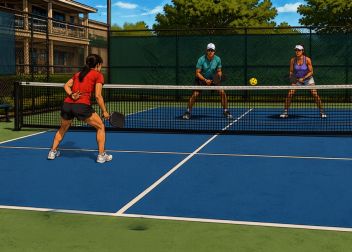
A pickleball court is 44 feet long, so each side measures 22 feet from baseline to net. The non volley zone takes the 7 feet closest to the net. That leaves about 15 feet of midcourt between the baseline and the kitchen line, and that strip is the transition zone.
The most uncomfortable part is the middle of it. Balls land at your feet there, and a ball at your feet is the hardest ball in pickleball to do anything useful with.
Why is the transition zone so hard?
Because the geometry is against you. Your opponents are at the kitchen line hitting down. You are 12 feet back with the net between you and them, and any ball you pop up arrives at their paddle above net height.
It also punishes bad timing. If you are moving forward when your opponent contacts the ball, your weight is going one direction and the ball is going another. That is how a routine dink turns into a shot off the edge guard.
Most players lose points here in one of two ways. They stop moving and camp in the middle of the zone, which turns them into a target. Or they sprint straight through it and arrive at the kitchen line already off balance.
What shot gets you out of the transition zone?
A reset. The goal in the midcourt is not to win the point, it is to earn the next step forward.
A reset is a soft, low shot that lands in your opponent’s kitchen and takes all the pace off the ball. It buys you the half second you need to move up. Our guide to the reset shot covers the technique in detail.
The shot selection rule most coaches teach is simple enough to use under pressure:
- Ball below net height. Reset it. Soft hands, paddle out front, let the ball come to you.
- Ball at your feet. Reset it, and get low with your knees rather than reaching down with your paddle.
- Ball above net height. Attack it, or at minimum drive it at the feet of the opponent who is furthest back.
- Ball above your shoulders. Take it out of the air rather than backing up to let it bounce.
How should you move through the zone?
In pieces, with a split step before every opponent contact.
The pattern is move, split, hit, move again. You take two or three steps forward, then stop and split as your opponent swings. You hit your reset. Then you take two or three more steps. Nobody crosses 15 feet in one run against decent opponents.
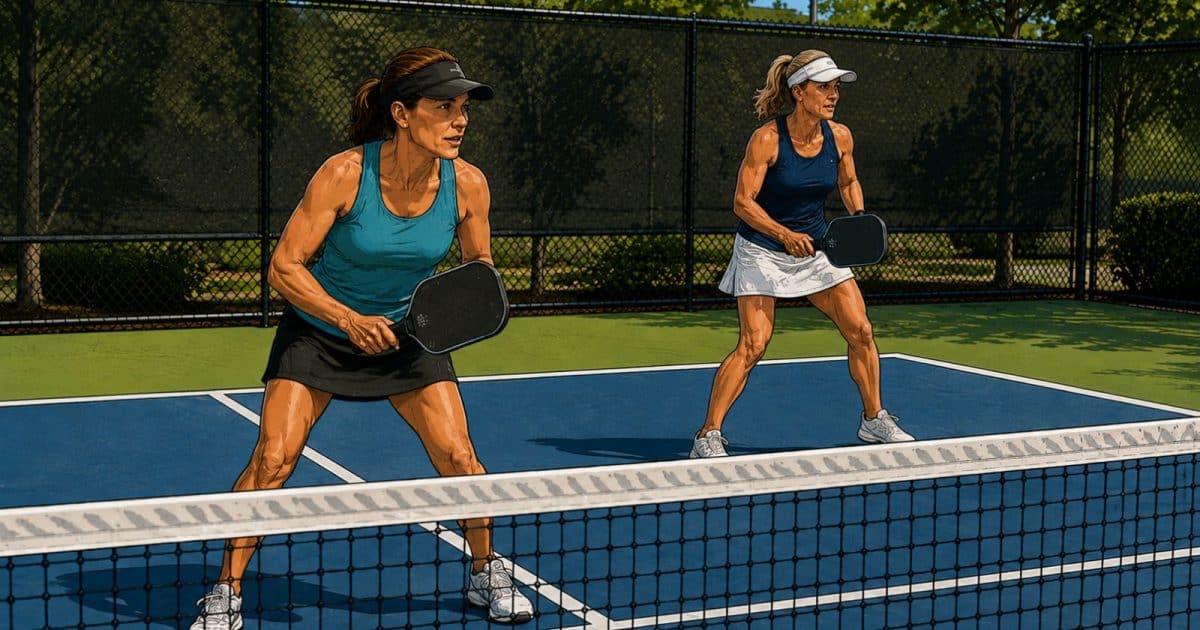
Stay tall enough to move. A deep defensive crouch feels safe and makes it almost impossible to push off forward. A staggered athletic stance with one foot slightly ahead moves better in every direction. Our piece on footwork for pickleball covers the drills that build this.
When should you attack from the midcourt instead?
When the ball comes up. Modern pros treat the transition zone as an opportunity rather than pure survival, and the trigger is height. A floating dink or a soft third that sits above the net gives you a free chance to speed up while your opponents are still expecting a reset.
The mistake is manufacturing offense from a ball that does not offer it. Attacking a ball below net height from 12 feet back is how rallies end badly.
Frequently asked questions
Is the transition zone the same as no man’s land? Yes, they are two names for the same midcourt strip. No man’s land is the older tennis term.
How deep is the transition zone? About 15 feet, from the baseline to the kitchen line on your side. The court half is 22 feet and the kitchen takes 7 of those.
Should you ever stop in the transition zone? Only to split step. Standing still in the middle of it as a position is how points get lost.
What is the difference between a drop and a reset? A third shot drop is hit from the baseline to start your approach. A reset is hit from the midcourt to survive the approach. Same soft touch, different starting point.
Why do I keep getting hit at my feet? Because good opponents aim there. The fix is getting low with your legs and keeping the paddle out in front so the ball meets it in front of your body rather than beside it.
Should I back up if the ball is deep? Rarely. Backing up in the transition zone is the most common cause of falls in this sport. Take it out of the air or turn and run rather than backpedaling.
How do I drill this alone? Feed yourself balls off a wall from about 12 feet back and practice absorbing pace with a still paddle face. A ball machine set to a low medium feed works even better.
Do beginners need to worry about this? Once you are consistently getting to the kitchen line, yes. Below that, serve return and third shot consistency pay off faster.
The transition zone is where recreational players separate from tournament players, and it responds to drilling more than almost any other part of the game. A coach can diagnose your footwork in one session, and our pickleball coaches directory lists instructors by area if you want eyes on it.
Written by the Pickler Junction Team.