Why Is the Non-Volley Zone Called the Kitchen in Pickleball
Quick Answer: No one knows for certain why the non-volley zone is called the kitchen in pickleball, but the most popular explanation is that the term was borrowed from shuffleboard, where the “kitchen” is a penalty area you want to avoid. There is no official origin story in the rulebook. The name simply stuck, and today “kitchen” is the universal nickname for the 7-foot no-volley area on each side of the net.
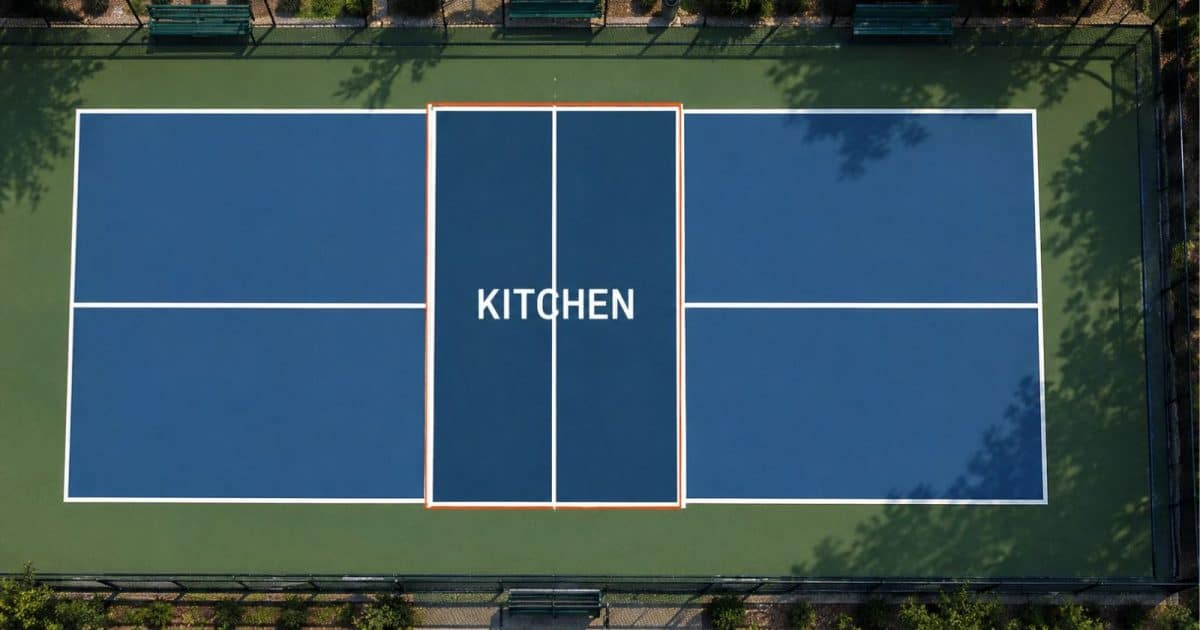
The kitchen, formally called the non-volley zone (NVZ), is the 7-foot area on both sides of the net where you cannot hit the ball out of the air. This article is about the name itself, not the rules, which we cover separately.
Why do players call it the kitchen?
Because the nickname caught on, though its exact origin is uncertain. There is no official reason recorded in the pickleball rulebook, so what you will hear are popular theories rather than documented fact.
The leading explanations:
- Borrowed from shuffleboard. In shuffleboard, the “kitchen” is a scoring area you want to avoid, since landing there costs you points. Since several early pickleball players knew shuffleboard, many believe the term carried over.
- The phrase “if you can’t stand the heat, get out of the kitchen.” Some players link it to the idea of a zone you should stay out of.
- It simply stuck. Like a lot of slang, it spread informally and became standard.
Honestly, the shuffleboard connection is the explanation I find most convincing, but I always tell people to hold it loosely. It is folklore, not a documented fact.
What is the kitchen actually called in the rules?
The non-volley zone, or NVZ. The official rulebook uses “non-volley zone.” “Kitchen” is the universal nickname, but you will not find it as the formal term.
A few facts about the zone itself:
- It extends 7 feet from the net on both sides.
- It spans the full 20-foot width of the court.
- You cannot volley (hit the ball in the air) while standing in or touching it.
- You can stand in it to play a ball that has already bounced.
So the name is casual, but the zone is one of the most important parts of the game. For the rules, see our guides on whether you can step in the kitchen and the momentum rule.
Does the name matter for how you play?
Not really, but knowing the lingo helps you fit in. The name is trivia, but understanding the zone it refers to is essential. New players who grasp the kitchen early tend to improve faster, because so much of pickleball strategy happens right at that line.
What matters more than the name:
- Where the line is, so you do not fault on a volley.
- How to use the zone to hit dinks and resets.
- The soft game played at the kitchen line, which wins points.
If you want to get better at the part of the court the kitchen refers to, our guides on the third shot drop and beginner drills will help.
Frequently asked questions
Why is it called the kitchen in pickleball? The exact reason is not documented, but the most popular theory is that it was borrowed from shuffleboard, where the “kitchen” is a penalty area to avoid. The nickname simply caught on.
What is the kitchen officially called? The non-volley zone, or NVZ. “Kitchen” is the universal nickname, but the rulebook uses “non-volley zone.”
How big is the kitchen? It extends 7 feet from the net on each side and spans the full 20-foot width of the court.
Is the kitchen origin in the official rules? No. There is no official explanation in the rulebook. The theories you hear are folklore, not documented history.
Can you ever stand in the kitchen? Yes. You can stand in or enter the kitchen to play a ball that has bounced. You just cannot volley (hit it in the air) while touching the zone or its line.
Does shuffleboard really use the term kitchen? Yes, shuffleboard has a “kitchen” area that penalizes you, which is the most cited source for the pickleball nickname.
The name is fun trivia, but the zone is where matches are won. Learn to use it with our guide to the third shot drop, and if you want hands-on help with the soft game, browse our coaches and clinics directory.
Written by the Pickler Junction Team.