Does Virtual Physical Therapy Work for Pickleball Injuries?
Quick Answer: For many pickleball injuries, yes. Virtual physical therapy works well for exercise progression, movement coaching, and the follow-up visits that make up most of a rehab course. It works poorly where hands-on assessment or manual treatment is the point. The honest split is diagnosis in person, rehab often remote.
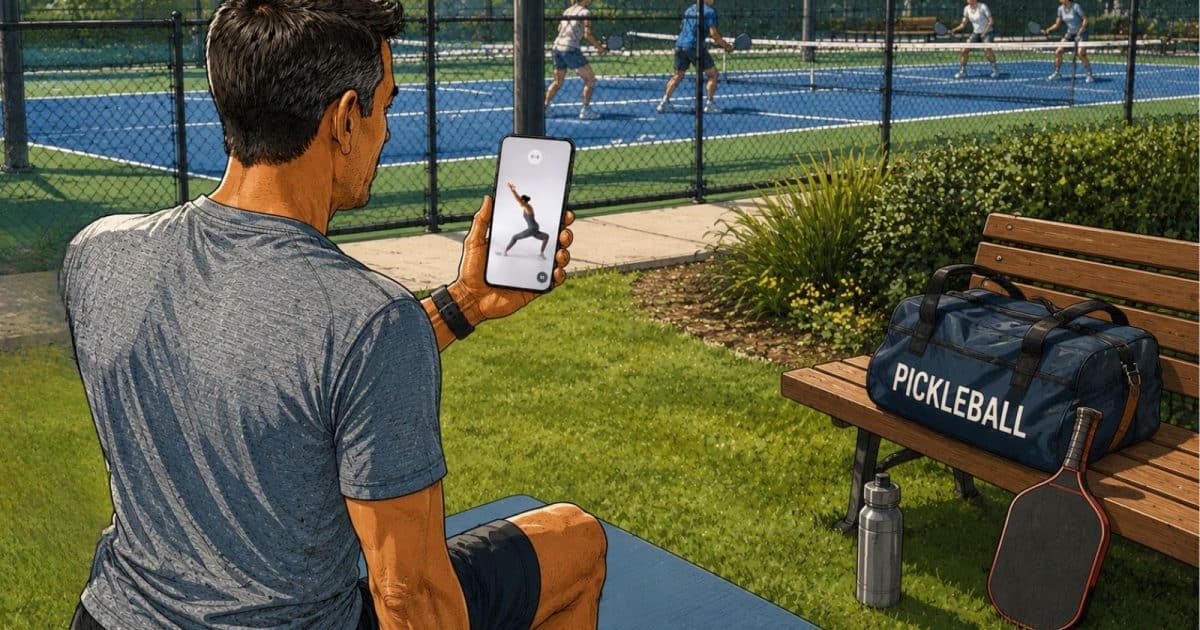
Virtual physical therapy is rehabilitation delivered by video call, where the therapist assesses movement, prescribes exercises, and adjusts the program without being in the room.
What does virtual PT do well?
More than skeptics expect, because most of physical therapy is coaching rather than touching.
Exercise prescription and progression. The core of nearly every rehab course. A therapist can watch you do a movement on camera and correct it.
Movement assessment. Squat quality, single-leg balance, gait, how you land. All visible on video, and often better on video because you can record and review.
Follow-up visits. The bulk of any course of care. Checking progress, advancing the program, troubleshooting pain. These translate almost perfectly.
Load management. How much to play, how fast to return, what to cut. That is a conversation, and conversations work on video.
Where does it fall down?
Where hands are the treatment, and where the diagnosis is uncertain.
Manual therapy. Joint mobilization, soft tissue work, dry needling. None of it happens remotely.
Uncertain diagnosis. If nobody knows what is wrong, hands-on testing narrows it in ways video cannot. Special tests for a meniscus or a rotator cuff require someone moving your joint.
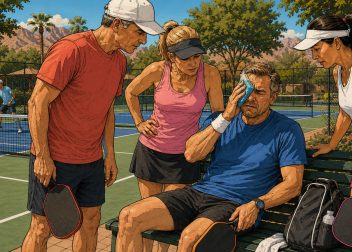
Red flags. Anything with rapid swelling, locking, giving way, or an injury with a distinct pop needs in-person assessment.
Very early acute injury. The first days after an obvious injury are usually better handled in person.
Which pickleball injuries suit it?
The sport’s injury profile is unusually well suited to remote rehab, which is why this is worth considering.
Sprains and strains dominate pickleball injuries, and the lower leg, ankle and knee lead the body-part list. Most of those are managed with progressive loading, which is exactly what virtual PT delivers well.
Overuse problems are the other strong fit. Pickleball elbow, shoulder irritation, plantar fasciitis and general achiness respond to programmed strengthening and load adjustment, and they rarely need hands-on work. See pickleball elbow, pickleball with plantar fasciitis and pickleball injury prevention.
What makes a virtual session actually work?
Practical things that make more difference than the technology.
1. Set the camera to show your whole body. A therapist who can only see your face cannot assess anything.
2. Have space to move. Eight feet of clear floor.
3. Have your own equipment ready. A band, a chair, a wall.
4. Record yourself doing the movement beforehand if the problem only shows up during play. That video is often more useful than the live session.
5. Be specific about what hurts and when. Remote care depends more on your description than in-person care does.
Is it cheaper?
Frequently, and coverage varies enormously by plan and by state.
The cost question is worth asking your insurer directly rather than assuming, because telehealth coverage for physical therapy has changed repeatedly and differs between plans. What is consistent is that virtual visits remove travel time, which for a twice-weekly course is a real saving even when the visit price is the same.
FAQ
Does virtual physical therapy work for pickleball injuries?
For most of them, yes. Exercise progression, movement assessment and follow-up visits all translate well to video. Manual therapy and uncertain diagnoses do not.
When should I see someone in person instead?
Rapid swelling, a joint locking or giving way, an injury with a distinct pop, or any situation where nobody is sure what is wrong.
Can a therapist diagnose over video?
Sometimes, for straightforward presentations. Hands-on special tests are still the better tool where the diagnosis is unclear.
Is virtual PT covered by insurance?
Coverage varies by plan and by state and has changed repeatedly. Ask your insurer directly rather than assuming either way.
What do I need for a virtual session?
A camera position that shows your whole body, about eight feet of clear space, and whatever equipment the therapist asked you to have.
Which pickleball injuries suit virtual care best?
Overuse problems and the sprains and strains that dominate the sport’s injury data, since both are managed mainly through progressive loading.
Can I do virtual PT after surgery?
Often, for later-stage rehab. Early post-operative care usually involves hands-on work and in-person assessment. That is a decision for your surgeon.
Is it as good as in-person?
For the coaching half of physical therapy, comparable. For the hands-on half, no, because that half cannot happen remotely.
If you want to compare remote and in-person options, our directory lists physicians and physical therapists by location.
*This article is general information, not medical advice. Talk with your doctor about your own health before starting a new sport.
Written by the Pickler Junction Team.