Why Am I So Sore After Playing Pickleball?
Quick Answer: Soreness after pickleball comes from sudden stops, lateral lunges, and long dinking rallies that load muscles in unfamiliar ways. Mild soreness that shows up the next day and eases with light movement is a normal response to new or increased activity, according to Mayo Clinic. Sharp pain, swelling, or soreness that does not improve is different.
Why pickleball makes you so sore
Because of the movements, not the intensity.
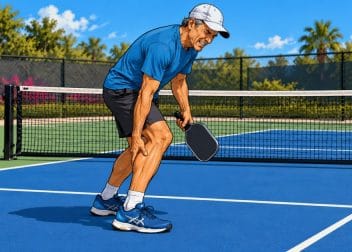
Walking and jogging load the body forward at a steady rate. Pickleball asks for stops, direction changes, lunges, and pushes off from a dead stop, often several times in one rally. Muscles that lengthen under tension while doing this kind of work, rather than simply shortening, tend to feel it the most the day after.
The kitchen line adds its own version. Holding a half-crouch for long dinking exchanges is sustained work for the quads and hips without any obvious effort attached to it, which is why players are surprised to be sore after a session that felt easy.
Mayo Clinic physical therapist Maggie Bryant points to a simple root cause behind most of this: ramping into a new activity too fast. Going from an occasional match to several sessions a week in a short span is a common trigger for soreness, regardless of how fit someone already is.
Where it usually shows up
The pattern is consistent enough to be reassuring.
- Quads and glutes, from the crouching and the pushing off.
- Calves, from the split steps and constant small hops.
- Hip flexors and adductors, from the lateral lunges.
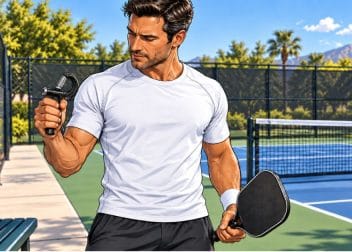
- Forearm and shoulder, particularly in players new to a paddle sport.
- Lower back, usually from bending rather than from the swing.
Soreness in those spots, arriving the day after and easing within a few days, matches what Mayo Clinic describes as a typical response to unfamiliar or increased exercise, not a sign of injury.
When soreness is a problem
Most soreness is ordinary, but a few signals mean it is time to check in with a doctor.
Normal: a general ache in a muscle, usually on both sides, that shows up the next day and eases as you keep moving.
Contact a doctor: pain paired with redness and swelling around the sore muscle, pain that does not improve with rest and gentle movement, or muscle pain that starts or gets worse after beginning or increasing the dose of a medication such as a statin. Mayo Clinic lists all three as reasons to schedule an appointment rather than wait it out.
Seek care right away: muscle pain along with trouble breathing or dizziness, a high fever with a stiff neck, or extreme weakness that interferes with routine daily activities. Mayo Clinic classifies these as emergency signs, not ordinary soreness.
Pain in one specific spot rather than across a muscle, or an injury that came with a distinct pop, also falls outside normal soreness. The guide to pickleball injury prevention covers those cases in more detail.
Reducing it
Most of the answer is about how much and how fast you play, not what you do afterward.
- Increase gradually. Mayo Clinic’s Maggie Bryant compares it to building up any new activity in small steps, playing a short session before working toward a full match the way someone might walk a mile before trying to run five. Jumping straight into several long sessions a week is a common cause of both soreness and overuse injury.
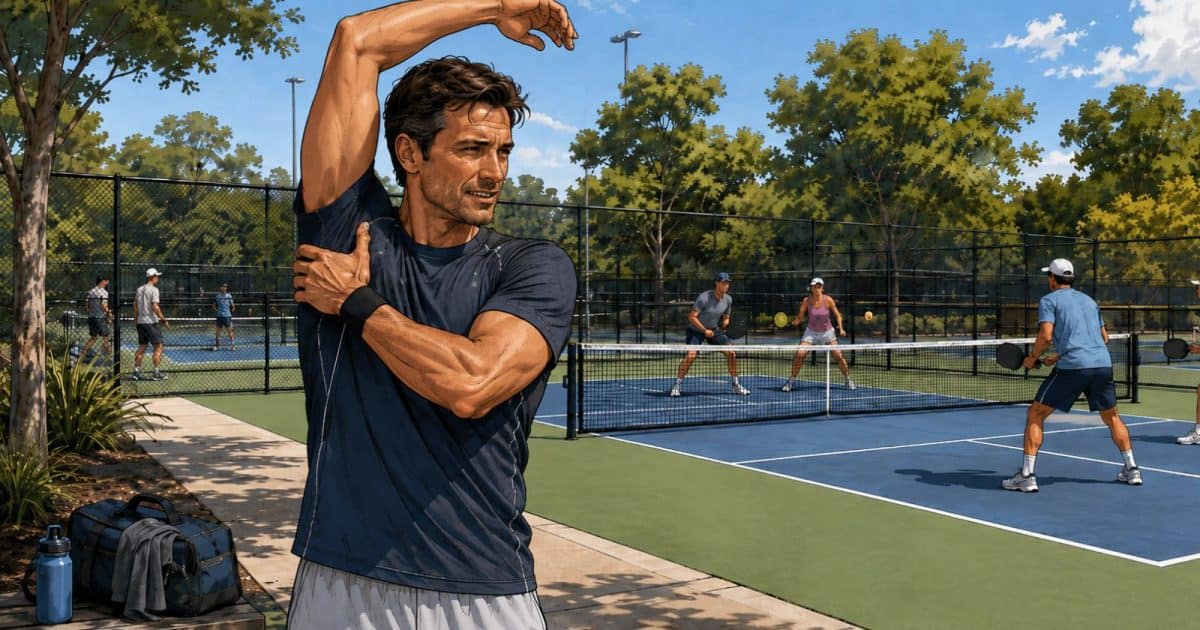
- Warm up properly. A few minutes of movement before you play changes how the first part of the session feels. See the best pickleball warm-up routine to prevent injury.
- Keep moving the next day. Mayo Clinic notes that light activity, such as a walk or gentle stretching, can meaningfully ease soreness, while complete rest tends to leave muscles stiffer.
- Do some off-court strength work. Legs that are used to the load get less sore. See the best off-court workouts for pickleball players.
- Use ice or heat appropriately. Mayo Clinic advises ice for acute pain with visible swelling, and heat for a muscle strain, since heat improves blood flow to the area.
- Eat and sleep normally. Recovery depends more on rest and food than on any single product. See what to eat after playing pickleball for more on that side of it.
Soreness does not mean it is working
No, and this is worth being clear about.
Soreness indicates unfamiliar loading, not effective training. A beginner is sore because everything is new. An experienced player is sore because a session or a week asked more of the body than usual. Neither is a measure of progress, and chasing soreness on purpose raises the odds of an overuse injury rather than proving a workout worked.
The absence of soreness after a hard session does not mean the time on the court was wasted either. See best stretches after playing pickleball for a simple cooldown to add regardless of how sore a session leaves you.
FAQ
Is it normal to be sore after playing pickleball?
Yes, particularly for new players or anyone who has recently increased how often they play. Mayo Clinic describes soreness that appears the next day and eases with light movement as a normal response to unfamiliar or increased activity.
How long should soreness last?
Mild soreness typically fades within a few days as movement continues. Pain that does not improve, or gets worse instead of better, is a reason to contact a doctor rather than wait, according to Mayo Clinic.
Why am I sore when the game felt easy?
Long dinking exchanges hold a player in a half-crouch, which is sustained muscle work for the quads and hips even when the pace of the rally feels relaxed.
Should I rest completely or keep playing?
Mayo Clinic physical therapist Maggie Bryant recommends gentle movement, such as a walk or light stretching, over complete rest. Playing again at reduced volume is a reasonable next step rather than jumping back into a full session.
What is the difference between normal soreness and something that needs medical care?
Soreness is a general ache across a muscle, usually on both sides, that eases over a few days. Mayo Clinic advises seeing a doctor for pain paired with redness and swelling, pain that will not improve, or any muscle pain that starts after beginning or increasing a medication dose.
Why are my forearms sore after pickleball?
This is common in players new to a paddle sport and is often related to grip. A grip that is too small can lead to squeezing the paddle harder than necessary through a rally.
Could soreness be linked to a medication I am taking?
It can be. Mayo Clinic notes that some medications, including statins, list muscle pain as a side effect, and recommends talking with a doctor if soreness begins or worsens after starting or increasing a dose.
If soreness keeps turning into something sharper or more localized, the Pickler Junction directory lists physicians and physical therapists who work with racket sport players. This article is general information, not medical advice.
Written by the Pickler Junction Team.