Pickleball Elbow: What It Is, Why It Happens, and How to Treat It
Quick Answer: Pickleball elbow is the common name for lateral epicondylitis, the same condition as tennis elbow. It is an overuse injury where the forearm tendons that attach to the outer elbow develop tiny tears, causing pain, tenderness, and a weaker grip. It usually comes from repetitive swinging or overuse, and is treated with rest, technique fixes, and time.
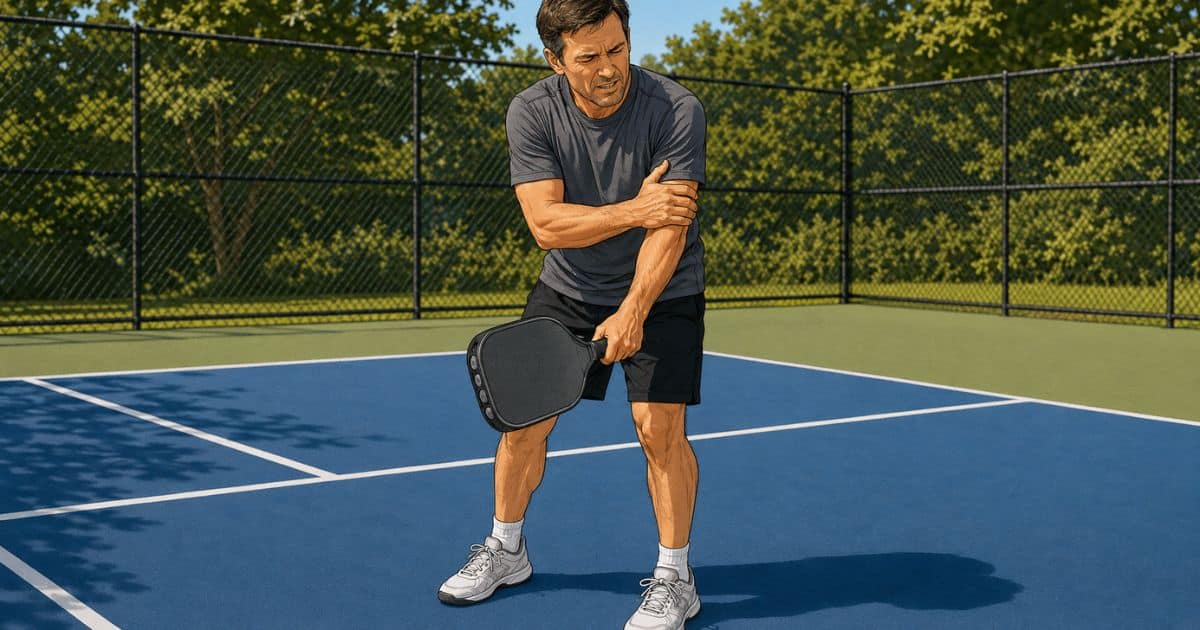
Pickleball elbow is an irritation of the tendons on the outside of your elbow, medically called lateral epicondylitis. It is one of the most common pickleball injuries, especially among players over 40, and the good news is that most cases improve with the right care.
What is pickleball elbow?
It is lateral epicondylitis, the same injury as tennis elbow. The forearm extensor muscles, which lift your wrist and hand, attach to a bony bump on the outer elbow called the lateral epicondyle. Overuse causes tiny tears where those tendons attach, leading to pain and inflammation.
The signs to know:
- Pain, burning, or tenderness on the outside of the elbow
- Pain that radiates down the forearm
- A weaker grip, with trouble holding objects like a coffee cup
- Pain with wrist extension, such as during a serve or backhand
- A gradual onset, usually without a single injury moment
Because the onset is slow, many players ignore it until it interferes with daily tasks. Catching it early makes treatment much easier.
Why does pickleball cause elbow pain?
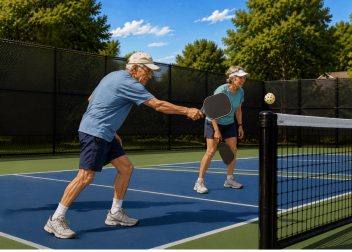
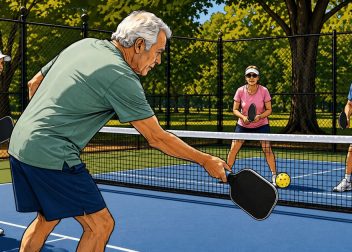
Repetitive strain, often made worse by technique and equipment. The repeated swinging in pickleball, especially backhands and punchy volleys, loads the forearm tendons over and over. A few specific factors raise the risk.
Common causes:
- Doing too much too soon. Harvard Health notes that players who go from zero to hours of daily play quickly are at higher risk, because their bodies are not ready for the load.
- Poor stroke mechanics. Hitting late or relying on the wrist and arm instead of the body strains the tendons.
- The wrong paddle or grip size. A heavy paddle or ill-fitting grip adds strain.
- A stiff, tight grip on contact, especially on volleys and drives.
- Skipping warm-ups for the wrist and forearm.
It is worth noting the solid ball and rigid paddle transmit more shock to the arm than a flexible tennis setup, which is one reason longtime tennis players sometimes develop elbow trouble only after switching to pickleball.
How do you treat and prevent pickleball elbow?
Rest it, fix the cause, and rebuild strength. Most cases respond to conservative care, but the key is addressing why it happened, not just calming the symptoms. As USA Pickleball puts it, do not just ice and rest, fix the mechanics.
Common treatment steps:
- Rest and reduce play to let the tendon settle. Mild cases can improve in a couple of weeks, while moderate ones take 6 to 12 weeks.
- Ice the area to ease pain and inflammation.
- Over-the-counter anti-inflammatories, if appropriate for you.
- A counterforce brace or strap to offload the tendon during activity.
- Targeted strengthening, especially eccentric forearm exercises, often guided by a physical therapist.
- Technique and equipment fixes, like a coaching session and a properly sized paddle.
To prevent it: warm up your wrists and arms, strengthen your forearm, use a paddle that fits your grip, and build up play time gradually. If pain persists beyond a few weeks, worsens, or limits daily activities, see a physical therapist or sports medicine provider. Left untreated, it can become a stubborn, chronic problem.
Frequently asked questions
What is pickleball elbow? It is lateral epicondylitis, the same as tennis elbow, an overuse injury of the forearm tendons that attach to the outer elbow, causing pain, tenderness, and a weaker grip.
How do you treat pickleball elbow? With rest, ice, anti-inflammatories, a counterforce strap, and targeted forearm strengthening, plus fixing the technique or equipment that caused it. Persistent cases should see a physical therapist or doctor.
How long does pickleball elbow take to heal? Mild cases can improve in a couple of weeks, moderate cases in 6 to 12 weeks, and severe or untreated cases can take months to a year. Early care speeds recovery.
Can I keep playing with pickleball elbow? Playing through it often makes it worse and prolongs recovery. Rest and modified activity, guided by a professional, usually lead to a faster, more complete recovery.
What causes pickleball elbow? Repetitive swinging plus contributing factors like poor mechanics, an ill-fitting or heavy paddle, a too-tight grip, ramping up too fast, and skipping warm-ups.
How do I prevent it? Warm up the wrist and forearm, strengthen the forearm, use a properly sized paddle, fix your technique with a coach, and increase play time gradually.
Catch it early and pickleball elbow is very manageable. Set yourself up to avoid it with a proper warm-up and off-court strengthening, and for pain that lingers, a physical therapist or sports medicine provider can build a recovery plan.
This article is general information, not medical advice. For persistent or severe elbow pain, see a healthcare professional.
Written by the Pickler Junction Team.