How to Prevent Achilles Injuries in Pickleball
Quick Answer: To prevent Achilles injuries in pickleball, warm up before the first point, strengthen your calves off the court, wear court-specific shoes, and stop playing at the first sign of heel or calf tightness. According to Foot & Ankle International research, Achilles tendon rupture is a recognized injury pattern in pickleball, and most cases require surgical repair.
The Achilles tendon connects your calf muscles to your heel bone, and it takes the load every time you push off. Pickleball asks for hundreds of those pushes per session, most of them sideways and most of them unplanned.
How common are Achilles injuries in pickleball?
Orthopedic surgeons increasingly recognize the pattern. A 2024 short report in Foot & Ankle International by Kingston and colleagues found that Achilles tendon rupture is a recurring diagnosis among pickleball-related foot and ankle injuries, and that most of the ruptures in that sample were treated surgically. A separate 2024 review in Cureus by Opara and colleagues found Achilles ruptures made up 12.0 percent of pickleball and paddleball lower-extremity injuries, with 88.1 percent of those treated surgically. A roundup of the most common pickleball injuries covers where Achilles ruptures rank among the rest.
A 2026 systematic review in Cureus by Okhovat and colleagues found that pickleball players with lower-extremity injuries were primarily aged 50 and older, in line with the sport’s older average player base.
Why does this sport cause it?
Three factors stack together, and it is the combination that causes the damage.
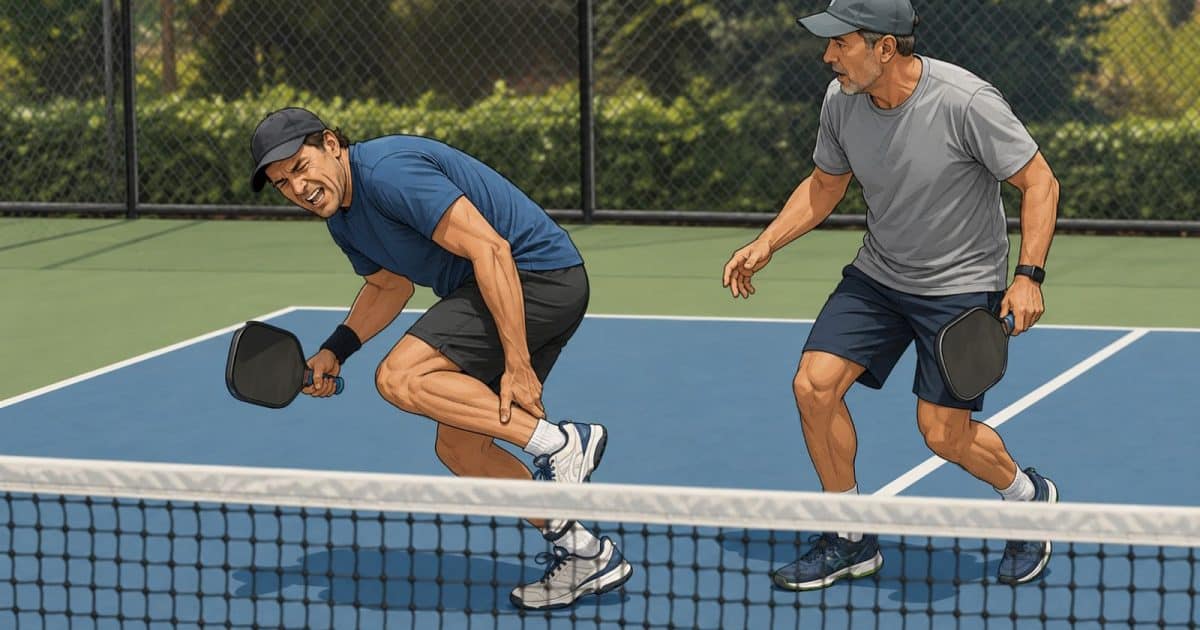
The first is an explosive push-off from a stationary start. You plant at the kitchen line, then push hard and sideways to reach a ball. The Mayo Clinic lists that kind of sudden, forceful load, along with jumping and sharp changes of direction, as the usual trigger for an Achilles rupture.
The second is age-related tendon change. Tendons grow stiffer and less elastic over the decades, and a section of the Achilles has a naturally limited blood supply. That helps explain why pickleball’s Achilles injuries concentrate in an older population, as the Cureus systematic review above found.
The third is a deconditioning gap. According to the Sports & Fitness Industry Association, US pickleball participation grew from 4.2 million players in 2020 to 24.3 million in 2025, and much of that growth is players in their fifties, sixties, and beyond moving from years of low activity into several sessions a week. The tendon does not adapt as fast as the enthusiasm does.
What are the warning signs?
Most ruptures do not appear out of nowhere. Weeks of nagging discomfort often come first.
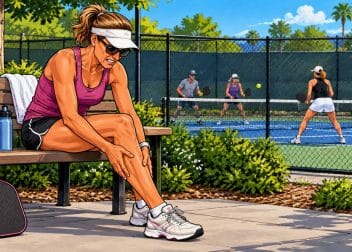
- Morning stiffness in the heel or lower calf that eases after a few minutes of walking.
- Tenderness when you press the tendon a few inches above the heel.
- Aching after play that feels worse the next day than it did during the session.
- Thickening you can feel in one tendon compared with the other.
According to the Mayo Clinic, most people who suffer a full rupture hear or feel a pop at the moment it happens, followed by sudden weakness pushing off the foot. Some people feel less pain than expected, which can lead them to delay care. That combination needs urgent medical care, not ice and a wait. A guide to physical therapy for pickleball injuries covers what treatment and rehab typically involve.
How do you lower your risk?
A handful of habits account for most of the protection you can control.
Warm up before the first point, not after the second game. Cold tendons are stiffer, so the opening minutes of play deserve real attention. A warm-up routine with easy movement and dynamic stretches takes about five minutes and is worth the time.
Build calf strength off the court. Heel raises done through a full range of motion, both with a straight leg and a bent knee, load different parts of the calf and the Achilles tendon. Physical therapists commonly build this kind of loading into tendon rehab and prevention programs.
Wear court shoes, and replace them on schedule. Running shoes are built for forward motion and offer little lateral support, and worn-out shoes change how your foot loads with every push-off. A guide to what shoes to wear for pickleball covers the differences.
Ramp up your playing volume gradually. Adding one session a week is a change a tendon can generally absorb. Jumping from one day to five inside a month is not.
The classic setup for a rupture is a first outing after a winter off, a second game of the day, no warm-up, on a cold outdoor court. A five-minute warm-up is the cheaper option every time.
Do certain medications matter?
Some do. According to the Mayo Clinic, fluoroquinolone antibiotics such as ciprofloxacin and levofloxacin raise the risk of Achilles tendon rupture, and corticosteroid injections near a tendon can weaken nearby tissue as well. If you take one of these medications regularly and also play pickleball, that combination is worth a direct conversation with your doctor or pharmacist rather than something to judge on your own.
Frequently asked questions
What does an Achilles rupture feel like? According to the Mayo Clinic, most people hear or feel a pop at the moment of injury, followed by sudden weakness pushing off the foot. Some people feel less pain than expected, which can lead them to delay care.
Can you walk with a ruptured Achilles? Some people can still walk, awkwardly, which is part of why the injury gets missed at first. If you cannot rise onto your toes on the injured side, get it evaluated right away.
Does stretching prevent Achilles injuries? Stretching alone has not been shown to prevent Achilles injuries. Building calf strength and warming up before play matter more for tendon health.
Are heel lifts or braces useful? Some clinicians use heel lifts during specific phases of rehabilitation after a rupture. Whether one is right for you is a question for a clinician who has examined your tendon.
How long is recovery from a rupture? Recovery from a rupture typically takes many months, and surgical repair is common in this age group, according to the Cureus reviews cited above.
Should you stop playing if your heel is sore? Persistent heel or lower calf soreness that keeps coming back deserves an evaluation before you keep loading it. Playing through tendon pain is how the serious version of this injury tends to arrive.
Does court surface matter? Harder, grippier surfaces increase the load on push-off, and grit on outdoor courts is a separate slipping hazard on top of that.
Is this risk a reason to stop playing after 50? No. The broader health benefits of the sport are well documented, as the article on pickleball injury prevention discusses. Preparation is what changes the odds, not age alone.
A few minutes of warm-up and two sets of calf raises a week cost far less than a month on crutches. If an Achilles has been aching, do not wait for the pop to find out how serious it is. The Pickler Junction physicians and therapists directory can help find a clinician nearby who treats paddle sport injuries. This article is general information, not medical advice.
Written by the Pickler Junction Team.