The Best Pickleball Warm-Up Routine to Prevent Injury
Quick Answer: The best pickleball warm-up takes 5 to 10 minutes and combines light cardio with dynamic stretches and a few practice shots. Start with brisk walking or marching, then move through leg swings, arm circles, side shuffles, and gentle lunges, and finish with easy dinks and serves. Warming up raises your heart rate, loosens joints, and primes muscles, which helps prevent the strains, sprains, and falls that sideline players.
A warm-up is light, progressive movement that prepares your body before you play. Pickleball’s quick starts, stops, and reaches can strain cold muscles, so a short, dynamic warm-up is one of the simplest ways to stay healthy on the court.
Why warm up before pickleball?
Because cold muscles and joints get hurt. Pickleball involves sudden lateral movements, lunges, and overhead swings, and doing those without preparation is a recipe for tweaks and tears. Common pickleball injuries include muscle strains, ligament sprains, and falls, many of which a proper warm-up helps prevent.
What warming up does:
- Raises your heart rate and blood flow to muscles
- Loosens joints through their range of motion
- Activates the muscles you are about to use
- Sharpens coordination and reaction time before real points
- Lowers injury risk, especially for calves, Achilles, knees, and shoulders
Here is the honest truth I see too often: players walk straight onto the court and into a competitive game cold, then pull a calf on the first hard push-off. Five minutes of warm-up prevents most of that.
What is a good pickleball warm-up routine?
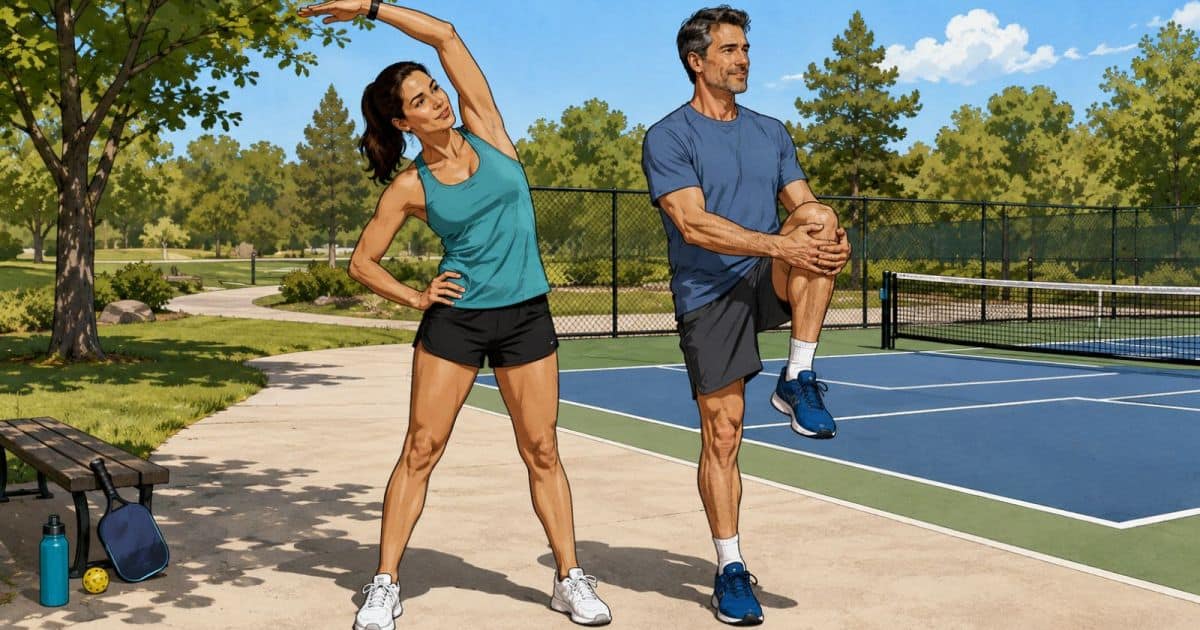
A short sequence of light cardio, dynamic stretches, and practice shots. Keep it dynamic (moving) rather than static (holding) before play, since dynamic movement preps muscles better for activity. Save the long holds for afterward.
A 5 to 10 minute routine:
- Light cardio (2 minutes): brisk walking, marching, or easy jogging in place to raise your heart rate.
- Leg swings (forward and side): 10 each leg, to loosen hips.
- Arm circles and shoulder rolls: 10 each direction, for the shoulders you will use overhead.
- Side shuffles: a few lengths, to prep lateral movement.
- Gentle lunges with a slight twist: 5 each side, for legs and torso.
- Ankle and wrist circles: 10 each, for the joints under the most load.
- Easy on-court shots: a few minutes of soft dinks, then gradually firmer groundstrokes and serves.
Build intensity gradually, ending close to game pace. This mirrors the dynamic warm-up clinicians recommend for racket sports.
How does warming up fit your overall injury prevention?
It is one piece, alongside conditioning, cooling down, and not overplaying. A warm-up protects you in the moment, but lasting injury prevention comes from a few habits working together.
The full picture:
- Warm up before every session, as above.
- Condition off the court to build the strength and agility play demands. See our off-court workouts guide.
- Cool down and stretch after playing, covered in our post-play stretches guide.
- Avoid overplaying, since fatigue raises injury and fall risk. Our guide on how often to play helps.
- Stop when tired or sore, rather than pushing through pain.
If you have a nagging issue or a history of injury, a physical therapist can build a warm-up and prevention plan around you.
Frequently asked questions
How should I warm up for pickleball? Spend 5 to 10 minutes on light cardio, dynamic stretches like leg swings and side shuffles, and a few easy practice shots, building gradually to game pace.
Should I stretch before or after pickleball? Do dynamic (moving) stretches before play to prepare your muscles, and save static (holding) stretches for after, when your muscles are warm. See our post-play stretches.
How long should a pickleball warm-up be? About 5 to 10 minutes is plenty for most players. Older players or those returning from injury may want a little longer.
What injuries does warming up prevent? It helps reduce strains and sprains, particularly to the calves, Achilles, knees, and shoulders, and lowers the chance of a fall from cold, unprepared muscles.
Do I really need to warm up for a casual game? Yes. Even casual play involves sudden movements that can strain cold muscles. A quick warm-up is worth it regardless of how relaxed the game feels.
What is the most important part of the warm-up? Dynamic lower-body movement, like leg swings, lunges, and side shuffles, since the legs absorb the quick starts, stops, and lateral steps that cause many injuries.
A few minutes up front saves you weeks on the sideline. Round out your routine with off-court conditioning and a proper cool-down. For a plan built around your body or an old injury, reach out to a physical therapist.
For the bigger picture, start with why pickleball is genuinely good exercise.
Written by the Pickler Junction Team.
This article is general information, not medical advice. Talk with your doctor or a physical therapist about your own health.