How to Recover Faster Between Pickleball Games
Quick Answer: Use the break instead of just sitting through it. Sip fluids as soon as you come off the court, let your breathing settle, eat something small and familiar only if the session is long, keep stretching gentle, and get back on your feet for a minute or two before your name is called. Settle, replace, restart.
You finish a tough game, walk off the court, sit down, take a few drinks of water, and wait for your name to be called again.
Then the next game starts and somehow you feel worse than you did when the last one ended.
Your legs feel heavy. Your first few shots are late. You are not moving well, and it takes half the game before your body seems ready to play again.
Recovering between games is not just about resting. In fact, sitting still for too long can leave some players feeling stiff when they return to the court. The goal is to use the break to replace what you have lost, let your body settle after the previous game, and then get ready to move again.
Start Recovering as Soon as the Game Ends
You do not need a complicated recovery routine. You do need to pay attention to the first few minutes after you leave the court.
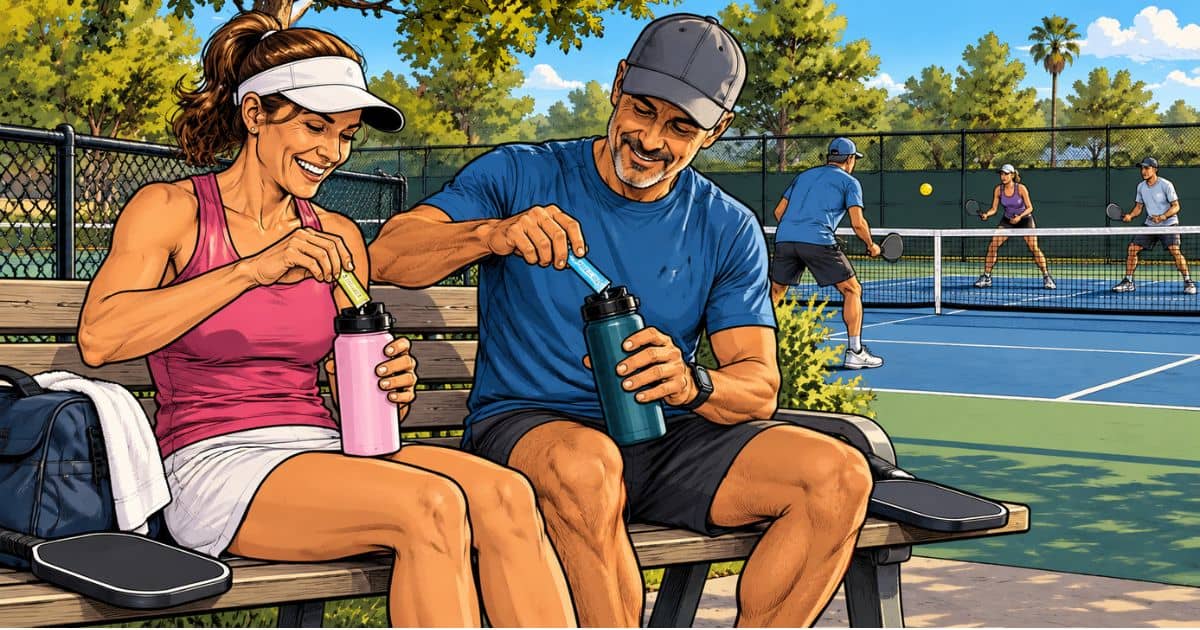
Start with fluids, especially if you have been sweating heavily or playing in warm conditions. Do not wait until you are noticeably thirsty and then gulp a huge amount right before returning to play. Sip during the break so you are gradually replacing fluid.
If you are playing for a long stretch, sweating significantly, or exercising in the heat, an electrolyte drink may also be useful. Sweat contains water and sodium, but individual fluid and electrolyte needs vary. The comparison of sports drinks and water for pickleball covers when the electrolytes are worth it.
The important point is that between-game hydration works best as part of what you have been doing throughout the session. It is difficult to make up for a large fluid deficit during one short break, and drinking excessively can create problems of its own. The Cleveland Clinic puts the ceiling at roughly 32 ounces of water in an hour and advises drinking when you are thirsty rather than forcing large volumes in a short period.
Do Not Automatically Collapse Into a Chair
Sitting down feels good after a hard game, and there is nothing wrong with taking a seat.
The problem is staying there until someone calls you back onto the court.
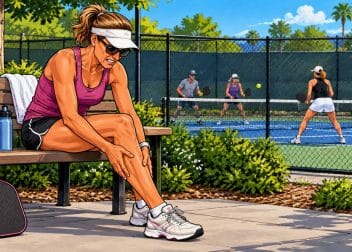
After several minutes of complete inactivity, particularly if you have cooled down, those first movements of the next game may feel surprisingly stiff.
Instead, use a combination of rest and light movement.
Sit if you need to. Let your breathing settle. Then stand up and walk around for a minute or two before you return to the court.
If you tend to get stiff between games, gentle movement may leave you feeling more prepared than spending the entire break in a chair.
Give Your Heart Rate a Chance to Come Down
The opposite mistake is never actually recovering.
Some players finish a hard game and immediately start practicing serves, hitting against a wall, or pacing around as though stopping for three minutes will somehow ruin their game.
A break should still be a break.
If you are breathing hard, give yourself time to settle. Slow your breathing and let the intensity come down before worrying about the next game.
You are trying to find a middle ground: enough rest to recover, but not so much inactivity that your body feels as though the session has ended.
Eat According to How Long You Are Playing
If you are playing for an hour and then going home, you probably do not need to turn every break into a snack break.
If you are playing for several hours, competing in multiple matches, or have not eaten for quite a while, some easily digested carbohydrate between games may help support energy intake for the rest of the session.
A banana, pretzels, crackers, applesauce, a small granola bar, or another familiar snack may work well. The best choice is something you already know sits comfortably in your stomach. The guide to snacks for a pickleball tournament has a longer list.
Between games is usually not the time for a large meal or something heavy, greasy, or unfamiliar.
You want enough food to support the rest of your session, not enough to make you feel as though you need a nap.
Save the Long Stretching for Later
If something feels tight, you may instinctively start doing long, deep stretches while you wait.
That is usually not what you need immediately before another game.
Instead, use gentle movement to take your joints through comfortable ranges of motion. A few easy leg swings, ankle movements, shoulder circles, or controlled torso rotations can help you feel mobile without turning your break into a stretching session. The dynamic stretches for pickleball guide covers the ones that fit in a two-minute break.
Think movement rather than prolonged stretching.
Longer static stretches can fit elsewhere in an overall flexibility routine if they feel good to you, but the minutes before another game are usually better used for gentle movement and a gradual re-warm-up.
Your Brain Needs a Break Too
Recovery is not only physical.
A close game can leave you mentally wound up, especially if you are replaying every missed return, bad decision, or ball you think you should have put away.
That does not help the next game.
Give yourself a quick review if there is something useful to carry forward. Maybe you were returning too short. Maybe you were speeding up balls from poor positions. Maybe your opponents kept catching you leaning toward the middle.
Identify it and move on.
You do not need to conduct a full investigation into Game 1 while you are supposed to be recovering for Game 2.
A useful between-game question is: what is the one thing I want to do better in the next game?
Then let the rest go.
Pay Attention to the Length of the Break
A five-minute break and a 30-minute break are not the same thing.
If you are going back on court quickly, you may only need some water, a few minutes to settle, and a little movement before restarting.
If you have been sitting around for 20 or 30 minutes, treat your return more like a mini warm-up.
Walk for a couple of minutes. Move your shoulders and hips. Take some practice swings. If court space is available, hit a few easy balls before immediately trying to produce your hardest serve or drive. The pickleball warm-up routine is the full version; a shortened one is enough here.
The longer you have cooled down, the more useful that re-warm-up becomes.
Do Not Let the Score Determine Your Recovery
Players sometimes recover differently after a win than after a loss.
Win 11-3 and you are chatting, laughing, and feeling great.
Lose 11-3 and suddenly you are sitting alone analyzing your forehand.
Physically, your body does not care what the scoreboard said. It cares about how hard you worked.
A long 11-9 game with extended rallies may require more recovery than an easy win. Heat, humidity, how much court you covered, how long you have already been playing, and your own conditioning all matter.
Recover from the effort, not the result.
Your Between-Game Reset
You can turn all of this into a simple routine.
Step 1: Settle
Walk off the court and give your breathing a chance to return toward normal. Sit if you want to, especially after a demanding game.
Step 2: Replace
Sip fluids. If you have been playing for an extended period or sweating heavily, consider an electrolyte drink and, when appropriate, a small familiar snack.
Step 3: Restart
Before your next game, get back on your feet. Walk around, use a few gentle dynamic movements, take some practice swings, and get your attention back on the court.
The exact timing will depend on how long your break lasts, but the sequence stays the same:
Settle. Replace. Restart.
The Bottom Line
Recovering faster between games does not mean finding one trick that instantly makes tired legs feel fresh.
It means using your break well.
Drink gradually instead of waiting until you are depleted. Eat when the length and intensity of the session call for it. Rest without becoming completely inactive. Give your mind a chance to reset. And if you have been sitting for a while, warm yourself back up before the next game begins.
The goal is not to spend the entire break preparing for pickleball.
It is to make sure that when you hear, “You’re up,” your body has not forgotten that you are still playing. What happens after the last game of the day is a different job, covered in how to recover after pickleball. If tired legs between games have turned into pain that does not ease, a physical therapist or sports medicine physician who works with court sports can sort out why, and the physicians and therapists directory is a good place to find one. Pickler Junction may earn a commission if you purchase through links in this article. This article is general information, not medical advice.
Written by the Pickler Junction Team.