Can You Switch Hands in Pickleball?
Quick Answer: Yes, you can switch hands in pickleball at any moment, mid rally included, and nothing in the rulebook restricts it. The paddle may be held in either hand or both. The real question is whether switching helps. The honest answer is occasionally, on defense, and less often than it feels like it should.
Hand switching is one of those rules questions where the rulebook answer takes one sentence and the strategy answer takes the rest of the article. The rulebook does not care which hand holds your paddle. Your opponents will make you care.
What does the rulebook actually allow?
Everything, on this subject. The paddle may be held in either hand, moved between hands at any time, and gripped with both hands at once. There is no rule requiring you to declare a playing hand, no restriction on switching between or during rallies, and no limitation unique to the serve beyond the normal service rules everyone follows.
Two adjacent rules are worth knowing because they mark the actual legal boundaries. The ball must be struck with the paddle or with the hand holding the paddle below the wrist, so a ball off your free hand is a fault, and a switch that leaves the ball touching the wrong hand costs you the rally. That interaction, what happens when the ball hits your body or hand, is covered fully in our guide to whether the ball can hit your body in pickleball.
And a dropped paddle is not itself a fault: if the paddle slips mid switch and clatters to the court, play simply continues, though your odds in that rally have obviously not improved. The fundamentals underneath all of this live in our five basic rules guide, which is the fastest way to know where the real lines are.
When does switching hands actually help?
In three specific situations, and honestly not many more.
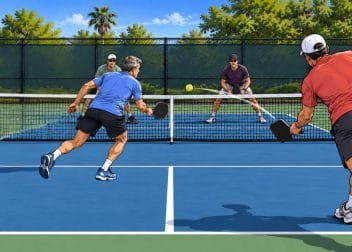
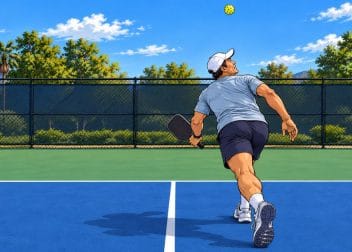
- The full stretch defensive reach. A ball driven wide to your backhand side, beyond crossover-step range, can sometimes be reached by swapping the paddle to the other hand and extending. This is the classic use, and at rec level it turns some clean winners into scrambles.
- Chronic backhand avoidance, managed honestly. A few players, often with tennis or table tennis histories, develop a genuine two-forehand game, switching deliberately so that almost every ball meets a forehand. It is rare, legal, and demanding.
- Injury adaptation. Players managing an elbow or shoulder problem sometimes train the other hand seriously, and the sport permits a complete mid match swap. Some have built entire second games this way.
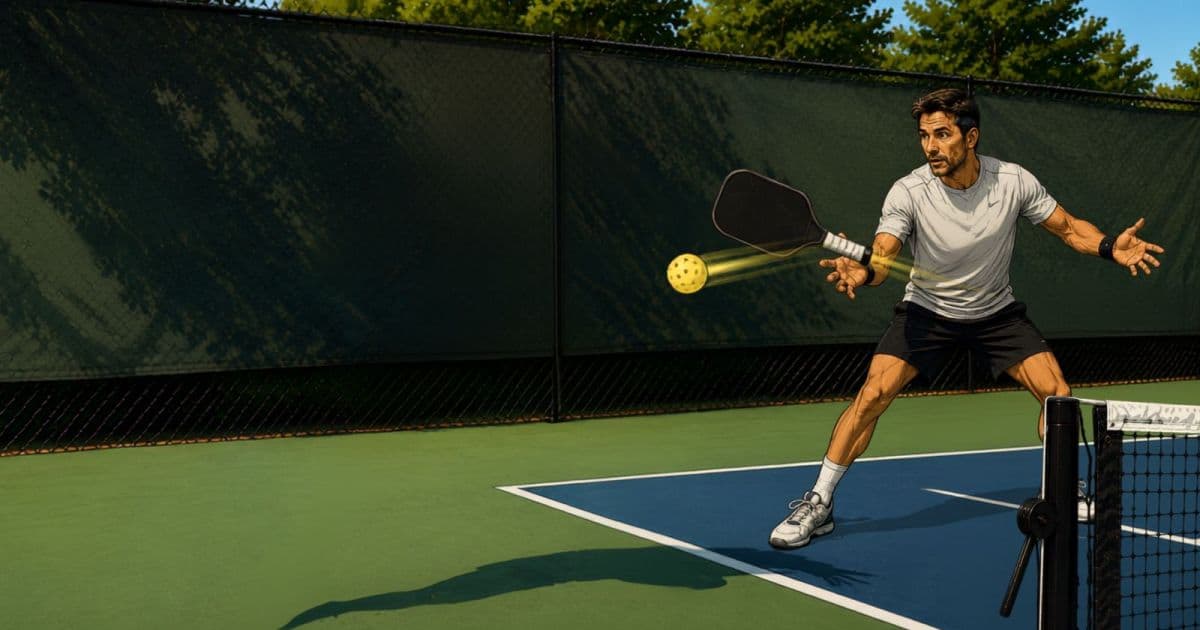
The pattern in that list: switching is a reach extender and an adaptation, not a general upgrade. The everyday version, the panic swap on a fast ball at the kitchen line, mostly produces weak, late contact with an unfamiliar hand. At net speed there is no time to change grips, and the players with truly fast hands got them through practice, not ambidexterity.
What does switching cost you?
Time, grip integrity, and your best hand’s readiness, and each cost bites hardest exactly when the switch is most tempting.
The swap itself takes a beat, and fast exchanges do not offer one. A transferred paddle rarely arrives in a proper grip, so the shot you hit with the new hand is usually a push rather than a stroke. And while the paddle travels between hands, neither hand is ready, which is the worst possible state for the middle of a firefight.
There is a subtler cost: development. Every rally spent rescuing your backhand with a hand switch is a rally your backhand did not spend improving, and at every level above beginner, a competent backhand beats a clever workaround. The reach situations where switching shines are real but rare, and drilling covers the gap better than swapping does. A session of the patterns in our beginner drills guide does more for wide-ball defense than a season of paddle juggling.
What about two hands on the paddle?
Fully legal, increasingly common, and a different subject from switching. The two handed backhand, second hand supporting the paddle hand through the stroke, has migrated from tennis into pickleball and become a standard weapon, especially for power and stability on drives and counters.
The same free-hand rule applies: the supporting hand shares the grip, and a ball that strikes a hand not holding the paddle is still a fault. Beyond that, the rulebook is indifferent to how many hands power your backhand.
If the backhand is the problem, the two hander is the productive direction that hand switching pretends to be: it strengthens the weak wing rather than abandoning it, costs nothing in readiness, and holds up under speed. Players who reach the advanced shots, the erne and its cousins, almost universally got there with one settled paddle hand and a backhand they stopped avoiding.
If you do want switching in your toolkit, train it like any skill: deliberate wide-ball drills, a real grip change, repetitions before match use. As a practiced tool it is a legitimate niche skill. As an improvisation it is a donation to your opponents.
FAQ
Is switching hands legal in pickleball? Yes, completely. The paddle may change hands at any time, including mid rally, and no rule requires a declared playing hand.
Can you switch hands during the serve? You may serve with either hand in any rally. The serve itself must follow the normal service rules, but nothing binds you to one hand game to game.
Can you hit with both hands on the paddle? Yes. Two handed backhands are common and fully legal. Both hands on the grip count as the paddle hand.
What if the ball hits my free hand? Fault, and the rally is lost. Only the paddle, or the hand holding it below the wrist, may legally contact the ball.
Is dropping the paddle during a switch a fault? No. A dropped paddle does not end the rally by rule, though it rarely ends well in practice.
Do any good players switch hands? A small number use it systematically for reach or as a two-forehand style, and some players have rebuilt their game on the other hand after injury. It is a niche, not a trend.
Should beginners learn to switch hands? No. The time goes further building a real backhand, ideally two handed if stability is the issue. Switching is a later, optional tool.
Does switching help at the kitchen line? Almost never. Exchanges there are too fast for a swap, and an unready half-second is exactly what loses hands battles.
Working on the honest fix instead of the workaround? The coaches in our directory rebuild backhands for a living, and the group sessions in our camps and clinics listings drill the wide-ball footwork that makes most hand switching unnecessary.
Written by the Pickler Junction Team.