What Are the Best Beginner Pickleball Drills?
Quick Answer: The best beginner pickleball drills build three things: soft hands at the kitchen line, a serve you can repeat, and a third shot drop you trust. Start with cross-court dinks, wall dinks, serve targets, and the drop drill. Twenty to forty-five focused minutes of drilling beats hours of casual play.
A drill is a repeat of one shot with a specific target and a way to keep score. That scoring is what separates a drill from hitting balls around. It is also why drilling moves your game forward while casual play mostly holds it steady.
Why Do Drills Work Better Than Playing Games?
In a normal rec game, you might hit a dozen dinks and a handful of third shot drops across twenty minutes. In twenty minutes of focused drilling, that count can run into the hundreds. The gap is not close.
Games also let you hide. You avoid your backhand, drive every third shot because it feels easier, and never find out what your weak side does under pressure. A drill removes the option to dodge the shot you are worst at, which is exactly why the first two weeks of drilling feel uncomfortable.
Play still matters. The ratio is the point. If you want to improve, aim for one drilling session for every two open play sessions.
What Drills Should a Beginner Start With?
Five drills cover most of what a new player needs. Do not run all five in one session. Pick two, do them properly, and stop.
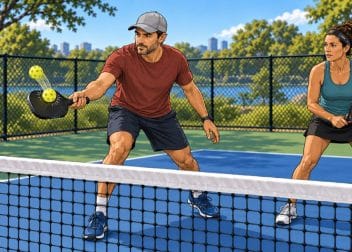
- Cross-court dinks. Both players stand at the kitchen line and dink diagonally. A beginner dinking drill published by The Dink Pickleball uses a team goal of 30 consecutive dinks before the pace picks up. Cross-court is the longer, safer diagonal, and it is where most real dink rallies happen.
- Wall dinks. Stand back from a wall and dink continuously against it. Count your best streak. This is the only drill on the list you can run alone in a garage.
- Serve targets. Set a target paddle near the baseline of the service box. Selkirk’s training program, Selkirk University, uses a ten-serve goal for this drill: serve ten balls and see how many land in the deep zone.
- The drop drill. One player feeds from the kitchen while you stand at the baseline and hit third shot drops. A solo drop-drill progression from The Dink Pickleball builds toward 10 drops in a row, working through three stages of difficulty.
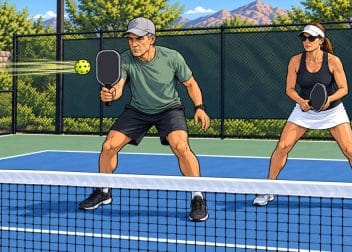
- Dink to volley. Both players dink at the kitchen until someone speeds it up, then the point plays out. This trains the decision, not just the shot.
Counting your dinks and drops for the first time, after years of feeling good about them, tends to be humbling. That is the point. You cannot improve a shot you are not measuring.
How Do You Practice Alone?
Three ways work without a partner:
- Wall work. Dinks, volleys, and resets against a wall. A wall never misses and never gets tired of feeding the ball back.
- Serve buckets. Take a full bucket of balls to an empty court and serve to a target. The serve is the one shot nobody can rush you on, which makes it a strong solo drill. A guide to pickleball serve drills has more targets once this one gets easy.
- Shadow footwork. Split step, move to the kitchen line, split step back. Two minutes on, one minute off, five rounds. It is boring, and it fixes the footwork gap that costs most beginners points.
Finding an empty court is usually the hard part. Weekday mornings and early afternoons tend to be quietest at most public facilities.
How Long Should a Drilling Session Be?
Thirty to forty-five minutes of focused reps, according to Athena Pickleball coach Jess in a practice plan published by The Dink Pickleball. Past that, quality drops and you start grooving whatever tired mechanics are left in your arms.
A simple structure that works: five minutes of dinking to warm up, twenty minutes on one drill with a counted target, ten to fifteen minutes of dink-to-volley to add pressure, then play. If you only have twenty minutes, cut the warm-up and the play, not the counted drill. A warm-up routine covers how to loosen up safely before any of this starts.
The same solo third shot program spreads practice across three sessions a week instead of one long session, which fits how most beginners actually find court time.
How Do You Know a Drill Is Working?
Write the number down. Not in a spreadsheet, just in your phone notes. Best dink streak, drops landed out of 10, serves landed out of 10.
Progress in pickleball is slow enough that memory lies to you. A rising drop count is one of the clearest signs that you are ready to hold the kitchen line under pressure, and the skill levels guide ties that exact jump to moving from a 3.0 rating toward a 3.5. Without the number written down, that improvement can feel like nothing happened.
What Do Beginners Get Wrong About Drilling?
Four mistakes cost the most, roughly in order:
- Drilling only the shots you already like.
- Hitting hard during soft-game drills because it feels more productive than it is.
- Switching drills every few minutes instead of finishing a counted set.
- Skipping the count, which turns a drill back into hitting around.
There is a fifth: blaming the paddle. Sometimes it really is the paddle, and if your drops keep sailing long, a livelier face may be working against you. A paddle buying guide walks through what core thickness and face material actually change. Once the basics above feel solid, drills for intermediate players add the pace and pressure that beginner drilling does not cover.
Frequently Asked Questions
How often should a beginner drill?
A solo third shot drop program from The Dink Pickleball spreads practice across three sessions a week, each 20 to 30 minutes. That schedule beats one long weekend session because the motion gets reinforced more often.
Can you drill pickleball by yourself?
Yes. Wall dinking, serve practice with a bucket of balls, and shadow footwork all work alone. A wall is a dependable training partner, and it never gets tired of feeding the ball back to you.
What is the most important drill for a new player?
The third shot drop. It is the shot that gets you from the baseline to the kitchen line, and the kitchen line is where doubles points are usually won. It is also the hardest shot to learn during a live game, which makes drilling it the more realistic path.
How many dinks in a row should I be able to hit?
A beginner dinking drill from The Dink Pickleball sets a target of 30 consecutive dinks before the pace increases. Most new players land far short of that at first, and getting close is a fair marker that the soft game is ready for faster play.
Should beginners drill or take lessons first?
A lesson or two first is worth it, because drilling a broken motion just makes the broken motion permanent. Once a coach has checked your grip, paddle position, and footwork, drilling alone becomes far more productive.
Do drills work if my partner is a different level?
Yes, and mismatched drilling is often better than mismatched games. The stronger player controls the feed and gets touch work. The weaker player gets consistent balls to hit, and both leave the session better off. Mismatched games tend to help neither player as much.
What equipment do I need to drill?
A paddle, a court or a wall, and more balls than you think. A full bucket turns a serve session from chasing balls into actually serving them. Cones or a spare paddle work fine as targets.
How long before drills show up in my games?
Around four to six weeks for a noticeable change, and two to three months before it holds up under match pressure, based on a solo third shot drop progression published by The Dink Pickleball. The shot shows up in drills first, then in casual games, then under pressure late in a tight game. That last step takes the longest, and it is normal.
Pick two drills, find an empty court, and count something. If the motion still feels broken after a few sessions, a coach can often spot the fix faster than more solo reps will. Search the pickleball coaches directory to find one near you.
Written by the Pickler Junction Team.