How to Beat a Lobber in Pickleball
Quick Answer: Beating a lobber in pickleball starts with reading the swing early, turning your hip and running back rather than backpedaling, and letting your partner call the switch. Smash a short lob out of the air, reset a deep one with a soft shot, and keep your own dinks low and deep so the lobber runs out of good options.
A lob is a shot hit high and deep over the opposing team, meant to push players away from the non-volley zone line and open the court behind them. Against a player who leans on that shot every point, the fix is not one trick but a small set of habits: spot the swing early, move correctly, talk to your partner, and pick the right response once the ball is in the air.
Why Do Lobs Give Pickleball Players So Much Trouble?
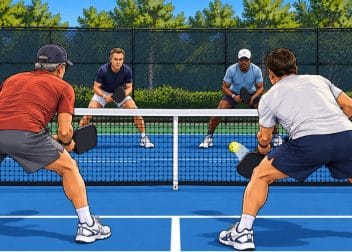
A lob works because it attacks the one thing most players give up at the kitchen line: their view of the court behind them. Standing tight to the non-volley zone line wins hands battles and dink exchanges, but it leaves the back third of the court open. A lobber does not need power, just height and depth, to turn a comfortable dinking rally into a footrace. Teams that never adjust their court positioning against a lobber tend to keep losing the same point the same way, which is one reason lob defense gets its own section in most breakdowns of doubles strategy.
How Do You Read a Lob Before It Leaves the Paddle?
The tell shows up in the backswing, not the flight of the ball. A player setting up a lob usually opens the paddle face earlier than on a drive or a dink, drops the paddle head below the ball, and takes a longer, looser swing. Weight often shifts onto the back foot instead of staying forward. Watching the opponent’s shoulders and paddle angle during the split second before contact gives more warning than watching the ball itself, because by the time the ball is airborne a step or two has already been lost.
What Footwork Actually Gets You to a Lob in Time?
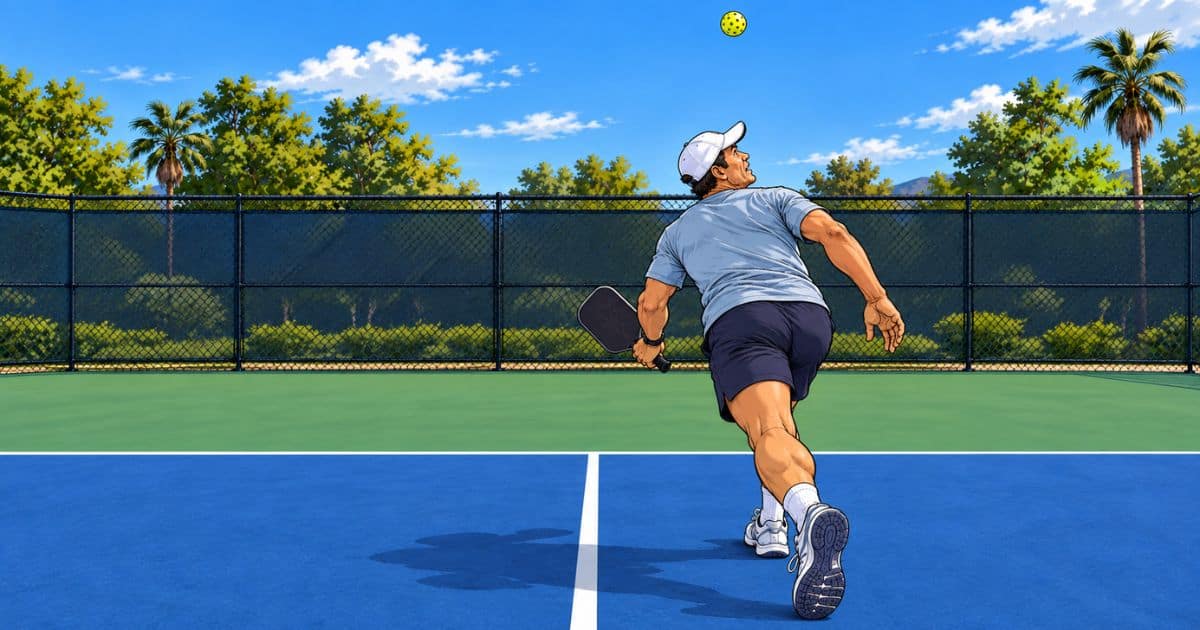
Turn and run. Backpedaling is a common reason lobs land clean, because running backward caps top speed and makes it easy to trip or fall. The correct move is a drop step: pivot the outside foot, turn the hips and shoulders so the body faces the direction of travel, then sprint. Track the ball over one shoulder rather than staring straight up, which keeps the sprint honest instead of slowing into a jog. Good footwork habits built away from lob defense, like a low ready stance and quick first-step reactions, carry directly into this movement.
How Should Partners Communicate and Switch on a Lob?
A lob over one player is a team problem, not a solo one. As soon as the ball goes up, both players need to talk. The player chasing the lob calls it out loud, a quick “got it” or “switch,” so the partner knows to cross behind and cover the court that was just vacated. Skipping that call is how two players end up standing in the same spot while the middle of the court sits empty. Clear, early calls and a plan for moving with a partner turn a defensive scramble into a controlled rotation instead of a collision.
When Should You Smash the Overhead, and When Should You Let It Reset?
A lob that lands short, inside the baseline with real height on it, is an invitation to attack. Stepping into position early and hitting an overhead at the peak or on the way down, aimed at the opponents’ feet or the open middle, ends the point far more often than it starts one. One rule matters here: under the 2026 rulebook, Section 11.A.1, a player who volleys the ball while any part of the player or anything touching the player contacts the non-volley zone, which extends 7 feet from the net on each side, commits a fault, and Section 11.A.2 extends that fault to a player whose momentum carries them into the zone after the volley. Smashing a short lob from well behind that 7-foot line, and staying behind it through the follow-through, avoids that call entirely.
How Do You Reset a Deep Lob Without Losing the Point?
A lob that clears the baseline, or lands deep enough that a full swing would be rushed, calls for the opposite response. Let it bounce, take a compact swing, and hit a soft, controlled shot back toward the middle of the court rather than trying to end the point from a dead sprint. A rushed overhead hit on the run, from behind the baseline, sails long far more often than it wins the rally. Buying an extra second with a soft reset, or even a defensive lob of the same kind, gives both players time to jog back into position at the kitchen line before the next shot arrives.
How Do You Take Away the Lob Before It Even Starts?
A strong defense against a lobber often starts before the lob is even hit. Keeping dinks low, at or below net height, and deep into the kitchen forces an opponent to hit up on the ball just to get it back, which removes the extra time and space a clean lob setup needs. A player working from a low, defensive dink has little room to load a big backswing without popping the ball up early, which turns into an easy put-away instead of a lob. Patient dinking that denies a comfortable setup does more to shut down a lobber over a match than any single defensive sprint.
How Do Sun and Wind Change Lob Defense?
Outdoor courts add two variables indoor play never has to deal with. When the sun sits low and behind one side of the court, the team facing into it should expect trouble tracking a high ball and can plan ahead by having the partner with the sun at their back take overheads whenever possible. Wind changes how far a lob carries and how much it drifts sideways, which means a shot that would land in on a calm day can sail long, or a light push can turn a routine overhead into a mishit. Reading conditions before the game starts, the kind of adjustment covered in the guide to playing pickleball in the wind, saves points that otherwise look like unforced errors.
Frequently Asked Questions
Should you backpedal or turn and run when the ball goes up as a lob? Turn and run. Backpedaling caps top speed and raises the odds of tripping, while a pivot into a sprint gets a player to the ball with the paddle already in position to swing.
How do you know a lob is coming before the ball leaves the paddle? Watch the setup, not the ball. A player loading a lob usually opens the paddle face earlier, drops the paddle head, and shifts weight onto the back foot, all before contact.
Is it a fault to smash an overhead while standing in the non-volley zone? Yes. Under the rulebook, Section 11.A.1, volleying the ball while touching the non-volley zone is a fault, and Section 11.A.2 covers a player whose momentum carries them into the zone after the volley.
What should you do with a lob that lands deep near the baseline? Let it bounce and hit a controlled reset shot back toward the middle of the court. Swinging hard from behind the baseline on the run produces far more long balls than winners.
How do you stop an opponent from lobbing every point? Keep dinks low and deep at the feet so the opponent has to hit up just to get the ball back, which removes the time needed to load a clean lob in the first place.
Should both partners chase every lob? No. One player tracks the ball and calls it out while the other crosses to cover the court that was just vacated, then both players work back toward the kitchen line together once the point resets.
Does wind change how a lob should be defended? Yes. Wind can carry a lob long past where it would land on a calm day, or turn a light contact into a mishit overhead, so reading conditions before the match starts matters as much as footwork does during the point.
What is the difference between a defensive lob and an offensive lob? A defensive lob buys time to recover court position after being pulled out of place, while an offensive lob targets a player crowding the net and tries to win the point outright.
Can a lob be hit on the serve return? Yes. A deep return lob is legal and can push both opponents back from the kitchen line before the point even begins, though most return of serve strategy favors a lower, flatter shot instead.
Lob defense is a mix of anticipation, footwork, and a partner who talks. None of it requires a special shot, just the habit of turning and running instead of backpedaling, calling the switch early, and picking a smash or a reset based on where the ball actually lands. A coach can spot and fix these habits faster than trial and error on court, and the pickleball coaches directory is a place to find one nearby who works on exactly this kind of doubles positioning.
Written by the Pickler Junction Team.