Can You Build a Pickleball Court on Grass?
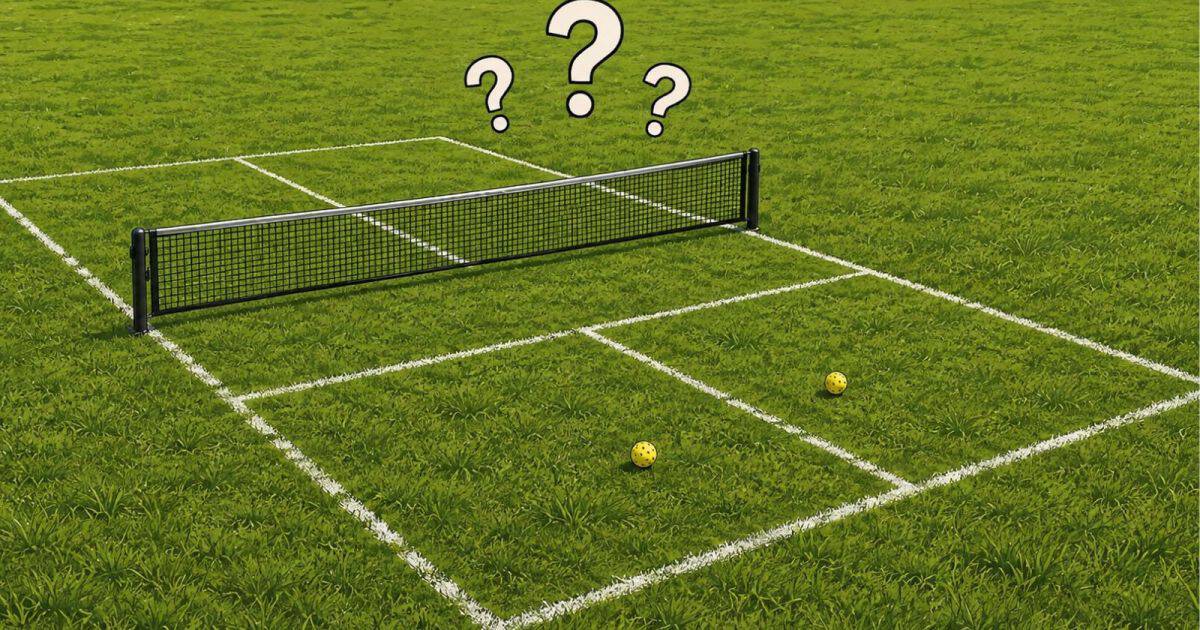
Quick Answer: You cannot build a real pickleball court on grass. A hollow plastic ball needs a hard, level surface to bounce correctly, and grass absorbs that energy instead of returning it. What you can do on a lawn is set up a portable net for a casual backyard game, or strip the sod and build a proper hard surface underneath.
A pickleball court needs a hard, level, non-absorbent surface, because the ball is light and hollow and depends on a firm surface to give back any usable bounce at all. Grass absorbs that energy, and the game stops working the way it should.
Why Does Grass Not Work?
Three reasons stand out, and the first one alone settles the question.
The bounce dies. A pickleball is light and hollow, and it needs a firm, flat surface to return energy predictably. According to USA Pickleball’s official construction guidance, grass will not let the ball bounce the way the sport requires, while a hard surface such as concrete or asphalt will. Under the 2026 USA Pickleball rulebook, the serve and the return of serve must each bounce once before either side can volley, a requirement known as the two-bounce rule under Rule 10.A. A surface that kills the bounce breaks that rule before a rally even gets going.
It is rarely level. Even a well kept lawn can vary by an inch or more across a 44 foot court. That kind of unevenness shows up as a bad bounce or a rolled ankle during a fast exchange at the kitchen line.
It gets slick. Wet grass combined with the sideways shuffling pickleball demands is a common way to slip and strain a knee or an ankle.
What About Artificial Turf?
Turf is better, and it is still not a court. According to Pickletile’s padel court surface guide, most padel courts use artificial grass with silica sand infill brushed into the fibers, laid over a rigid, well drained base, because that combination gives a steadier, more consistent bounce than natural grass. The comparison of padel courts and pickleball courts covers why that surface suits one sport and not the other.
For pickleball, turf still plays lower and slower than acrylic over concrete, so a court built on turf will not match the courts found anywhere else. Building a practice court on turf while playing real games elsewhere sets up a mismatch that works against a player’s timing.
What Can You Actually Do on a Lawn?
Set up a portable net and play a relaxed backyard version. Nobody should call it regulation pickleball, and it can still make for a good afternoon.
What helps:
- Mow it short right before playing, since shorter grass gives a slightly truer bounce.
- Use an indoor ball, which is softer and sits up a bit better on turf than an outdoor ball does.
- Mark lines with rope, chalk, or cones rather than trying to paint grass.
- Shorten the court and accept that the serve and the deep game will not work the way they do on a real court.
A flat lawn is fine for a backyard barbecue game, but dinks barely come up and bad bounces end rallies constantly. For a closer approximation of a true bounce without pouring concrete, the guide to a temporary pickleball court on a tennis court covers a better short term option than a lawn.
Can You Build a Permanent Court Where Grass Is Now?
Yes, and this is usually the real question behind the ask. The grass is not the obstacle. It is just what happens to be sitting on top of the spot right now.
The sequence is the same as any court build. Strip the sod and topsoil, excavate, install and compact a crushed stone base, grade it, then pour concrete or lay asphalt and finish the surface. According to AG Sports Surfaces, a slope of about 1 percent, or roughly 1 inch of drop for every 10 feet, is the standard recommendation for tennis and pickleball court drainage, and anything steeper starts to feel uneven underfoot.
As of September 2026, HomeGuide puts site preparation on a project like this at $2,000 to $10,000 or more, depending on land clearing, grading, and drainage needs, with the finished court typically landing between $20,000 and $50,000 and a national average near $34,000. The guide to how much space you need covers the footprint, the slope and drainage guide covers the step that most determines whether the court lasts, and the full breakdown of what a court costs in 2026 covers what drives the price up or down.
Frequently Asked Questions
Can you play pickleball on grass at all?
You can play a modified backyard version with a portable net, but not real pickleball. Under the USA Pickleball rulebook, grass keeps the ball from bouncing the way the sport requires, which breaks the two-bounce rule in Rule 10.A and most of the strategy built around it.
Can you put court tiles on grass?
No. Interlocking tiles need a solid, level base underneath them. Laid over sod, they sink unevenly, pull apart at the seams, and trap water below the surface. A compacted crushed stone base is the minimum, and concrete performs far better over time.
What about grass pickleball as its own game?
It exists informally, the way lawn versions of other sports do, but there is no sanctioned format and no governing body rules covering it. Treat it as a backyard variant rather than a version of the sport played in tournaments.
Would artificial turf work better?
Somewhat. Short pile turf over a compacted base with sand infill, the same setup used on padel courts, gives a steadier bounce than natural grass. It still plays lower and slower than acrylic over concrete, so it remains a compromise surface rather than a true court.
How much does it cost to convert a lawn into a court?
HomeGuide estimates site preparation on a project like this at $2,000 to $10,000 or more, with the total build typically landing between $20,000 and $50,000 and a national average near $34,000. Drainage needs and site access drive most of the swing.
Do you need a permit to build over a lawn?
Usually yes for a new concrete or asphalt slab, and often for grading, fencing above a certain height, and lighting. The permit guide covers the triggers that vary by city.
Will grass grow back through a temporary setup?
Yes, and quickly. A portable net and cones do no lasting damage to a lawn. Anything left down for weeks, including tiles or tarps, will kill the grass underneath and mean reseeding later.
Is there any surface cheaper than concrete that works?
Not really. HomeGuide lists asphalt at $5 to $12 or more per square foot against $5 to $10 per square foot for concrete, so asphalt is not a budget shortcut, though it tolerates minor base movement better than concrete does. Below that price range, the remaining options will not hold a true bounce. The concrete versus asphalt comparison covers the trade-off in more detail.
Grass is never the finish line for a real pickleball court, only the starting point before the excavator arrives. When it is time to move from lawn to a lasting surface, the directory of pickleball court construction and infrastructure professionals connects homeowners with contractors who handle site prep, drainage, and surfacing correctly the first time.
Written by the Pickler Junction Team.