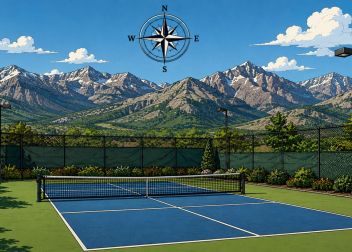
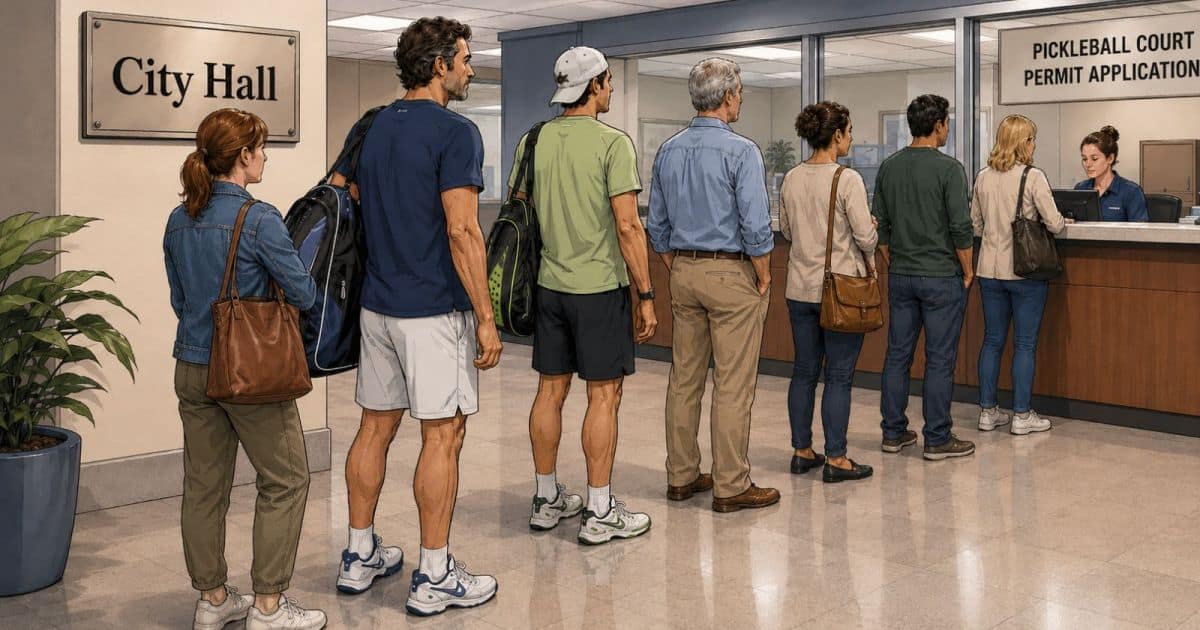
Do You Need a Permit to Build a Pickleball Court?
Quick Answer: Usually yes. Most backyard pickleball courts need a standard building permit from the local building department, because pouring a slab counts as construction. Fencing above a set height, lighting, and grading each carry their own requirements, and an HOA can say no even after the city says yes.
A pickleball court permit is your local government’s sign-off that what you are building meets code. For a court, the permit covers the slab, any grading, and often the fence and lights as separate items.
What Actually Triggers a Permit?
Five things, and most court projects hit at least three of them.
- The slab. New concrete or asphalt is construction. This is the main trigger, and it applies whether the court is 20 by 44 or bigger.
- Grading. Moving enough earth to build a base usually needs its own review, especially on a slope or near a drainage easement.
- Fencing. Most jurisdictions set a height above which a fence needs a permit, commonly six feet. Court backstops start at ten.
- Lighting. Pole lights involve electrical permits, and many towns cap height, hours, and light spill onto neighboring property.
- Noise. Courts near homes sometimes need a noise variance to operate during certain hours, because the sound of pickleball carries further than people expect.
What generally does not need a permit: resurfacing an existing slab, painting lines, and setting up a portable net.
What Does Zoning Control?
Zoning is separate from the building permit and it is where most projects actually get stuck. Local zoning sets setback distances from property lines, maximum fence heights, and lighting restrictions.
Setbacks are the one to check first, before you measure anything else. USA Pickleball recommends 34 by 64 feet of total space for a new court, and if your setbacks eat into that footprint, the court has to shrink or move. Our guide to how much space a court needs covers what you are trying to protect.
Some jurisdictions also cap impervious surface, meaning the total percentage of your lot covered by anything water cannot soak through. A 2,176 square foot court is a meaningful chunk of a small lot, and this catches people late.
Does the HOA Get a Say?
If you have one, yes, and their approval is separate from the city’s. An architectural review board typically evaluates court placement, materials, colors, fencing height, and lighting.
The important part: an HOA can deny a project the city would happily permit. Read your covenants before you spend anything on design. Our guide to HOA rules for backyard courts covers how to work that process, and avoiding an HOA lawsuit covers what happens when it goes badly.
How Do You Actually Get One?
The order that saves the most rework:
- Read your HOA covenants, if you have an HOA. Cheapest possible no.
- Call the local building department and ask what a residential sport court requires. One phone call, and they will tell you.
- Check your setbacks and any impervious surface cap against the footprint you want.
- Have your contractor pull the permits. Established court builders do this routinely and it is worth letting them.
- Schedule inspections as required, usually at base and again at completion.
The single most useful thing here is that phone call. Requirements vary enough between towns that no article, including this one, can tell you what your specific building department wants. What we can tell you is that they will answer the question in ten minutes and it costs nothing to ask.
Frequently Asked Questions
Do I need a permit to build a pickleball court in my backyard?
Usually yes. Most backyard courts require a standard building permit because a new slab counts as construction. Grading, fencing above a set height, and lighting often need their own approvals.
What happens if I build without a permit?
Fines, a stop work order, and in the worst case an order to remove what you built. It also surfaces at resale, when an unpermitted structure shows up in inspection and either kills the deal or comes off the price.
Do I need a permit to resurface an existing court?
Generally no. Resurfacing and repainting an existing slab is maintenance rather than construction. Adding fencing or lights to that same court is a different question.
Does a portable net need a permit?
No. A portable net and painted or taped lines on an existing driveway are not construction. A permanent net post set into a slab may be treated differently.
How much do the permits cost?
It varies widely by jurisdiction, and the permit fee is almost always small relative to the build, which commonly runs $20,000 to $50,000. The expensive part is redoing work that was never approved, not the fee itself.
Can my HOA stop me even if the city approves it?
Yes. HOA approval is separate and their architectural review board can deny a court over placement, materials, color, fence height, or lighting. Check the covenants first.
Do lights need a separate permit?
Usually. Pole mounted court lighting involves electrical work and often triggers restrictions on pole height, operating hours, and light spilling onto adjacent property. Budget $5,000 to $10,000 installed for the lighting itself.
What is an impervious surface limit?
A cap on how much of your lot can be covered by surfaces water cannot pass through, including the house, driveway, and court. A 34 by 64 court is 2,176 square feet, which is enough to push a small lot over the line.
Should the contractor pull the permits or should I?
Let the contractor. Established court builders handle permits, codes, and zoning as part of the job, and they already know what your local department expects.
While the paperwork works its way through, our directory of public pickleball courts will keep you playing.
Written by the Pickler Junction Team.