Padel Court vs Pickleball Court: Size and Cost Compared
Quick Answer: In the padel court vs pickleball court comparison, ground area is almost a tie. A padel court’s playing area is about 2,178 square feet, and a full pickleball footprint at 34 by 64 feet is 2,176. Cost is where they split: a padel court costs substantially more to install than a pickleball court, which runs $25,000 to $50,000.
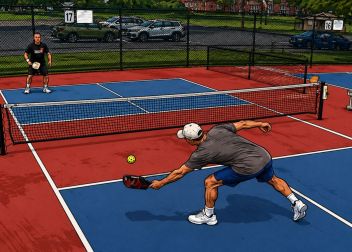
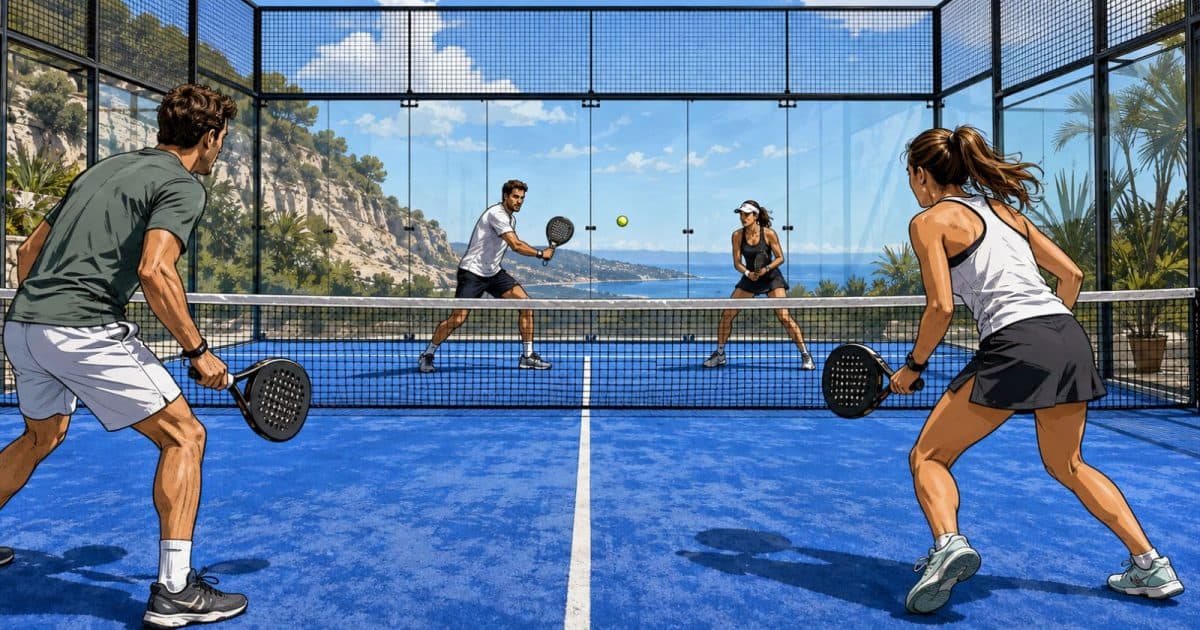
Here is the plain version before the money. A padel court is a fully enclosed court, walled in tempered glass and metal mesh, where the ball plays off the walls. A pickleball court is an open, flat court with no walls at all. If you are still deciding which sport fits your market, our breakdown of how padel and pickleball differ as games is a good place to start. This article is about the concrete, steel, and dollars.
How Big Is a Padel Court Compared to a Pickleball Court?
They take up almost exactly the same amount of ground. A padel court’s playing area is 20 meters by 10 meters, about 66 by 33 feet, which works out to roughly 2,178 square feet. A pickleball court’s playing lines are only 20 by 44 feet, but you cannot build right up to the lines. You need runoff room.
The recommended total footprint for one pickleball court is 30 by 60 feet minimum, with 34 by 64 feet preferred. At the preferred size, that is 2,176 square feet. So the two courts land within a couple of square feet of each other. If you are sketching a site plan, our guide on how much space a pickleball court really needs walks through the buffer zones in detail.
One more space fact worth taping to your desk: four pickleball courts fit in the footprint of one tennis court. Nothing else in racket sports packs players in that tightly.
What Does Each Court Cost to Build?
Padel costs more, usually a lot more. No authoritative source publishes US padel installation pricing, so treat any single figure you see with caution and get a quote. The structure is the reason for the gap: a padel court is a glass and steel enclosure rather than a painted slab. Foundation and site prep, freight, installation, lighting, and permits make up the rest. Quotes vary widely by region and site conditions, so treat those numbers as a starting range and get local bids before you sign anything.
A new outdoor pickleball court commonly runs $25,000 to $50,000, with about $34,000 being typical. And here is the part that changes the math for a lot of owners: if you already have a sound slab, resurfacing it for pickleball is far cheaper than new construction. There is no equivalent shortcut in padel. You cannot resurface your way into a glass box.
Why Does Padel Cost So Much More?
Because you are building a structure, and structures need engineering. The padel enclosure is tempered glass panels and metal mesh held in a steel frame, and that enclosure is structural, so it needs engineered footings. The ball plays off those walls at speed, which means none of it can be flimsy.
A pickleball court is a slab with paint. The surface is acrylic over asphalt or concrete, or interlocking tiles, graded at about a one percent slope for drainage. Fencing is optional, and when you do fence, USA Pickleball specifies a 10-foot minimum backstop and a 3-foot minimum sidestop. Our article on pickleball court fence height covers when fencing earns its cost and when it does not.
Lighting tilts the same direction. A padel court usually requires lighting because the enclosure creates shadow even in daylight. A pickleball court only needs lights if you want night play.
Side by Side: The Numbers
Here is the whole comparison in one table. Ranges are ranges. Get local quotes.
| Feature | Padel Court | Pickleball Court |
|---|---|---|
| Playing area | 20 m x 10 m (about 66 x 33 ft), roughly 2,178 sq ft | 20 x 44 ft playing lines |
| Total footprint | Playing area plus access room around the enclosure | 30 x 60 ft minimum, 34 x 64 ft preferred (2,176 sq ft) |
| Walls or fencing | Fully enclosed: tempered glass and metal mesh in a steel frame, with footings | No walls; optional fencing, typically 10 ft perimeter and 4 ft between courts |
| Surface | Artificial turf with sand infill, sometimes porous concrete | Acrylic over asphalt or concrete, or interlocking tiles, about 1 percent slope |
| Lighting needs | Usually required; the enclosure creates shadow | Optional for daytime, added for night play |
| Players per court | 4 (almost always doubles) | 2 or 4 |
| Rough build cost | Substantially more than pickleball; no authoritative US pricing is published, so quote it locally | About $25,000 to $50,000 new outdoor, roughly $34,000 typical; resurfacing an existing slab about $1,500 to $3,500 |
Which Court Makes More Business Sense?
Short answer: pickleball wins on cost per court, padel can win on revenue per booking, and the square footage argument is a wash. Both courts sit on roughly 2,200 square feet of ground, so your land works equally hard either way. The question is what that land earns.
Padel fills its footprint with four paying players nearly every session, since the game is almost always doubles. In many markets, padel court time also rents at a premium because supply is still thin. That can push revenue per square foot up nicely, but you paid more for steel and glass to get there, so your payback period stretches out.
Pickleball serves two or four players per court, and open play formats rotate a lot of bodies through in a day. The buy-in is lower, the build is simpler, and an old tennis slab can become four courts without major site work. On a padel quote, the engineered footings line item is usually the one that changes a facility owner’s mind. That line item does not exist on a pickleball bid.
This is why a growing number of clubs are building both. The reasoning usually looks like this:
- The two courts use nearly identical ground area, so one site module works for either.
- Both sports pull from the same social, doubles-loving crowd, and players cross over.
- Pickleball courts generate volume; padel courts generate premium bookings.
- One lobby, one parking lot, one front desk, and one bar serve both.
If your budget only stretches to one, and you have an existing slab, pickleball is the obvious first move. If you are building on raw land in a market with zero padel supply, the glass box deserves a hard look.
Frequently Asked Questions
Is a padel court bigger than a pickleball court?
The playing area is bigger, but the total ground used is nearly identical. Padel’s playing area is about 2,178 square feet, and a pickleball court’s preferred total footprint of 34 by 64 feet is 2,176 square feet. On a site plan they are basically twins.
How much does a padel court cost in the US?
No authoritative US source publishes padel installation pricing, so the honest answer is to get a local quote. What is clear is that the glass and steel enclosure, foundations, freight, lighting and permits put it well above a pickleball court. Region, site prep, and footings move the number a lot, so get at least two or three local quotes before budgeting.
How much does a pickleball court cost to build?
A new outdoor court commonly runs $25,000 to $50,000, with roughly $34,000 being typical. If you already have a sound concrete or asphalt slab, resurfacing it runs about $1,500 to $3,500 for a standard 30 by 60 foot pad.
Can you play pickleball on a padel court?
Not in any normal way. The turf surface kills the pickleball bounce, and the glass walls sit inside the space a proper pickleball layout needs for safe runoff. Treat them as separate builds.
How many pickleball courts fit on a tennis court?
Four. That is one of the strongest arguments for pickleball conversions, since one aging tennis court becomes four rentable courts serving up to 16 players in doubles.
Do padel courts need special engineering?
Yes. The glass and steel enclosure is structural, so it needs engineered footings, and most sites will need a permit process that reflects that. Budget time for it, not just money.
Do pickleball courts need fencing?
No, fencing is optional. When owners add it, USA Pickleball specifies a 10-foot minimum backstop and a 3-foot minimum sidestop. Your site, neighbors, and budget decide how much fence makes sense.
Whichever way you build, players still have to find you once the paint or the turf goes down. Browse the public pickleball courts listed on Pickler Junction to see how facilities in your area present themselves, and claim your spot when your courts open.
Written by the Pickler Junction Team.