How to Serve Deep in Pickleball
Quick Answer: Serving deep in pickleball means landing the ball in the back portion of the service box, near the baseline, rather than short near the non-volley zone line. Contact the ball out in front of the body on a low-to-high swing, add topspin to bring a high-arcing toss down inside the line, and add height for margin.
A deep serve is any serve that lands close to the baseline rather than short in the service box, and it is one of the simplest ways to make a return harder to attack.
Why Does Serve Depth Matter More Than Power?
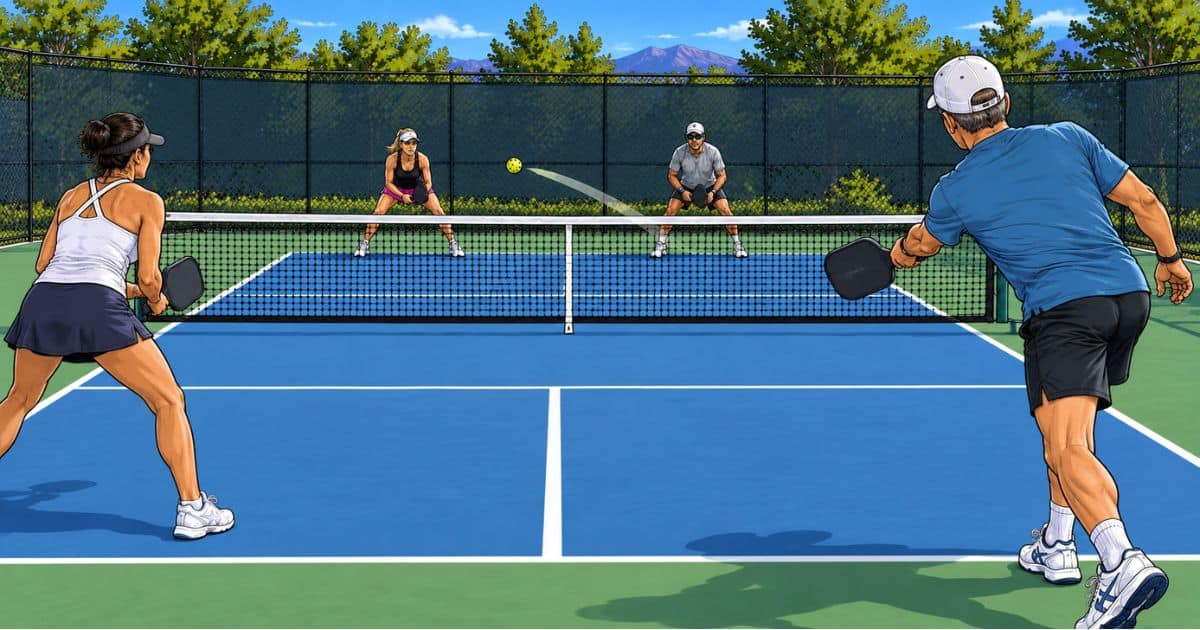
A hard, flat serve that lands mid-court gives the returner time to step in and drive a strong return. A deep serve pushes the returner back near the baseline, where the returner has to generate pace from a defensive position and cover more court to reach the non-volley zone afterward. Depth buys time. Power without depth just gives an opponent a fast ball to redirect.
Many players chase serve speed first, then wonder why the serve keeps getting punished. Speed with no target is just a shorter rally starter. A serve landing well inside the back portion of the service box, even at moderate pace, generally gives the returner less court to work with than a hard serve landing near the service line.
Where Exactly Should a Deep Serve Land?
A useful target for a deep serve is the back portion of the service box before the baseline. That strip sits farthest from the returner’s paddle-ready position and leaves the least time to adjust footwork before contact.
Picture the service box in thirds, from the non-volley zone line to the baseline. A short serve lands in the first third. A serve landing in the back third is commonly considered deep. Aiming at the back third with margin built in beats aiming at the baseline itself, since a serve landing even a few inches long is a fault.
What Contact Point and Swing Path Produce Depth?
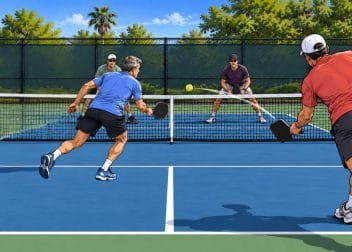
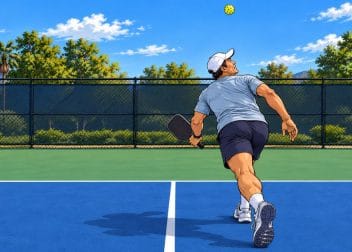
Depth starts with where and how the paddle meets the ball, not with how hard you swing. Contact the ball out in front of the body, roughly even with or slightly ahead of the front hip, rather than dropping the paddle back and meeting the ball late. A late contact point pulls the shot down and short.
The swing path matters as much as the contact point. A low-to-high swing, starting the paddle below the ball and finishing with the paddle head rising through contact, carries the ball deep rather than dying at the net or ballooning long. A flat, side-arm swing tends to net the serve or send it well past the baseline, since there is little margin for error without an upward path. Players building the swing from scratch can start with the broader guide to improving a pickleball serve, which covers grip and stance before depth technique.
How Does Topspin Help a Deep Serve Land In?
A serve hit with extra height for net clearance needs a way to come back down before it sails past the baseline, and topspin is that mechanism. Brushing up and over the ball on contact creates forward rotation that pulls the ball down out of its arc sooner than a flat or backspin serve would, letting a server add height without giving up depth control.
The tradeoff runs the other way for a flat serve: more net clearance without added spin usually means the ball keeps carrying and lands long. Topspin lets a player aim closer to the baseline with more confidence that the ball drops in rather than sails out. Players ready to add rotation to the toss can work through a dedicated guide to spinning a pickleball serve, since timing the brush takes repetition.
Why Add Height Instead of Just Hitting Harder?
A serve with a higher arc over the net has more room to travel before it needs to come down, which makes a deep target reachable without swinging harder. A flatter, harder serve has to be timed almost perfectly to clear the net and still land inside the baseline, since there is little vertical margin if the swing is even slightly off.
Adding arc height is a margin decision, not a power decision. Raising the ball’s peak height while keeping pace moderate gives the serve room to drop into the back third of the box even if the toss or swing is a little inconsistent that day. A hard serve landing short gets attacked far more often than a moderate serve landing deep.
What Drills Build a More Reliable Deep Serve?
Two drills build depth with a specific target rather than vague practice swings.
- Back-third ladder. Mark or picture the service box in thirds. Serve 10 balls aiming only at the back third, closest to the baseline, and count how many land inside that strip. Track the count across sessions to measure real progress rather than a feel for how the serve looked.
- Cross-corner depth targets. Place two small targets, such as cones or towels, in the back corners of each service box. Alternate serves between the two corners, aiming for depth first and corner placement second. This builds the habit of committing to a deep target even while changing direction.
Both drills work better with a consistent toss and stance, which the step-by-step pickleball serve drills guide breaks down further, including reps and progressions for players moving from short serves to consistent depth. A player just starting out with serve fundamentals can also start with a guide built for new servers before adding depth-specific targets.
What Does the Rulebook Require on the Serve Motion?
Every legal serve, including a serve aimed for depth, has to fit inside a specific motion under Section 7.C of the 2026 USA Pickleball rulebook, which requires the paddle to be moving in a clear upward arc at the moment it contacts the ball, contact to happen no higher than the server’s waist, and the highest point of the paddle head to stay at or below the server’s wrist joint at contact. Together those three requirements keep the motion underhand, the same low-to-high path that also helps produce a deep, arcing serve.
Players who use a drop serve follow a related but separate set of rules under Section 7.D for the release; the volley-serve motion restrictions in Section 7.C do not apply to a drop serve. A serve that breaks these motion rules falls under the list of illegal pickleball serves, worth a review before relying on any new motion in a match. The upward-arc, below-waist contact rules govern the volley serve; a drop serve can still be aimed deep, but it follows its own release rules.
FAQ
What counts as a deep serve in pickleball? A deep serve lands in the back portion of the service box, generally the last five feet before the baseline, rather than closer to the non-volley zone line. It pushes the returner back and shortens the time available to set up an aggressive return.
Is a deep serve always better than a hard serve? Not necessarily, but a deep serve gives a returner less time and worse court position more consistently than a hard, short serve does. A server can combine moderate pace with depth rather than choosing one or the other.
Do you need topspin to serve deep? No, but topspin helps. It lets a server add net clearance for margin while still bringing the ball down inside the baseline, which is harder to do consistently on a flat serve hit with the same height.
Where should you aim on a deep serve? Aim for the back third of the service box, roughly the last five feet before the baseline, rather than at the baseline itself. Aiming with a small buffer reduces the chance of a long fault.
What happens if a deep serve lands past the baseline? It is a fault and the point goes to the receiving side, the same as any serve landing outside the service box. Depth technique should always include margin for exactly this reason.
Can beginners work on serve depth right away? Yes, though most benefit from locking in a consistent toss, stance, and legal motion first. Depth is easier to build once the basic serve motion is repeatable.
Does the rulebook require an underhand serve motion? The rulebook does not use the word underhand directly, but Section 7.C requires the paddle to move in an upward arc, contact the ball at or below waist height, and keep the paddle head from rising above the wrist, which together produce an underhand-style motion.
How is a deep serve different from a drop serve? Depth describes where the ball lands. The drop serve, covered under Section 7.D, describes a serve in which the ball is released from the hand and allowed to bounce before it is struck. A drop serve can be aimed deep the same way a volley serve can.
Should you change your grip to serve deeper? Grip changes matter less than swing path and contact point. A low-to-high swing with contact out in front of the body adds more depth than a grip adjustment does.
How many serves should you practice for depth in a session? There is no official count, but tracking makes practice worthwhile. Serving in sets of 10 toward a specific back-third target, then recording how many land in, gives a clear number to improve over multiple sessions.
Working with a pickleball coach speeds this up, since a coach can watch contact point and swing path in real time and flag the habit, an early contact point or a flat swing, that is keeping a serve short. Pair that feedback with the drills above and depth becomes a repeatable part of the serve rather than a lucky outcome.
Written by the Pickler Junction Team.