How to Add Spin to Your Pickleball Serve
Quick Answer: You add spin to a pickleball serve by brushing the paddle across the ball at contact, up the back for topspin or across it for sidespin. Manipulating the ball with your hand or fingers before contact is prohibited under rule 7.B.2 of the 2026 rulebook. Spin the paddle creates at contact has always been legal.
A spin serve in pickleball is a serve where the paddle brushes across the ball at contact so it rotates, which changes how the ball travels through the air and how it kicks off the court.
What is banned and what is still legal
This part of the rulebook is easy to get wrong, and plenty of advice about it online is outdated. Under the rulebook, rule 7.B.2 says the server must not manipulate the ball to add spin with any part of the body or the paddle prior to hitting it, though the ball may still roll off the paddle face by gravity on the way down. If the receiver sees manipulation or spin on the release, the remedy under rule 7.B.2.a is a replay, called before the return, not a fault. That covers spinning the ball off your fingers, rolling it off your hand, or working it against the paddle face before contact.
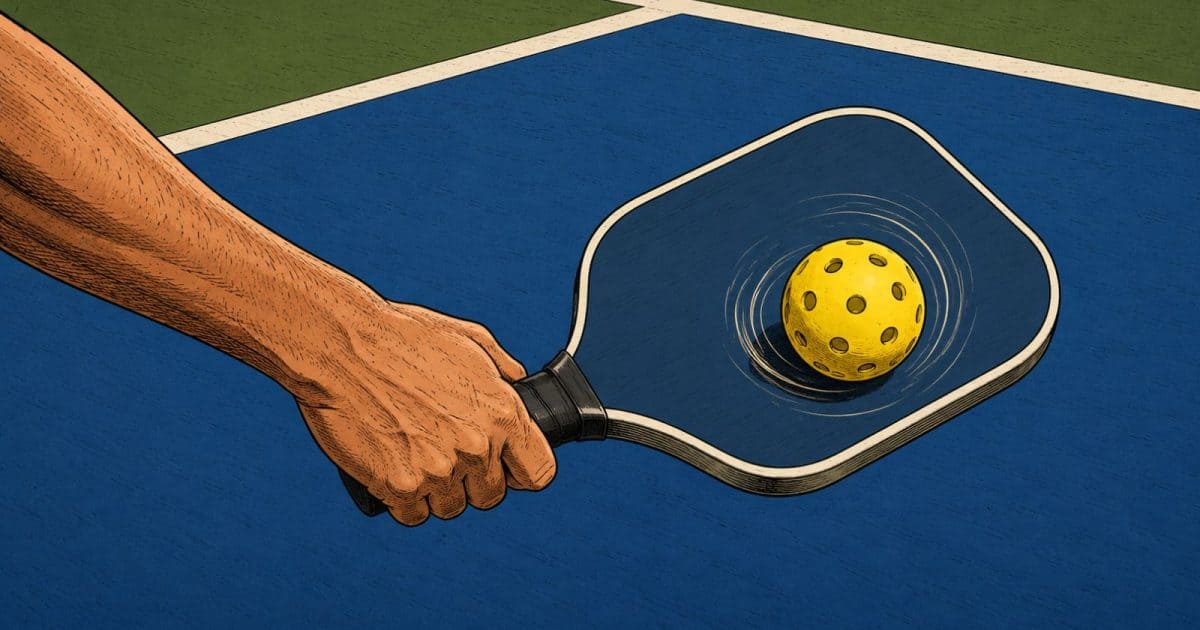
What is legal, and always has been, is spin created by the paddle at the moment of contact. The rulebook says so directly: “Spin may be applied to the ball upon contact by the paddle.” Brushing the ball is part of the stroke, not manipulation of the release.
Both legal serve types allow it. The rulebook permits two serve methods, the volley serve under rule 7.C and the drop serve under rule 7.D, and you can generate paddle spin with either one. The explainer on whether the drop serve is legal covers the differences between the two, and what a chainsaw serve is walks through the exact technique the pre-spin rule targets.
The topspin serve
Topspin is the workhorse. It makes the ball dive down into the service box, which lets you swing harder without sailing long, and it kicks forward off the bounce so the returner has to move up into it.
- Start with the ball lower than you think. Drop it around thigh height so the paddle has room to travel upward.
- Set the paddle face slightly closed, tilted a few degrees toward the net.
- Swing low to high. The paddle path matters more than paddle speed here.
- Brush up the back of the ball rather than driving through the middle of it. You should hear less thump and more of a scrape.
- Finish high, with the paddle ending up near your opposite shoulder.
- Keep the contact point out in front and below your waist. Under rule 7.C.3 of the rulebook, the ball must be no higher than your waist when the paddle makes contact.
The mistake most players make at first is swinging harder instead of swinging more upward. Speed without brush just sends the ball long.
The sidespin serve
Sidespin curves the ball in flight and skids sideways off the bounce, which can pull the returner off the court before the point has started.
The motion is the same idea, rotated. Instead of brushing bottom to top, brush across the ball from one side to the other, roughly three o’clock toward nine o’clock for a ball that curves away from a right handed opponent’s forehand. Keep the paddle face fairly flat and let the path do the work.
Sidespin is generally easier to learn than topspin and less useful on its own. It becomes far more dangerous once it is combined with pace and aimed at the returner’s outside shoulder.
What makes a spin serve effective
Spin alone wins nothing. Plenty of players build a heavy spin serve and still get it returned comfortably every time, because they telegraph it and hit it to the same spot.
Three things turn spin into free points:
- Placement. A spin serve to the middle is a spin serve the returner steps into easily. The same serve wide, pulling them off the court, changes the whole rally.
- Disguise. Identical toss, identical setup, different paddle path. Once an opponent reads the spin from the toss, it becomes a warning instead of a weapon.
- Depth. A spinning serve that lands short sits up and invites a drive. Depth is what pins the returner behind the baseline.
Depth matters more than spin for most recreational players. If you can only work on one thing, work on depth first. The guide to improving your pickleball serve covers the fundamentals that make spin worth adding once your depth is solid.
How long it takes to learn
Most players can build a serviceable topspin serve within a few weeks of deliberate practice, meaning baskets of serves rather than serves hit only during games. The motion itself is not complicated. What takes longer is keeping it under control when the score is tied late in a game.
A set of structured reps also helps more than random practice. The pickleball serve drills page lays out repeatable sets for topspin and sidespin. Practicing serves is also one of the few pickleball skills you can genuinely build alone, since you need a court and a bucket of balls and nothing else. See how to practice pickleball by yourself for a structure that works.
FAQ
Is the spin serve legal in pickleball?
Yes, when the spin comes from the paddle at contact. The rulebook states this directly in rule 7.B.2, which bans manipulating the ball to add spin during the release but allows the server to let the ball roll off the paddle by gravity. Under the rulebook, the receiver may call a replay under rule 7.B.2.a if they see manipulation during the release.
What is the difference between a spin serve and a chainsaw serve?
A chainsaw serve worked the ball against the paddle face with the hand before striking it, which is the kind of pre-spin rule 7.B.2 of the rulebook prohibits. A paddle generated spin serve creates rotation only at contact and stays fully legal.
Can I still spin the ball on a drop serve?
Yes. Under the rulebook, rule 7.B.2 stops you from imparting spin when you release the ball, but once it bounces you can brush it with the paddle exactly as you would on a volley serve under rule 7.D.
Does topspin or sidespin work better in pickleball?
Topspin is generally more useful because it lets you swing with more pace while keeping the ball in, and it pushes the returner forward off the bounce. Sidespin is easier to learn and works best when it is used to move an opponent off the court.
Why does my spin serve keep going long?
Almost always because the swing is too flat and too fast. Spin comes from paddle path, not paddle speed. Slow down, swing more upward, and let the brush create the dip that keeps the ball in the box.
Do I need a special paddle to hit a spin serve?
No. Textured paddle faces, particularly raw carbon fiber, do grip the ball more and can help generate extra spin, but the swing produces the spin first. A player with good technique and a smooth paddle will out spin a player with poor technique and an expensive one.
Is a spin serve worth learning as a beginner?
Not first. Get the serve in reliably and get it deep before adding rotation. A deep flat serve beats a short spinning one every time. The pickleball serve for beginners guide covers the basics worth locking in first.
How do you return a spin serve?
Watch the paddle path on the toss rather than the ball itself, since the brush direction tells you which way the ball will curve and kick. The guide on how to return a spin serve breaks down the footwork and paddle angle adjustments for both topspin and sidespin.
If you want to build the serve properly rather than piecing it together from videos, working with a coach for an hour usually shortcuts weeks of trial and error. Find one through the Pickler Junction coach directory.
Written by the Pickler Junction Team.