How to Hit a Third Shot Drive in Pickleball
Quick Answer: Drive the third shot when the return is high, deep, or slow, or when an opponent has not reached the non-volley zone line. Use a compact backswing, contact the ball in front of your body, and brush low to high for topspin, aiming at the middle of the court or the backhand hip, clearing the net by about a foot.
What Is a Third Shot Drive in Pickleball?
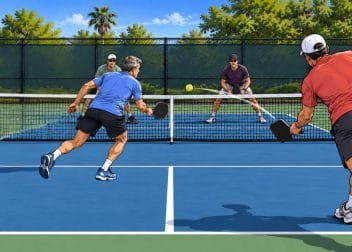
The third shot is the first shot the serving team hits after the return of serve, and it sets up everything that follows in the point. A drive is a firm, flat to topspin groundstroke hit with pace and aimed low over the net, as opposed to a soft drop shot that arcs into the kitchen. The guide to what counts as a drive in pickleball covers the shot’s mechanics in more detail, but the short version is that a drive trades touch for speed, reaching the opposing team faster and giving them less time to set up.
Under the 2026 rulebook, Section 10.A, the serve and the return of serve must each bounce once before either side can volley, so the third shot always comes off a bounce rather than out of the air. That bounce gives the serving team one clean look at a ball that has already settled, and a compact, well timed swing can turn that look into a hard, low ball the return team has to handle on the rise.
When Should You Drive Instead of Drop?
Choosing between a drive and a drop is a read, not a rule, and the read starts with the ball coming back at you. A high, floating, or short return is a strong signal to drive it, because a firm shot needs less lift than trying to loop a drop over the net from the same height. A deep, hard, low return usually calls for the opposite, since swinging hard at a fast, low ball tends to send it long, making a drop or a reset the safer play.
The other read is on the opponents, not the ball. If the return team is still moving forward or has not reached the non-volley zone line, which under the rulebook, Section 3.A.4.c, extends 7 feet back from the net on each side, a drive can beat them to the spot before they are set. Wind at your back matters too, since a tailwind pushes a firm drive down faster than it would a floating drop. The guide to shot selection in pickleball walks through more of these decision points, and the comparison of the third shot drive against the third shot drop breaks down the tradeoffs side by side.
How Do You Set Up the Drive?
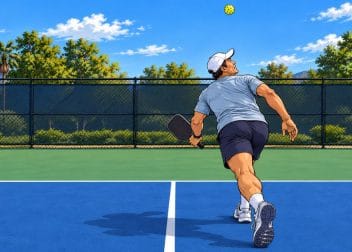
A third shot drive starts with a compact backswing, not a big wind-up. Pulling the paddle back too far adds swing time the ball does not need. Take the paddle back to roughly shoulder height, keep the elbow bent, and let the forward swing do the work.
Contact happens out in front of the body, not even with the hip or behind it. Meeting the ball early gives more court to work with. From that point, the swing path moves low to high, brushing up the back of the ball rather than driving straight through it. That low to high path is what puts topspin on the ball, and topspin is what lets a drive dip down into the court instead of sailing long. The guide to topspin in pickleball covers the grip and wrist mechanics behind that brushing motion.
Footwork matters as much as the swing. Split step as the return crosses the net, plant the outside foot, and rotate the hips and shoulders together into the shot rather than arming it with the wrist alone.
Where Should the Drive Go?
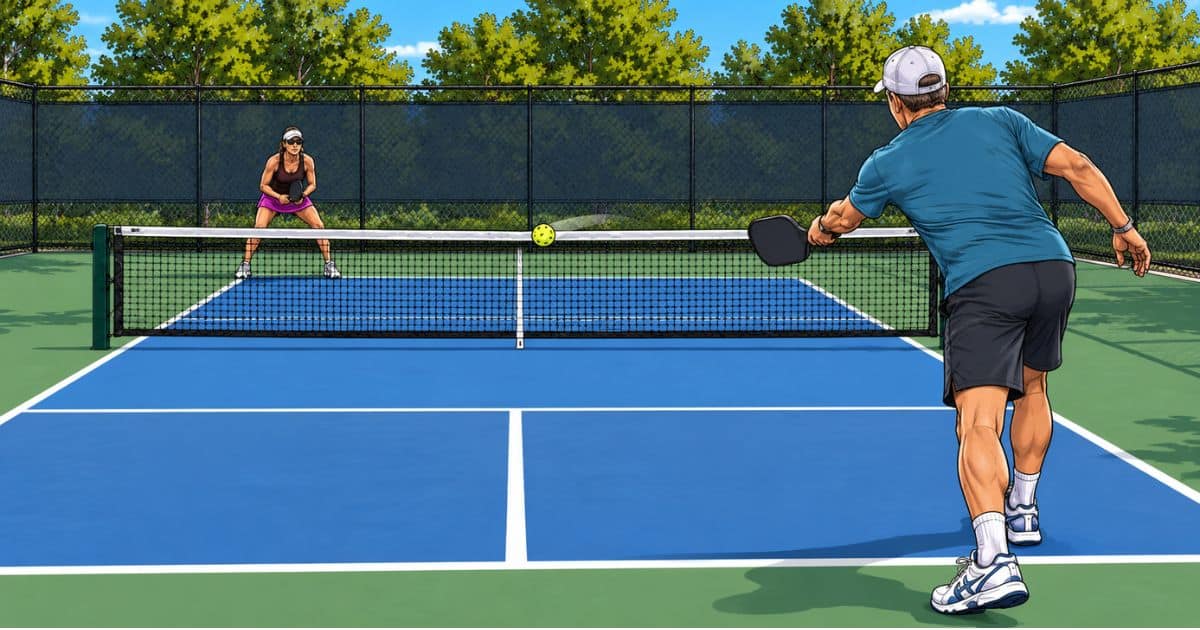
Height and direction both matter more than raw pace. A good target is clearing the net by about a foot, low enough that a player at the non-volley zone line cannot easily punch a volley down on it, but high enough for a reasonable margin. The net sits at 34 inches at the center and 36 inches at the sidelines under the rulebook, Sections 3.B.6 and 3.B.7, so a drive built to clear by roughly a foot crosses at somewhere around 46 to 48 inches, low enough to stay below a comfortable volley strike zone for an opponent standing at the line. The guide to keeping the ball low in pickleball has more detail on hitting to that target consistently.
Direction is a separate decision from height. Driving to the middle of the court, especially at the seam between two opponents, creates hesitation and can produce a weak return simply because neither player is sure whose ball it is. Driving at an opponent’s backhand hip, where the switch from a forehand to a backhand grip makes a clean block harder, is the other common target. Both are harder for the return team to handle cleanly than a ball hit straight to a forehand in the middle of a player’s strike zone.
What Happens on the Fifth Shot?
The drive does not end the point by itself, and treating it as a finishing shot is a common mistake among players who love to drive. If the return team blocks the drive back with a soft shot, which happens often, the serving team is now hitting a fifth shot from the baseline against a ball that is frequently short and slow. That fifth shot is where the point actually turns, and it plays much like a third shot drop or another drive depending on how the block comes back. The guide to blocking a drive in pickleball explains the return side of this exchange, worth knowing so you can anticipate what is coming back.
Some opponents, particularly aggressive net players sometimes called bangers, try to redirect the drive hard rather than block it softly. The guide to beating a banger in pickleball covers handling that harder counter.
How Does the Drive and Crash Pattern Work With a Partner?
The drive and crash is a two person pattern built around the fifth shot. One player drives the third shot, and instead of both players staying back to see what happens, the partner who did not hit the drive moves forward toward the non-volley zone line right after contact, timed to the moment the drive crosses the net. A firm, low drive often produces a soft, short block, and the crashing partner is already moving into position to attack that ball at the line rather than waiting for it to reach the baseline.
Timing the crash matters more than speed. Moving in too early invites a player who reads the crash to drive back at the space just vacated. Waiting until the block has traveled most of the way back is usually too late to attack. A useful cue is starting the move as the drive leaves the paddle and adjusting the last few steps once the return becomes clear.
The drive and crash rewards a player who can drive with the same target and pace shot after shot, since a partner cannot time a run to a shot that changes shape every time. Practicing the drive with a consistent low to high swing and a repeatable target at the middle or the backhand hip is what makes the pattern hold up with a partner in a real point.
Frequently Asked Questions
Is a third shot drive better than a third shot drop? Neither shot wins in every situation. The right choice depends on the height and pace of the return, where the opponents are standing, and conditions like wind.
How hard should you hit a third shot drive? Firm enough to keep the ball low and reach the opponents quickly, but not so hard that control breaks down. A drive that clears the net by about a foot and lands with pace inside the baseline does more than one hit as hard as possible that sails long.
What grip should you use for a third shot drive? A continental or mild eastern forehand grip works on the forehand side, since it lets the paddle face close slightly through contact for the low to high, topspin-producing swing path.
Should beginners learn the drive or the drop first? Many beginners find the drop harder to control at first because it demands more touch, so some coaches introduce the drive earlier to keep points going while drop feel develops. Both shots eventually belong in the same player’s game.
How do you add topspin to a third shot drive? Topspin comes from brushing up the back of the ball with a low to high swing path, not from swinging harder. A relaxed wrist and a swing that finishes above the height of contact both help generate spin.
What is a common mistake players make on the third shot drive? Treating the drive as a shot meant to win the point outright. A drive that clears the net by about a foot and lands with pace is meant to set up the fifth shot, not end the rally by itself.
Does wind affect the third shot drive? Yes. A tailwind carries a firm, low drive into the court faster, while a headwind can push the same shot up and long, favoring a drop instead.
What happens if the drive gets blocked back short? A short block usually becomes the fifth shot, played close to the non-volley zone line. It can be handled as another drop, a drive, or in the drive and crash pattern, a ball the crashing partner is already positioned to attack.
Working with a coach who can watch contact point and swing path in person tends to speed up learning the third shot drive, and the directory of pickleball coaches is a place to find one nearby.
Written by the Pickler Junction Team.