Can You Hit the Ball With Your Hand in Pickleball?
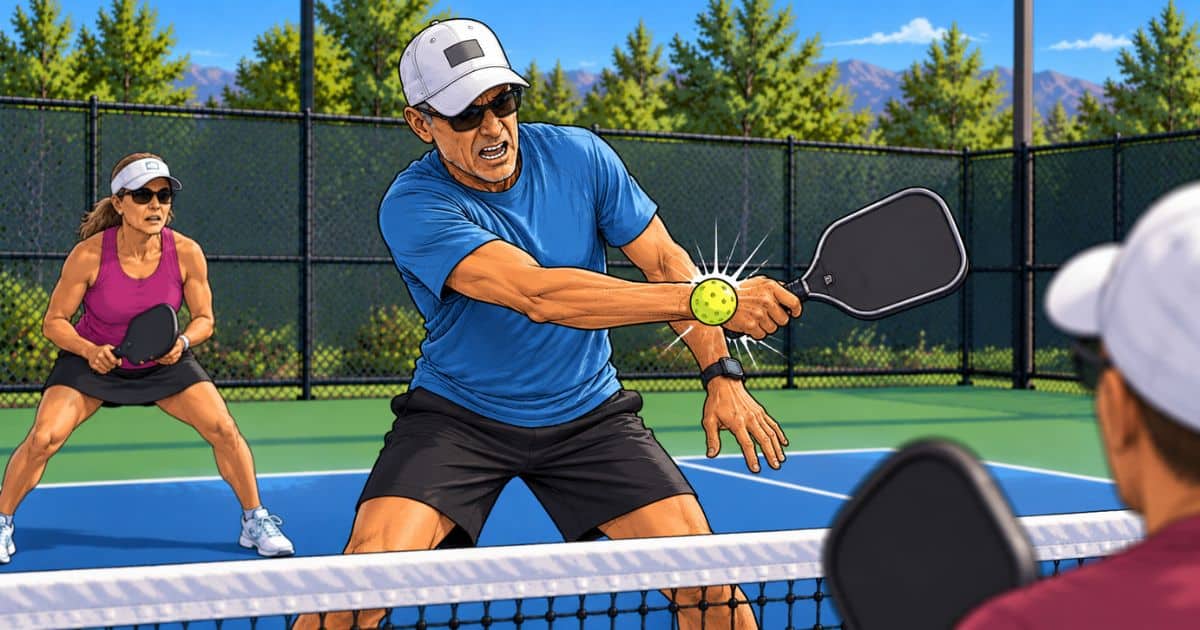
Quick Answer: Yes, if the ball contacts the paddle hand below the wrist while that hand is holding the paddle, play continues under Rule 10.C.3 of the 2026 rulebook. Contact with the other hand, the arm, or any other part of the body is a fault. Catching or stopping the ball instead of letting it deflect is also a fault.
Pickleball rallies move fast, and a ball headed for the paddle sometimes clips the fingers or the back of the hand instead. Whether that ends the point depends on exactly where the ball lands and what the hand is doing at the moment of contact. The rulebook draws a precise line, and a rec-play argument almost always comes down to which side of that line the contact fell on.
What Does Rule 10.C.3 Actually Say?
Rule 10.C.3 states that after the serve, when the ball contacts a player or anything worn or carried by the player, it is a fault, “except the player’s paddle or the player’s hands below the wrist joint while in contact with the paddle.” That exception is narrow by design. Two conditions have to be true at once: the contact has to land below the wrist joint, and that hand has to be in contact with the paddle at the moment the ball arrives. If both hold, the ball is treated the same as if it had struck the paddle face, and the rally continues.
Does the Wrist Line Matter That Much?
Yes. A ball that hits the back of the hand or a finger below the wrist joint is legal under Rule 10.C.3, but a ball that rides up and clips the forearm is a fault the instant it happens. There is no partial credit for a shot that grazes the wrist itself. Players who are unsure where a fast contact landed should call it against themselves rather than assume the friendlier outcome, since the rule protects the hand specifically, not the whole arm.
What Happens if the Ball Hits the Non-Paddle Hand?
Contact with a hand that is not in contact with the paddle is a fault under the same rulebook provision. This can come up with two-handed backhands if a guide hand has come off the grip, and with players who let a free hand drift out for balance during a stretch volley. If the ball tags that trailing hand while it is no longer in contact with the paddle, it is a fault. Players who rely on a two-handed backhand should keep the guide hand snug against the grip through contact, both for control and to stay inside the legal zone if the ball glances off target.
Is Catching or Stopping the Ball Ever Legal?
No. Even when the ball contacts the hand in the legal zone below the wrist, the player still has to let it continue in play rather than grab or trap it. Rule 9.A.1 makes stopping a rally before the ball otherwise becomes dead a fault against the player who stopped it, and closing a hand around the ball or pinning it against the paddle falls squarely under that rule. The exception in 10.C.3 covers incidental deflection, not a decision to end the point by hand. A ball that bounces off the hand and stays in the air is a live rally; a ball that gets caught is a dead one.
Does Switching Hands Mid-Rally Change Anything?
Switching hands is legal on its own. Under the rulebook, a player may switch hands during a rally and hold the paddle with either hand at any point in play. What matters for Rule 10.C.3 is which hand is holding the paddle at the exact moment of ball contact, not which hand a player normally favors. A right-handed player who swaps the paddle to the left hand for a wide ball and takes contact on the back of that left hand is still protected, because that hand is now the one in contact with the paddle. Swap too late, though, and a ball that reaches the old paddle hand after it has let go is no longer shielded by the exception.
How Does This Compare to the Ball Hitting Other Parts of the Body?
Rule 10.C.3 names one carve-out, the hand below the wrist. Everywhere else on the body, the guide to what happens when the ball hits your body in pickleball applies without exception: a shirt, a shoe, a shoulder, or a knee all produce the same fault as an arm would. The rulebook singles out the hand because it sits close to the paddle face during normal play, not because contact anywhere else on the body gets similar treatment.
What Should Players Do When the Call Is Disputed on a Rec Court?
Disputes usually come from disagreement over where contact happened, not disagreement over the rule itself. In self-officiated rec play, the receiving side has the better view of a ball that clips their own hand, so the rulebook’s general framework for line calls and self-officiated disputes puts the benefit of the doubt on the player closest to the contact when partners disagree. A hand contact that happens fast and close to the body is exactly the kind of call worth confirming out loud before the next serve, since replaying the point after an argument wastes more time than a quick, honest call in the moment. Players who want the exact wording to settle a dispute can pull up Rule 10.C.3 on a phone between points rather than relying on memory.
Does This Rule Interact With a Double Hit?
Not directly, but the two get confused on court. A double hit in pickleball involves more than one contact by the same player during one continuous stroke, and it is not automatically a fault when the contacts are continuous. If a ball touches a player’s legal paddle hand and then the paddle during one continuous stroke, the sequence is not automatically a fault. Players sorting out a fast exchange are usually mixing up a hand-contact question with a double-hit question, and separate sections of the rulebook govern each.
FAQ
Is it legal to hit the ball with your hand in pickleball? Contact is legal only when the ball hits the paddle hand below the wrist joint while that hand is holding the paddle. Any other hand, arm, or body contact is a fault under Rule 10.C.3.
What happens if the ball hits your fingers in pickleball? If the fingers are below the wrist joint and the hand is holding the paddle at the moment of contact, the rulebook treats it as legal and the rally continues. If not, it is a fault.
Is it a fault if the ball hits your wrist in pickleball? The rulebook’s exception applies below the wrist joint, so contact at or above the wrist is a fault. Only the hand portion below that joint is protected.
Can you catch the ball with your hand in pickleball? No. Rule 9.A.1 makes stopping a rally before the ball otherwise becomes dead a fault, and catching the ball with a hand instead of letting it deflect falls under that rule regardless of where the ball touched.
Does it matter which hand is holding the paddle? Yes. The rulebook protects contact only on the hand that is holding the paddle at the moment the ball arrives. A trailing or guide hand that is not on the grip when contact happens is not covered.
Is a two-handed backhand riskier for this rule? It can be, because both hands are near the ball on a two-handed backhand and only the hand that stays in contact with the paddle at the moment of the shot is protected under the rulebook. A guide hand that has already come off the grip when the ball arrives is not covered.
Can you switch the paddle to your other hand during a point? Yes, switching hands during a rally is allowed at any time. What decides a hand-contact fault under Rule 10.C.3 is which hand is on the paddle at the instant the ball touches it, not which hand started the point.
What is the difference between this rule and the two-bounce rule? This rule concerns the ball touching a player’s hand, arm, or body during a rally. The two-bounce rule, covered in a separate section of the rulebook, requires the serve and the return of serve each to bounce once before either side can volley. The two are unrelated beyond appearing in the same rulebook.
Hand-contact calls happen fast on a rec court, and they are exactly the kind of question a certified instructor can walk through in a single lesson using slow-motion drills that isolate where the wrist joint actually sits. Players who want that kind of hands-on coaching, along with help sorting out other close calls like what counts as a fault in pickleball or what a carry looks like in pickleball, can find a local instructor through the directory of pickleball coaches.
Written by the Pickler Junction Team.