Pickleball Serve Drills: 10 Ways to Practice Your Serve
Quick Answer: Strong pickleball serve drills mix placement, spin, and pressure work: deep zone targets, corner cones, a serve plus third shot sequence, spin and drop serve reps under the 2026 rulebook, a speed ladder, and a pressure round where the goal is 10 makes in a row. All 10 drills below work solo against a wall or with one returning partner.
A serve that only clears the net is not the same as a serve that gives an opponent trouble. The gap between those two outcomes is almost entirely repetition, and repetition works better with a target, a rep count, and a way to measure a miss. The 10 drills below build placement first, then layer in the spin and drop serve options the 2026 rulebook allows, then finish with pressure work that mimics what a serve feels like at 9-9. Before drilling placement, the guide to how to improve your pickleball serve is worth reading for grip, toss, and follow-through basics, and a player still learning the legal serve motion should start with the pickleball serve for beginners guide before adding targets and rep counts on top of it.
What Are the Best Serve Placement Drills?
Placement drills come first because a serve that lands in the wrong spot gives an opponent an easy return no matter how much pace or spin is behind it.
Deep Serve Target Zone Drill. Lay a towel or a line of tape across the back three feet of each service court, right along the baseline. Serve 10 balls per side, counting only the ones that land inside the taped zone. A deep serve pushes the returner back from the net before the point even starts, so the zone, not the baseline itself, is the target.
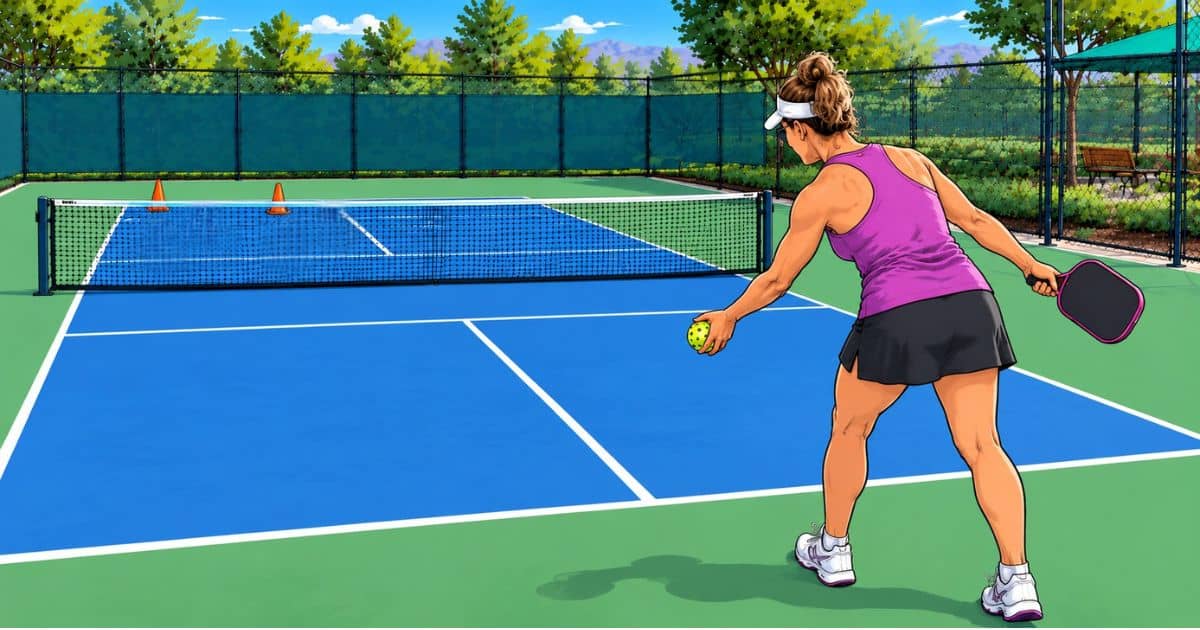
Cone or Towel Corner Target Drill. Place a cone in each back corner of the service court, angled to force a wide return. Serve 20 balls total, alternating corners every serve, and track makes out of 20. This drill isolates aim rather than depth, since a serve can land deep and still miss the corner by several feet.
Middle Serve Seam Drill. In doubles, the seam between two returners is a common target because it can create confusion over who takes the ball. Place a single cone on the centerline a few feet inside the service box and serve 10 balls at it. This drill only makes sense with a doubles court in mind, since singles has no seam to aim for.
How Do You Drill the Serve Into the Next Shot?
Serve Plus Third Shot Drill. A serve drilled in isolation does not train what happens right after contact. Serve to a partner, have that partner return crosscourt, then move forward and hit a third shot drop or drive depending on how the return comes back. Run 10 full sequences, resetting after each point rather than playing it out, so the rep count stays honest.
How Do You Practice Spin and Drop Serves Under the 2026 Rulebook?
Spin Serve Reps Drill. Under the 2026 rulebook, Section 7.B, the ball has to be released from the hand or off the paddle face without added spin at release, though the rulebook notes some natural rotation is expected. Spin is legal once the paddle makes contact, not before. Practice 15 serves focused on generating spin entirely through paddle path and wrist snap at contact, not through the toss, and check the motion against the pickleball serving rules if the toss itself starts to look manipulated. The guide on how to spin a pickleball serve breaks the contact-point mechanics down further.
Drop Serve Consistency Drill. The 2026 rulebook, Section 7.D, allows a drop serve where the ball is released from a natural height with no added propulsion, and it places no restriction on how many times the ball bounces or where it bounces before the server strikes it. That flexibility makes the drop serve useful for a player still building volley serve timing, since the rule in Section 7.C for a standard pickleball volley serve requires an upward paddle arc and contact no higher than the waist, a stricter motion than the drop serve needs. Drill the drop serve for consistency rather than placement at first: 15 reps focused on a repeatable drop height and a clean, unhurried strike.
What Drills Build Serve Power and Pressure Tolerance?
Serve Speed Ladder Drill. Serve in sets of five, alternating a soft, controlled serve with a firm, deeper drive serve, for four full sets of 10 total serves. The target is not a single speed but the ability to switch between two different paces on command, which matters more in a match than either speed alone.
Pressure Serving Drill (Make 10 in a Row). Serve to any legal target, but if a serve misses, the count resets to zero. The goal is 10 legal serves in a row before stopping. This drill trains the same nerves that show up serving at game point, since a single miss costs the whole streak rather than one point out of 10.
Can You Practice Serve Drills Alone?
Wall Serve Practice Drill. Every drill above works with a partner, but a wall session covers the days when no partner is available. Mark a target zone on a wall at a height and distance that approximates a deep serve landing spot, and serve into it in sets of 15. The guide to how to practice pickleball against a wall covers marking realistic target heights and adjusting distance so the rebound timing still resembles a real return. A rep counter or the pickleball drills app can track streaks across a wall session without needing a second player to call misses.
How Does Practicing With a Partner Returning Improve the Serve?
Partner Return Pressure Drill. Have a partner stand ready to return every serve live, rather than simply feeding the ball back. Serve 15 balls, and score a point only when the serve draws a weak or short return rather than just landing in play. This drill shifts the target from a spot on the court to an outcome, since the entire point of a strong serve is the quality of the return it forces, not the placement by itself.
Most of these drills work fastest with a plan that mixes at least one placement drill, one spin or drop serve session, and one pressure round in the same practice block, rather than repeating a single drill for an entire session. A coach who has watched the motion in person can usually spot a toss or contact-point issue faster than self-review does, and the directory of pickleball coaches lists instructors by city for players who want that kind of session built around serve mechanics specifically.
Frequently Asked Questions
How many serves should you practice per session? A session built from several of the drills above, at 10 to 20 reps each, usually adds up to 100 to 150 serves, which is enough to work placement, spin, and pressure without the motion breaking down from fatigue.
Can you do pickleball serve drills without a partner? Yes. The wall serve practice drill, the deep serve target zone drill, and the pressure serving drill all work solo, since none of them require a live return.
What is a good rep count for a beginner serve drill? Starting with sets of 10, focused on one target at a time, keeps a beginner from tracking too many variables in a single rep. Speed and spin work can wait until placement is consistent.
Is the drop serve easier to practice than the volley serve? The drop serve removes the upward-arc and below-waist contact requirements that Section 7.C of the 2026 rulebook places on the volley serve, since Section 7.D only requires a natural release with no added propulsion, which is why many players use it while still building volley serve timing.
How do you know if a spin serve is legal? Under the 2026 rulebook, Section 7.B, the spin has to come from the paddle at contact, not from the hand during the toss or release. If the ball is visibly spinning before the paddle touches it, the serve is not legal.
What is a good target for a deep serve drill? The back three feet of the service court, right along the baseline, is the standard target zone, since a serve that lands there gives the returner the least time and space to set up an aggressive return.
How does the make-10-in-a-row drill help with match nerves? Resetting the count to zero after any miss recreates the pressure of a single serve mattering at game point, rather than treating every serve as a low-stakes rep in a set of 10.
Should serve drills include the return, or just the serve? Both have value. Drills that isolate the serve build consistency faster, but the serve plus third shot drill and the partner return pressure drill train the shot that actually decides whether the serve did its job.
Can serve drills help with an ace rate? Placement and speed variation both increase the chance a serve lands somewhere the returner cannot reach cleanly, though no single drill guarantees an ace on any given serve.
How often should these drills be repeated each week? A short serve-focused block two or three times a week, mixing one placement drill with one pressure round each session, builds the motion faster than one long session covering every drill at once.
Written by the Pickler Junction Team.