How to Practice Pickleball Against a Wall
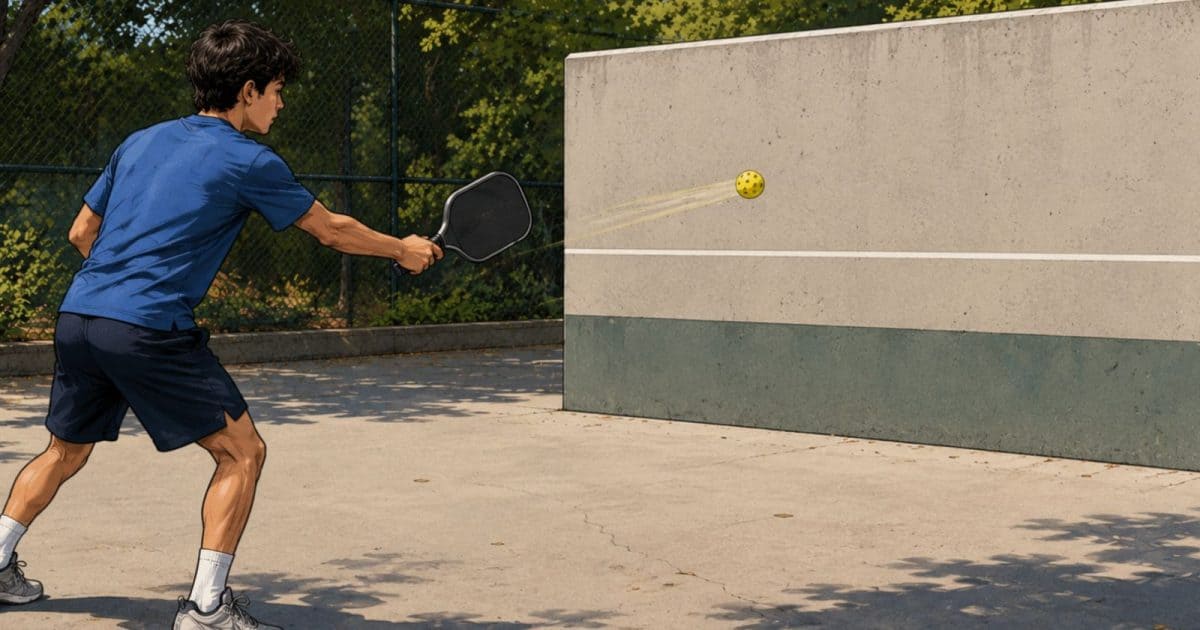
Quick Answer: Tape a net-height line on the wall at 34 inches, stand 7 to 10 feet back, and rally against it. Volleys, dinks, and resets all transfer well. Keep the paddle face steady and the swing short, because the wall rewards compactness and punishes big swings immediately.
Wall practice is the most useful solo work in pickleball, and it is genuinely productive rather than a substitute for a partner. Repetitions arrive faster than they do in live play.
What do you need to set it up?
A flat wall, a ball, and a strip of tape.
Any solid flat surface works: a gym wall, a garage door, a handball wall, or the back of a building. Concrete and cinder block give the truest rebound. Wood and metal doors are noisier and bouncier, which is workable once you adjust.
Mark a horizontal line at 34 inches, the height of the net at center. That line is what makes the practice specific rather than generic ball-striking, since it tells you instantly whether a shot would have cleared or not.
Ball choice matters more than people expect. Outdoor balls rebound harder and faster off a wall than indoor balls do, so an indoor ball is the friendlier starting point if the pace feels unmanageable. Stand 7 to 10 feet back to approximate kitchen-line distance.
Which drills actually transfer?
Four, and they cover most of what wall work can teach.
- Volley rallies. Stand close and hit continuous volleys above the line, paddle out in front, minimal swing. This builds hand speed and a stable paddle face better than any partner drill, because the ball comes back immediately.
- Dink control. Step back slightly and hit soft shots that land just above the line and come back low. The target is consistency, not power.
- Reset practice. Let the ball bounce, then absorb it with soft hands so it drops short rather than rebounding hard. This is the closest wall analogue to a real reset.
- Backhand isolation. Rally using only the backhand side. Most players’ weaker wing improves fastest here, since the wall gives repetitions no partner has patience for.
Two counting drills make sessions productive rather than idle. Set a target of consecutive volleys and restart from zero on a miss, or work in timed blocks of two minutes on one skill before switching.
Our guide to practicing pickleball by yourself covers the rest of the solo menu, including serve practice and ball machine work.
What can wall practice teach you badly?
Three habits, and they are worth naming because the wall reinforces them silently.
The first is a flat paddle face. A wall returns the ball on the same line every time, which makes a neutral face feel correct. Real play requires adjusting the face constantly for spin and height, and wall-only players sometimes develop a stiff, unadjusting paddle.
The second is standing still. The wall comes to you, so footwork gets no work at all. That is the largest gap in this kind of practice and the reason wall sessions pair best with live play rather than replacing it.
The third is pace escalation. A wall returns exactly what you give it, so a slightly harder shot comes back harder, and rallies drift faster until control disappears. That drift teaches hitting harder under pressure, which is the opposite of what the soft game needs. Resetting deliberately to slow pace back down is itself the useful skill, and our guide to the reset in pickleball covers what you are aiming for.
How should you structure a session?
Short and specific beats long and vague.
Twenty to thirty minutes is plenty. A workable shape is five minutes of easy volleys to warm up, ten minutes on one target skill, five minutes of backhand-only work, and five minutes of resets to finish on soft hands rather than hard ones.
Pick one thing per session. Wall practice rewards narrow focus, and a session spent on the backhand volley alone produces more transfer than a session spent hitting whatever comes back.
Finishing soft matters more than it sounds. Ending a session with fast volley exchanges leaves the hands trained toward pace, which is the habit most recreational players already have too much of. The soft shots that decide points at the kitchen line are covered in our guide to dinking in pickleball.
FAQ
How do you practice pickleball against a wall? Mark a line at net height, 34 inches, stand 7 to 10 feet back, and rally continuously. Volleys, dinks, resets, and backhand isolation all work.
How high should the line be? 34 inches, matching net height at the center. That gives instant feedback on whether a shot would have cleared.
How far should I stand? Seven to ten feet for volley and dink work, which approximates kitchen-line distance. Step back for reset practice.
Which ball should I use? Either, though outdoor balls rebound faster off a wall. An indoor ball is easier to control while you are learning the rhythm.
What does wall practice not teach? Footwork, since the ball comes to you, and paddle-face adjustment, since the rebound is predictable. Pair it with live play rather than substituting it.
Can wall practice make my game worse? It can reinforce a stiff paddle face and a drift toward faster pace. Resetting deliberately during sessions counters both.
How long should a session be? Twenty to thirty minutes, focused on one skill. Narrow sessions transfer better than long unfocused ones.
Is a garage door good enough? Yes, though it is louder and bouncier than concrete. Any flat solid surface works once you adjust to the rebound.
Want the technique checked before you drill it in? The coaches in our directory catch the habits a wall will happily reinforce, and the public courts in our listings often have practice walls on site.
Written by the Pickler Junction Team.