How to Keep the Ball Low in Pickleball
Quick Answer: Four things keep the ball low: a closed paddle face, contact out in front of your body, bending your knees instead of lifting the paddle, and a short swing. Pop-ups almost always trace back to one of those four, and the knee bend is the one most players skip.
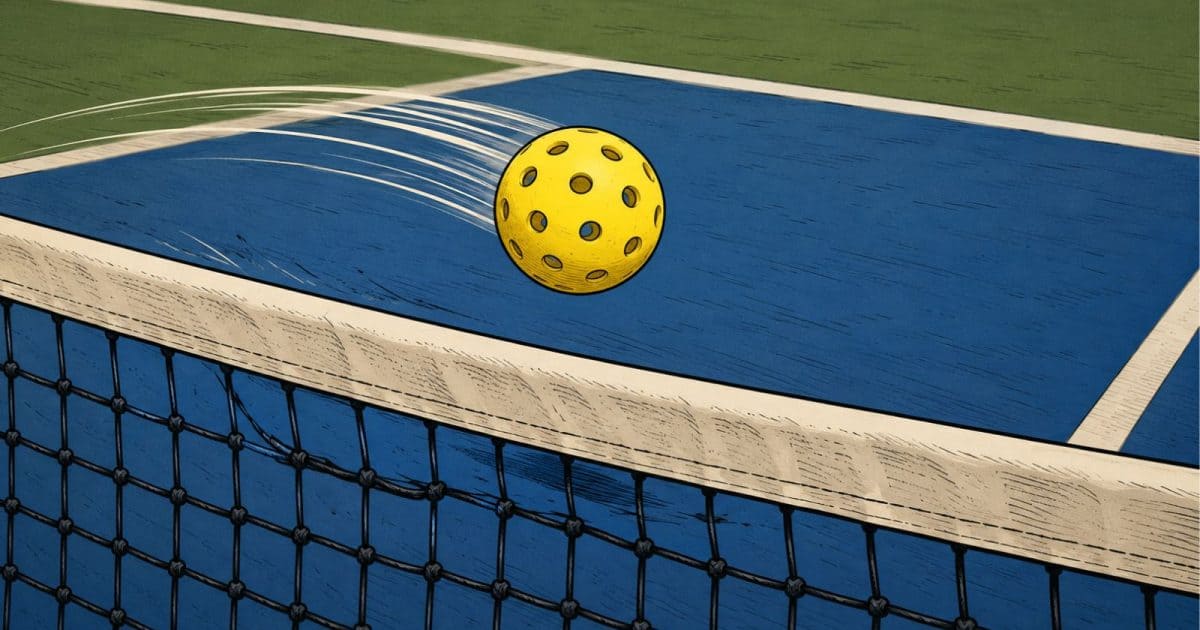
A ball that stays below net height at your opponent’s contact point cannot be attacked. That is the whole reason this matters, and it is why keeping the ball low is worth more than any amount of added power.
Why does the ball need to stay low?
Because height is what makes a ball attackable.
A ball your opponent meets above net height can be hit downward, which means pace with a safe margin. A ball they meet below net height cannot: attacking it requires lifting, and a lifted ball at speed is the easiest putaway in the sport.
That means every soft shot has one measurable job. It is not about landing in the kitchen, and it is not about being slow. It is about arriving below the net at the point where your opponent makes contact. Our guide to dinking covers the shot itself; this is about the property that makes it work.
The corollary is worth stating plainly: a dink that lands in the kitchen but sits up is worse than a slightly deeper ball that stays low.
What actually causes pop-ups?
Four causes, in rough order of how often they are to blame.
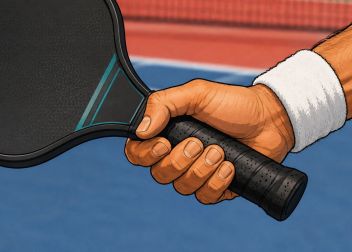
- An open paddle face. The face angled upward sends the ball upward, however softly you hit it. This is the single most common cause and the easiest to fix.
- Reaching instead of bending. Meeting a low ball by dropping the paddle head while standing upright forces an open face. The legs, not the paddle, should get you down to the ball.
- Contact behind the body. A ball struck beside or behind you can only be lifted. Contact needs to be out in front where the paddle can travel forward.
- Too much swing. A long stroke adds pace you did not want and removes the control that keeps the ball down. Soft shots want a short motion.
Grip pressure deserves a mention too. A grip so loose that the face gives on contact produces the same result as an open face, and it is why very relaxed hands sometimes make the problem worse rather than better.
How do you fix each one?
Start with the face, then the knees, because those two account for most of it.
For the paddle face, set it square or slightly closed before the ball arrives rather than adjusting during the shot. A useful check is where the face points at the finish: if it is pointing at the sky, the ball went up.
For the knees, bend at the knees and hips to bring your eyes closer to the ball’s height, keeping the paddle face square. Fixing nothing else but this reduces pop-ups within a session, because the open face was a symptom of standing too tall.
For contact point, keep the paddle in front of your body between shots so contact naturally happens there. Reaching to the side is what produces the lift.
For swing length, finish where you started. A soft shot should look like a push rather than a stroke, and the follow-through should stop roughly where contact happened.
Does this change with the shot?
The principle holds; the margin changes.
On a dink, aim to clear the net by a small margin and land the ball short. Low and short beats low and deep, because a deep dink gives your opponent an easier reach.
On a reset from the transition zone, the priority shifts to absorbing pace. Soft hands and a slightly relaxed grip let the ball die off the face rather than rebounding, and our guide to the reset covers the difference.
On a third shot drop, the ball has to travel further, so it needs more arc. The height that matters is not the peak of the arc but where it crosses your opponent’s contact point, and our guide to the third shot drop covers the trajectory.
On a drive, topspin is what keeps the ball low, since it lets you hit with margin over the net and still have the ball dip inside the baseline.
How do you practise it?
Against a wall, with a line, and with a target that is not the kitchen.
Tape a line at net height, 34 inches, and rally against it, aiming to keep every ball just above the line coming back low. The wall gives immediate feedback and far more repetitions than a partner drill, and our guide to practising against a wall covers the setup.
With a partner, the useful constraint is a rope or a second net line about two feet above the tape: any ball that crosses above it loses the point regardless of where it lands. That reframes the drill around height rather than placement, which is the property you are actually training.
The decision of when a low ball is the right choice at all sits in our guide to shot selection, and it is the other half of this skill.
FAQ
How do I keep the ball low in pickleball? Close the paddle face, contact the ball in front of your body, bend your knees rather than dropping the paddle, and keep the swing short.
Why do my dinks keep popping up? Most often an open paddle face, or reaching for a low ball while standing upright, which forces the face open.
How low does the ball actually need to be? Below net height at the point where your opponent makes contact. That is what makes it unattackable.
Should I bend my knees or bend at the waist? Bend at the knees and hips. Bending at the waist alone drops your head without lowering your paddle path.
Does grip pressure matter? Yes. A grip so loose that the face gives on contact produces pop-ups, which is why very relaxed hands can make the problem worse.
Is a low dink better than a short one? Low beats short. A dink that lands in the kitchen but sits up is more attackable than a slightly deeper ball that stays below net height.
How do I keep a drive low? Topspin. It lets the ball clear the net with margin and still dip inside the baseline, which a flat drive cannot do.
What is the best drill for this? Wall rallies against a line taped at net height, 34 inches, aiming to keep every return low.
Want the fault diagnosed rather than guessed at? The coaches in our directory spot an open face in one rally, and the camps and clinics in our listings drill the soft game specifically.
Written by the Pickler Junction Team.