How to Return a Serve in Pickleball
Quick Answer: Stand a step behind the baseline, let the serve bounce as the rules require, then drive it deep down the middle or at the weaker opponent. Depth matters more than pace. Move to the kitchen line while the ball is in the air, since arriving there before the third shot is the point of a good return.
The return of serve is the most undervalued shot in pickleball. The receiving team starts every point with a structural advantage, and the return either locks that advantage in or gives it away.
Why does the return matter so much?
Because the two-bounce rule hands the receiving team a head start at the net.
Under the 2026 USA Pickleball rulebook, Rule 10.A requires the serve and the return of serve to each bounce before either side may hit the ball in the air. Rule 10.A.1 makes it a fault if the receiver hits the serve before it bounces, and Rule 10.A.2 makes it a fault if the serving side hits the return before it bounces. That second required bounce pins the serving team near their own baseline for one extra shot while the receiving team is free to move forward. The guide to the two-bounce rule covers the mechanic in full.
A deep return stretches that advantage by pushing the serving team further back, which lengthens their next shot and makes a clean third shot drop harder to execute. A short return does the opposite. It lets the serving team step in, hit forward, and arrive at the kitchen line alongside the receiving team.
That is the whole strategic case. The return is not about winning the point outright. It is about keeping an advantage the rules already gave the receiving team.
Where should you stand?
Behind the baseline, further back than feels necessary.
Many recreational players stand too close and get jammed by a deep serve. Starting a step or two behind the baseline lets a receiver move forward into the ball rather than backward away from it, and moving forward is the goal anyway.
Position laterally according to the server’s tendencies and a personal weaker side. A player with a shaky backhand does better shading slightly to protect it than standing dead center and hoping.
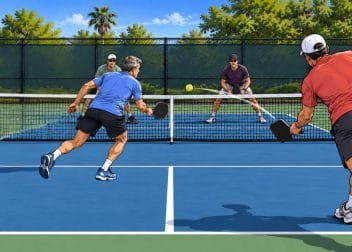
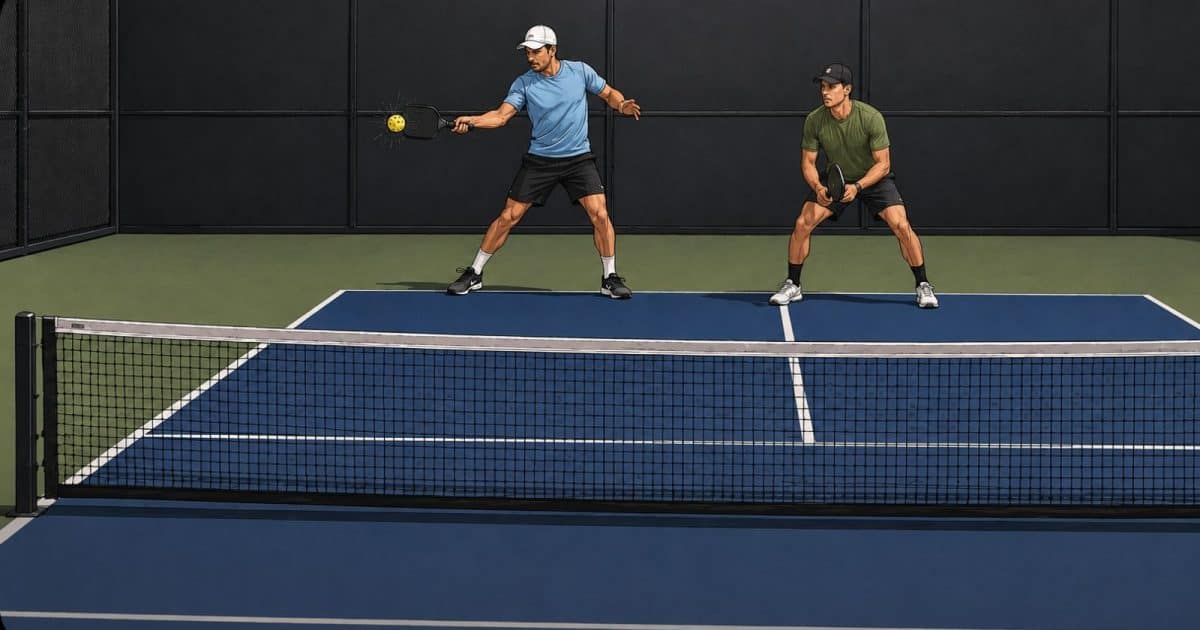
The receiving partner stands at the kitchen line already, since Rule 10.A only restricts the player actually receiving the serve. That asymmetry is worth remembering. The receiving team already has one player at the net before the point starts, which is part of why a poor return costs more than it looks like it should.
How should you hit it?
Deep, safe, and with margin over the net. Pace is optional.
The target is the back third of the opponents’ court, aimed down the middle or at the weaker player. Down the middle is the reliable default, because it reduces the angles available on the next shot and creates hesitation between two opponents about who should take it.
Three technical points do most of the work:
- Hit with net clearance. A return that clips the net costs the point outright. Aim several feet over the net rather than skimming it, since depth is the goal and a low, short return buys nothing.
- Keep the swing compact. A full tennis-style swing produces errors and slows the move forward. A controlled drive with a short finish is enough.
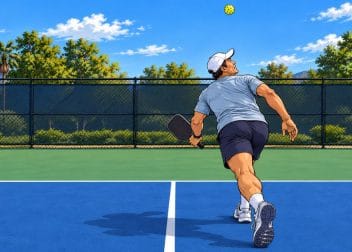
- Move as you hit. Start moving forward while the ball is in the air, not after watching it land. A receiver who hits and then starts walking is already a step behind.
Topspin adds margin and helps the ball dip inside the baseline, and a driven return is a legitimate way to pressure the serving team into a rushed third shot, as the guide to the drive covers. A slow, high, deep return is still more effective than a hard, flat, short one, and it buys more time to reach the net. Players working on serve mechanics from the other side of the ball can compare notes in the guide to serving for beginners, since a weak serve is often what makes a return this easy to hit deep in the first place.
What happens after the return?
Get to the kitchen line, and do it before the third shot arrives.
This is the part most recreational players leave undone. A player hits a good return, admires it, and starts walking forward, which strands them in the transition zone at exactly the moment the third shot lands at their feet. The whole value of the return depends on arriving at the net.
Stop when the opponent strikes the ball, split step, and continue moving only after reading the shot. That pause costs half a second and prevents the most common transition-zone mistake, which is drifting through the shot instead of being balanced for it.
Expect a drop or a drive in reply. The serving team’s problem is now a real one, and how they try to solve it is covered in the guide to the third shot drop. The receiving side’s job is simply to be at the kitchen line, balanced, paddle up, when it comes. A returner who also faces spin serves regularly can work through the adjustments in the guide to returning a spin serve, since the footwork changes but the destination, the kitchen line, does not.
FAQ
How do you return a serve in pickleball? Let the serve bounce, since Rule 10.A requires it, hit deep to the back third of the court, and move to the kitchen line while the ball is traveling.
Where should you aim the return? Deep down the middle by default, or at the weaker player. Down the middle reduces the angles available on the next shot.
Should the return be hard? Not necessarily. Depth matters more than pace, and a slow, deep return is more useful than a hard, short one.
Where should you stand to receive? A step or two behind the baseline, so the return comes off a forward swing into the ball rather than a backward step away from it.
Can the serve be volleyed? No. Rule 10.A.1 requires the serve to bounce before the receiver hits it, and volleying it is a fault.
Is a serve going out worth returning? No. A serve that lands out is out under the scoring rules. Playing it anyway gives away the point for no reason.
Where should your partner stand? At the kitchen line. Rule 10.A restricts only the player receiving the serve, not that player’s partner.
What is the most common return mistake? Hitting it short, or hitting a good deep return and then failing to reach the kitchen line behind it.
Getting the return right is a footwork habit as much as a swing, and it is one of the fastest things a coach can fix in a single lesson. The pickleball coaches listed in the Pickler Junction directory work on return and approach together, so the two shots get practiced as one sequence instead of separately. Players who want more serve reps first can also work through the guide to serve drills before booking a lesson.
Written by the Pickler Junction Team.