How to Return a Spin Serve in Pickleball
Quick Answer: To return a spin serve, watch the server’s paddle path instead of the ball, stand a foot or two behind the baseline, and block the return with a firm wrist rather than swinging. Topspin kicks forward and up off the bounce. Sidespin skids sideways. A deep, controlled return beats an aggressive one almost every time.
A spin serve is a serve struck with paddle brush so the ball rotates in flight, changing how it curves in the air and how it kicks off the bounce. Returning one well is mostly about reading it early and taking pace off, not adding more.
Read the spin before the ball arrives
Watch the paddle, not the ball. The ball tells you almost nothing until it has already gone past you.
- A paddle traveling low to high with a closed face is generating topspin. Expect the ball to dip late, then jump forward and up off the bounce.
- A paddle brushing across the ball, roughly side to side, is generating sidespin. Expect the ball to curve in the air and skid sideways off the bounce.
- A paddle traveling flat through contact is a drive serve. It arrives faster and bounces in a straight, predictable line.
Under Rule 7.B.2 of the 2026 USA Pickleball rulebook, the server cannot add spin with a hand or fingers before contact. Spin is allowed only from the paddle stroke itself, so the paddle path is the only place the spin can come from. That makes a spin serve easier to read than it looks. The companion guide on adding spin to a serve explains what the server is doing from the other side of the net.
Where to stand
Further back than feels natural. For most returners, this is the single biggest fix.
Spin does its damage in the first fraction of a second after the bounce. Standing a foot or two behind the baseline lets that kick finish before the ball reaches the paddle. Standing right on the baseline means playing the ball at its most unpredictable moment.
Give yourself the extra room, then move forward through the return. The goal is moving toward the kitchen while hitting the ball, not backing away from it.
The technique for the return
Block it. Do not swing at it.
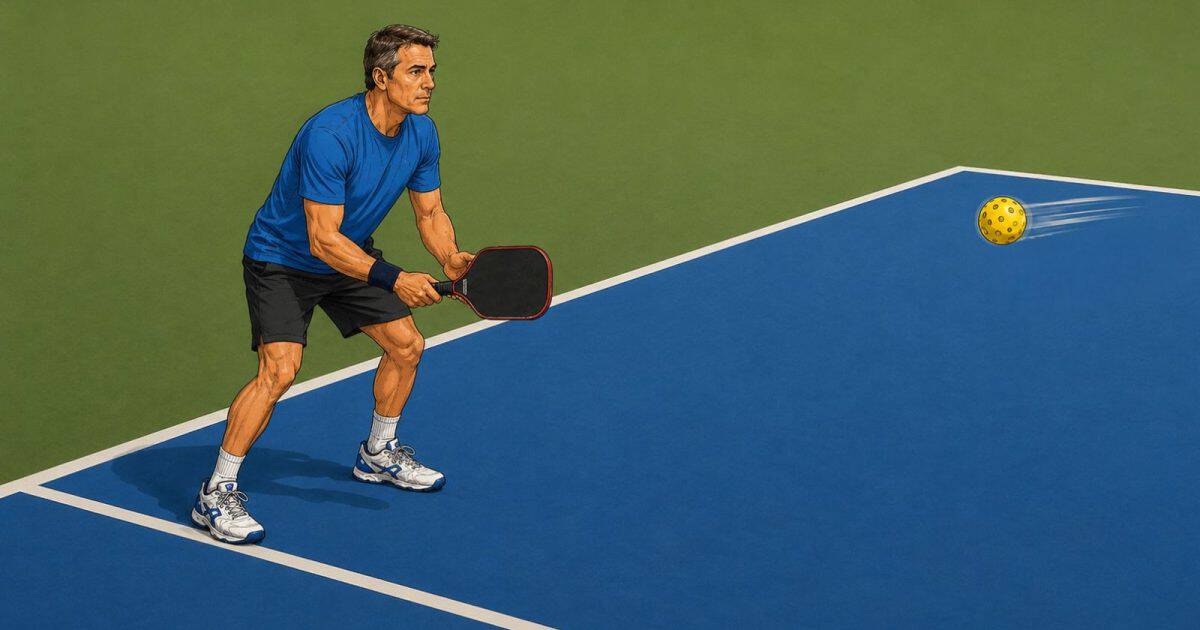
- Get the paddle out in front, roughly chest height, and turn the shoulders early.
- Start deep enough to step in, so contact happens on the way down instead of at the top of the kick.
- Keep the wrist firm. A loose wrist lets incoming spin twist the paddle face off line.
- Meet the ball out in front of the body with a short, compact stroke.
- Aim deep and toward the middle. Depth pins the server back near the baseline, and the middle removes angles on the next shot.
- Move forward as soon as the ball leaves the paddle.
The spin already on the ball supplies plenty of pace. A full swing added on top of that pace is how returns end up in the net or long.
Topspin versus sidespin
They fail in different ways, so they need different fixes.
Topspin dives late, then jumps forward and up off the bounce. A return that keeps flying long usually means contact is happening at the top of the kick with an open paddle face. Stepping back slightly and closing the face a touch corrects it.
Sidespin curves in the air and skids sideways off the bounce. A return that keeps sliding off the edge of the paddle usually means the ball is getting too far to the side of the body before contact. Moving the feet to get behind the ball and meeting it out in front, instead of reaching, fixes it.
Neither spin is unbeatable once reaching stops. Most missed returns come from standing still and stretching for a ball that needed a step.
Why a deep return matters so much
Because the return is one of the few shots in pickleball with a built-in structural edge, and a short return gives that edge away.
The returning team reaches the kitchen line first. That is built into the two-bounce rule, since under the rulebook, Rule 10.A requires the serving team to let the return bounce before volleying it. A deep return keeps the server pinned near the baseline and buys the returner time to get all the way forward.
A short return does the opposite. It pulls the server in, sets up an easy attacking third shot, and leaves the returner arriving at the kitchen line late. The guide to returning serve covers this positioning in more detail.
When the spin keeps beating you
Stop trying to attack it. Losing repeatedly to a spin serve almost always traces back to trying to hit a winner off it.
The lowest-risk answer is a high, deep, safe return down the middle. It is not glamorous, but it removes the advantage the spin serve was built to create. It gets the returner to the kitchen line on time and forces the server to hit a third shot from the baseline. Many servers get visibly frustrated when that shot keeps coming back.
Against a server who wins the point with spin over and over, asking for twenty spin serves in a row after the match teaches more than twenty games of guessing. A round of focused serve return drills with a coach or practice partner works the same way, turning a guess into a read.
FAQ
Is the spin serve legal in pickleball?
Paddle-generated spin is legal. Under the USA Pickleball rulebook, Rule 7.B.2 lets the server add spin only through the paddle stroke, not with a hand or fingers before or during release. Under the rulebook, Rule 7.B.2.a lets a receiver who spots illegal spin manipulation call for a replay, but only before returning the serve.
Should you stand further back to return a spin serve?
Yes. Standing a foot or two behind the baseline gives the spin time to finish working before the ball is contacted. Standing right on the baseline forces contact at the ball’s most unpredictable moment.
Why does the ball jump sideways off the bounce?
That is sidespin. The rotation grips the court surface and pushes the ball sideways. Moving the feet to get behind the ball works better than reaching out to the side.
Should you block or swing at a spin serve?
Block it. The serve already arrives with its own pace and rotation, and a short, controlled block with a firm wrist manages that far better than a full swing.
Where should the return of serve be aimed?
Deep and toward the middle. Depth keeps the serving team pinned back, and the middle cuts down the angles available on the next shot.
Does a textured paddle help return spin serves?
Not meaningfully. Paddle surface texture is built to help a player generate spin, not resist it. Firm contact out in front and good footwork matter more than surface texture.
How can returning spin serves be practiced without a partner?
Not easily, since the serve has to come from someone. Wall work builds reaction time and paddle control, but a serving partner willing to feed spin serves is the closest thing to real practice.
Why do returns keep going long against topspin?
Topspin kicks up and forward off the bounce, and an open paddle face sends that upward energy long. Stepping back to meet the ball on the way down, then closing the face slightly, corrects it.
Reading a spin serve quickly is one of those skills a coach can fix in a single session, since someone standing behind the returner can see exactly what led the eyes astray. Pickler Junction’s directory lists pickleball coaches by city for anyone who wants hands-on help with the read.
Written by the Pickler Junction Team.