Fiberglass vs Carbon Fiber Pickleball Paddles: Which Should You Buy?
Quick Answer: Fiberglass paddle faces flex more at contact and return more energy, adding power with less swing effort. Carbon fiber faces are stiffer, so they favor control, consistent response, and spin from surface texture. Power-focused players tend to prefer fiberglass. Control and touch players tend to prefer carbon fiber. Weight and grip choice matter too.
Face material is the most marketed spec on a pickleball paddle, and it is also one of the few specs that genuinely changes how the ball leaves the face. The choice comes down to what the paddle should do when a shot is not hit perfectly.
What actually differs between the two materials?
Stiffness explains most of the difference between the two faces.
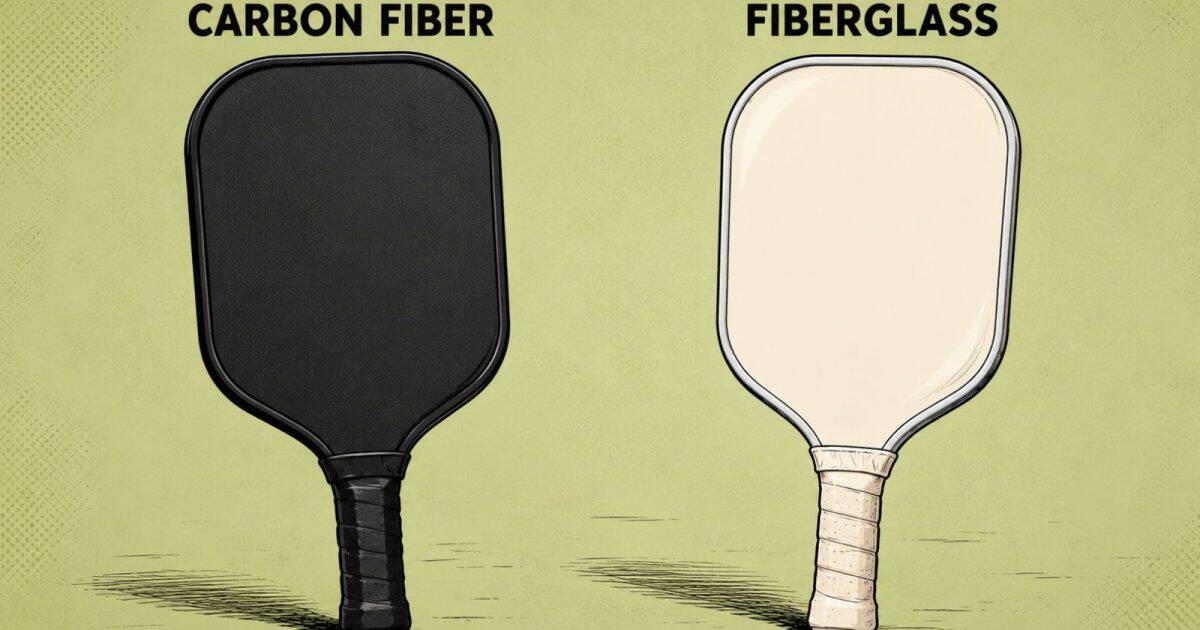
Fiberglass, sometimes sold as composite, E-glass, or S-glass, is the more flexible material. It deforms slightly on contact and springs back, adding extra pop to the shot. That trampoline effect is why fiberglass paddles feel lively and why players who want free power tend to choose them.
Carbon fiber is stiffer. It deforms less on contact, so more of the ball’s behavior comes from the swing than from the face. That produces a more predictable, more controllable response, which is why carbon dominates the performance end of the paddle market.
Surface texture is a separate variable from face material. Raw carbon faces often have a gritty, unpainted finish that grips the ball for extra spin, covered in the guide to raw carbon pickleball paddles, while fiberglass faces are more often finished smooth or painted. Under the 2026 USA Pickleball rulebook, Rule 3.D.5 bans hitting surfaces with sandpaper characteristics, rough texturing, or coatings such as anti-skid paint that add spin beyond what the surface itself provides, so any textured face sold today still has to clear that roughness limit to reach the USA Pickleball Approved Paddle List.
Which one suits your game?
Match the material to the shot that wins the most points.
- Choose fiberglass if drives and put-aways from the baseline win the point, or if a modest swing speed needs help generating pace.
- Choose carbon fiber if points get won at the net with dinks, resets, and touch shots, or if the extra spin from a textured face matters.
- Choose carbon if consistency matters more than peak power, since a stiffer face returns the ball the same way shot after shot instead of adding unpredictable pop.
- Choose fiberglass if budget is the deciding factor, since fiberglass paddles still tend to sit at lower price points than premium carbon models.
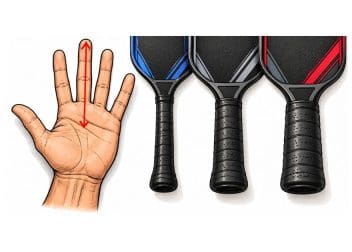
- Check the fit, not just the face, since paddle weight and grip choice change how a paddle feels as much as the material does.
Hybrid constructions muddy these categories on purpose. Some paddles pair a carbon frame or edge wall with a composite face, or blend both materials in layers. Reading the stated face material, rather than the marketing name on the box, is the only reliable way to know what a paddle actually is.
What is the honest tradeoff?
Power costs control, and the trade runs in both directions.
The fiberglass trampoline effect that adds pace to a drive adds pace to a dink just as easily, and a dink is exactly where extra pace is unwanted. Soft shots come off hotter and land deeper than intended, so a switch from carbon to fiberglass usually costs a few sessions of overhitting at the kitchen line before touch resets.
Carbon’s stiffness costs the opposite way. A slower swing gets less back from a carbon face, because the face returns close to what the swing puts into it. A player who relies on the paddle to generate pace can end up worse off with the more expensive, stiffer material.
That is the trap in buying the same premium carbon paddle a stronger opponent uses. A player with a slower swing can lose pace that a fiberglass paddle would have supplied, and the face is the reason rather than the player’s form.
Does the material change durability or price?
Both, modestly.
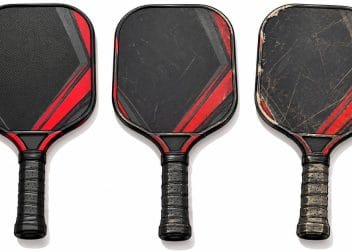
Fiberglass faces tend to show wear sooner and, over time, lose some pop as the material fatigues. Carbon faces generally hold their properties longer, though a raw carbon face’s spin-producing texture does smooth out with use, which is a real decline in performance even when the paddle still looks fine.
On price, fiberglass historically anchored the entry and mid tiers of the market while carbon sat at the premium end. That gap has narrowed as carbon manufacturing costs fell, so competent carbon paddles are now available well below what used to be the premium price threshold. The guide to how much to spend on a pickleball paddle covers where the money actually starts to matter, and the directory of gear retailers lists shops that carry both materials for a side by side test.
Face material has nothing to do with legality. Rule 3.D.2 caps paddle length at 17 inches and combined length plus width at 24 inches, and Rule 18.A requires every paddle used in sanctioned play to appear on the USA Pickleball Approved Paddle List. Both fiberglass and carbon paddles have to clear the same dimension rules and the same surface roughness limits under Rule 3.D.5 to be approved, so the face material a player picks has no bearing on whether the paddle is legal to use.
Spin is worth a final note, since it drives so many purchase decisions. Spin comes from surface texture rather than from the material underneath it, and the rulebook caps how rough that surface may be. The explainer on how paddle texture creates spin covers what is actually happening at contact.
FAQ
Is carbon fiber better than fiberglass for pickleball? Not universally. Carbon offers more control and spin, and fiberglass offers more power with less swing effort. Which one is better depends on whether a player wins points at the net or from the baseline.
Which material is better for beginners? Either can work well. Fiberglass helps a player who struggles to generate pace, while carbon builds touch habits earlier. Paddle weight and grip choice matter more than face material at the beginner stage, covered in the guide to paddle weight for beginners.
Does carbon fiber give more spin than fiberglass? Texture creates spin, not the material itself, and raw carbon faces are usually textured. A smooth carbon face grips the ball no better than a smooth fiberglass one.
Are fiberglass paddles cheaper than carbon paddles? Generally yes, though competent carbon paddles now reach well below the old premium price threshold.
Which material lasts longer? Carbon typically holds its playing properties longer than fiberglass. A raw carbon face’s spin-producing texture does wear smooth with repeated use, which reduces grip before the paddle shows visible damage.
What is a composite pickleball paddle? Usually a paddle with a fiberglass or blended face. The term composite is loose marketing language, so checking the stated face material matters more than the label on the box.
Will switching face materials change a player’s game right away? Expect an adjustment period, especially when moving from carbon to fiberglass, since soft shots come off hotter than intended for a few sessions.
Does face material affect whether a paddle is legal to use? No. Legality depends on paddle dimensions under Rule 3.D.2 and surface roughness limits under Rule 3.D.5, not on whether the face is fiberglass or carbon.
Reading a spec sheet only goes so far. Feeling the difference between a lively fiberglass face and a controlled carbon face is the fastest way to know which side of this tradeoff fits a given game, and the gear and accessories directory lists shops worth a demo session before buying.
Written by the Pickler Junction Team.