How to Choose a Pickleball Paddle Grip Size
Quick Answer: Pickleball paddle grips are commonly offered in a narrow range of circumferences, often around 4 to 4.5 inches. Hand measurements and the index-finger test can provide a starting point, but comfort, control, and the ability to hold the paddle without excessive squeezing matter more than any single formula.
What Grip Sizes Are Common on Pickleball Paddles?
Grip size refers to the circumference of the handle where the hand wraps around it, not the length of the handle itself. Paddle grips fall in a narrow band, from about 4 inches at the smallest to 4.5 inches at the largest, with 4 1/8 inches and 4 1/4 inches the two sizes many brands treat as standard. A quarter inch sounds small on paper, but across a two-hour session of dinks, drives, and resets, that difference changes how the hand and forearm feel by the third game.
Grip size is a separate spec from grip style, the technique used to hold the paddle, continental, eastern, or something in between. The guide to what grip to use in pickleball covers hand position and technique, while this guide focuses only on the physical size of the handle. The two interact, since a grip that fits well makes it easier to hold a consistent hand position, but they are not the same decision.
How Do You Measure Your Grip Size?
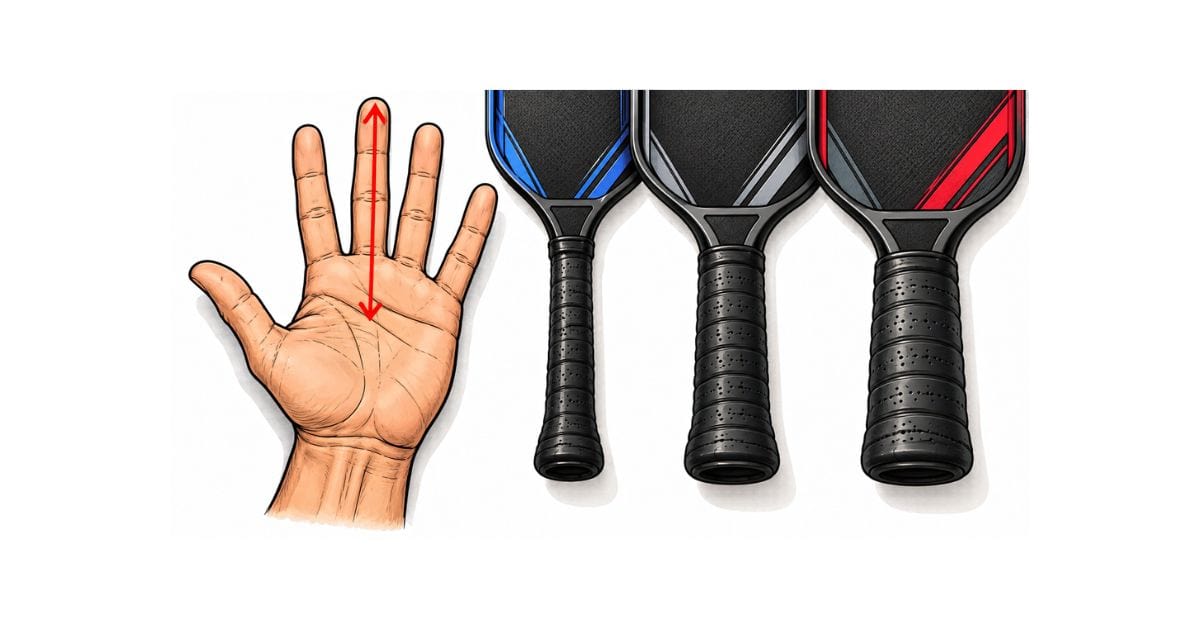
Two simple tests work well, and neither requires special equipment. The first is the ruler test, borrowed from tennis fitting. Hold your dominant hand open, palm up, and measure from the middle horizontal crease of the palm to the tip of the ring finger. That measurement can be used as a rough starting point, then checked by holding an actual paddle and assessing comfort and control.
The second is the index-finger test, done with a paddle already in hand. Grip the paddle normally, then slide the index finger of your free hand into the gap between your fingertips and the base of your palm on the gripping hand. A comfortable fit leaves just enough room for that finger to slide in without much extra space. No room at all or a very loose gap may suggest that the grip deserves a closer look, but the test is only a starting point and should be weighed against comfort and control during play. Neither test replaces holding an actual paddle before buying one, but both narrow the search before you do.
What Happens When the Grip Is Too Small or Too Large?
A grip that is too small forces the fingers to close further around the handle and squeeze harder to keep the paddle from twisting on off-center hits. A grip that feels too small can lead to squeezing harder, which can make the hand and forearm feel more fatigued over a long session. Mayo Clinic lists poor equipment and poor form among factors that can contribute to tennis elbow. A player with persistent elbow or forearm symptoms should consider professional evaluation rather than relying on an equipment change alone. Anyone already dealing with soreness should look at the guide to pickleball wrist pain for more on managing symptoms alongside equipment changes.
A grip that is too large creates a different problem. An oversized grip can feel less maneuverable for some players and may make fine paddle-face adjustments less comfortable. An oversized grip can feel like swinging a small club instead of a paddle, with the head lagging behind the hand instead of turning over cleanly on shots that need touch rather than power.
Should You Build Up the Grip With an Overgrip or Buy a Larger Handle?
An overgrip is the cheaper fix when a factory grip runs slightly small. Wrapping an overgrip around an existing grip adds a small amount to the circumference, though the exact change depends on the grip material, overlap, and wrapping tension. The comparison of overgrip versus replacement grip walks through when each option makes sense, including cost, feel, and how often each one needs replacing.
Stacking two or three overgrips to make up a bigger size difference is a common workaround, but it changes more than circumference. Extra wraps can change the handle feel and add a small amount of weight near the handle. A player who needs a meaningfully larger grip is usually better off choosing a paddle that ships with a larger factory grip or having a shop replace the base grip rather than layering overgrip after overgrip.
Does Grip Size Change for a Two-Handed Backhand?
Grip size preference can shift for a player who hits a two-handed backhand rather than a one-handed slice or drive. Some two-handed players prefer a smaller circumference or a longer handle, but preference varies with hand size, grip style, and which hand does most of the work. The guide to the two-handed backhand, sometimes called the twoey, covers hand placement for the shot in more detail.
A grip sized correctly for a one-handed forehand and backhand can feel slightly cramped for two hands on the shots where a second hand comes on for stability, and no single size solves both perfectly. Picking the size that suits the primary shot and adjusting technique around it is the more common approach.
Handle Length and Grip Size Work Together, Not Against Each Other
Grip circumference and handle length are two different measurements on the same paddle, and it is easy to confuse them on a spec sheet. Circumference is how thick the handle feels in the hand. Length is how much handle exists between the throat of the paddle and the butt cap, which matters most for players who use two hands on some shots or who want extra reach on a backhand. The guide to pickleball paddle handle length breaks down that separate spec and how it interacts with two-handed shots.
A paddle can have the correct circumference for a given hand and still feel wrong if the handle length does not match how that player holds it. Checking both specs together, rather than fixating on one, gets closer to a paddle that feels right in a full match rather than in a few practice swings in a store aisle. A player switching from a paddle used for years should expect an adjustment period even when the new grip size is closer to correct, since the hand has to relearn what normal feels like.
Frequently Asked Questions
What is the most common pickleball paddle grip size? Many paddle lines default to a grip in the 4 1/8 inch to 4 1/4 inch range, though the full spread across the market runs from about 4 inches to 4.5 inches.
Can I add grip tape to change my grip size? Grip tape adds a thin layer of texture and tackiness more than bulk, so it changes feel more than circumference. The guide to pickleball paddle grip tape explains the difference between tape, overgrips, and replacement grips.
How do I know if my grip is too small? The index-finger test is the fastest check. If there is no room at all to slide a finger between your fingertips and palm while holding the paddle, the grip is likely too small for your hand.
How do I know if my grip is too big? If the index-finger gap test leaves a loose, rattling amount of space, or if you feel like you are swinging a club instead of snapping the paddle through contact, the grip is probably oversized.
Does grip size affect tennis elbow risk in pickleball? Grip fit is one of several equipment factors that can play a role. Mayo Clinic includes poor equipment and poor form among the risk factors for tennis elbow, which is why fitting the handle to the hand is worth the extra few minutes before buying.
Is a smaller or larger grip better for spin shots? A smaller grip generally allows more wrist action, which helps generate the brushing motion behind topspin and slice. A grip that is too large limits that wrist snap regardless of technique.
Do two-handed backhand players need a different grip size? Many prefer a slightly smaller circumference than they would pick for an exclusively one-handed grip, since two hands share the handle and a slimmer grip leaves room for both.
Can an overgrip fix a paddle that is too small? One overgrip usually closes a small gap, often around a sixteenth of an inch in added circumference. A bigger size difference usually calls for a larger factory grip rather than several stacked overgrips.
Should beginners worry about grip size right away? It is worth checking early rather than after months of play, since a poor fit can shape bad habits, like gripping too tightly to compensate, that are harder to undo later than they are to avoid from the start.
Does grip size change as an overgrip wears out? Yes, slightly. A worn, compressed overgrip loses some of the bulk it added when new, which is one more reason to replace overgrips on a regular basis rather than waiting until they feel slick.
Getting the size right matters for a spec that never shows up in a highlight reel. Comparing a few paddles by hand, checking grip circumference alongside the guide to choosing a pickleball paddle, and buying from a shop that allows an exchange reduce the chance of settling for a handle that never quite feels right. The directory of pickleball gear and accessories is a place to find local shops that carry a range of grip sizes to test in person before buying.
Written by the Pickler Junction Team.