What Is a Raw Carbon Pickleball Paddle?
Quick Answer: A raw carbon pickleball paddle has a carbon fiber hitting surface left unpainted, so the woven texture of the fiber grips the ball instead of a smooth coating. Under USA Pickleball’s equipment standards, this texture must stay within measured roughness limits. That grip creates spin, and it gradually wears smoother with heavy play.
Raw carbon is one way paddle makers build grip into a hitting surface without adding a coating on top of it. Instead of finishing the carbon layer with paint and a clear topcoat, they leave the last layer of the layup exposed. The bare weave becomes the texture that grabs the ball.
What makes a paddle raw carbon?
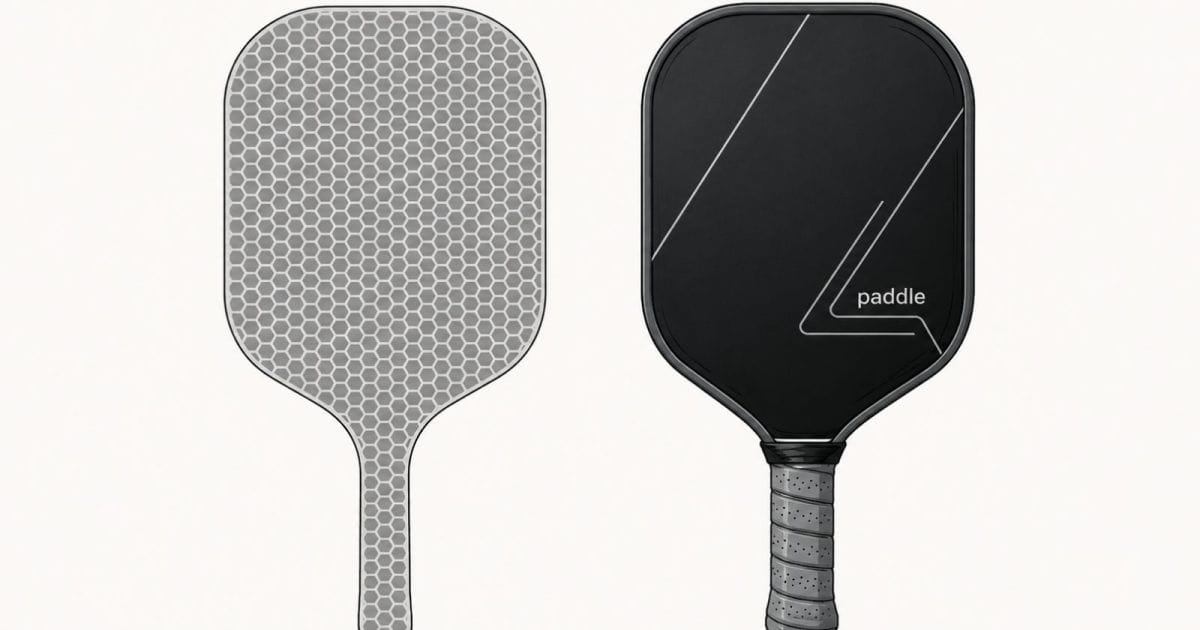
The absence of paint and a clear topcoat is what makes a paddle raw carbon. On a painted paddle, the carbon or fiberglass layer sits under graphics and a protective coating, which seals the surface smooth. On a raw carbon paddle, the outer layer of the layup is the carbon weave itself, left exposed with only a thin resin finish over it.
That exposed weave has a fine texture from the fibers crossing, similar to very fine sandpaper but less coarse. Under the USA Pickleball equipment standards manual, a paddle face is tested with a surface roughness tester, and the average reading cannot exceed 30 micrometers, with no single reading above 33 or 44 micrometers on the two scales used. A raw carbon weave that passes that test is legal texture. Anti-skid paint, sanded coatings, and rubber or vinyl additives built on top of the surface are not, under the same standards.
Because graphics require a coating, most raw carbon paddles look plain, with logos limited to the throat or edge guard where they will not interfere with the hitting surface. If you are comparing that clean, bonded-layer look to a molded, one-piece build, the guide to thermoformed pickleball paddles covers how that construction method differs.
Why does raw carbon create more spin?
Spin comes from the ball gripping the face long enough to be dragged sideways or upward as the paddle brushes across it. A slick surface lets the ball slide. A textured surface holds it for a few extra milliseconds, and that hold is where topspin and slice come from.
The effect shows up most on shots where you are already brushing rather than driving flat:
- Topspin dinks that dive into the kitchen instead of floating.
- Rolls off a low ball that clear the net and drop fast.
- Slice returns that stay low and skid.
- Topspin drives that carry pace but still land in.
Technique still does the heavy lifting. A raw carbon face rewards a brushing swing path, and it does little for a player who hits everything flat. The deeper breakdown of how paddle texture creates spin covers the mechanics and the limits.
What is T700 carbon, and does the number matter?
T700 is a carbon fiber grade from Toray, a Japanese materials manufacturer, and it shows up constantly in paddle marketing. According to Toray’s technical data sheet for T700S fiber, the fiber itself has a tensile strength of about 4,900 megapascals (711 ksi) and a tensile modulus of about 230 gigapascals (33.4 Msi). It is a real material spec, not a made-up label.
What the number does not tell you is how the paddle plays. The weave pattern, the resin, the number of layers, the core underneath, and the quality of the bond all shape feel more than the fiber grade does. Two paddles advertising the same carbon grade can feel nothing alike, because everything behind the face differs. Treat the grade as one input, not a verdict on quality.
Do raw carbon paddles wear out?
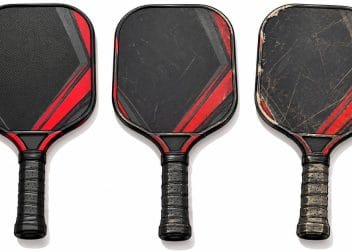
Yes, and that tradeoff rarely gets mentioned at purchase. The texture that generates spin is a physical surface, and rubbing a plastic ball against it thousands of times polishes it smooth. In 2026 accelerated wear testing published by Pickleball Effect, a traditional raw carbon face retained only about 82 percent of its original peak-to-valley surface roughness after simulated play, and spin began to drop off within roughly two months of regular use on some paddles tested.
As the weave flattens, the face gets smoother and grip drops. The paddle keeps working, but the spin it produced when new falls off measurably at that point. If pop rather than spin is what fades, the issue may sit in the core instead of the face; the guides to why a paddle loses its pop and to paddle delamination cover those separate failure points.
You cannot restore worn texture. Cleaning helps only when the loss is from dirt and ball residue rather than true wear, so wipe the face with a damp cloth regularly, following the steps in the guide to cleaning your pickleball paddle, and keep the paddle out of heat and grit, which the guide to storing pickleball paddles covers.
Is a raw carbon paddle right for you?
A raw carbon face is a good match if you already generate spin and want more of it, or if you are building toward a spin-based game and want equipment that rewards the swing path you are practicing. It is a weaker match if you hit flat and hard, since you pay for a feature you will not use as much.
Budget matters too. As of September 2026, one major paddle brand’s carbon fiber paddle lineup priced models from about 100 to 200 dollars, which puts raw carbon options toward the middle and upper end of the market rather than the entry level. The guide to how much to spend on a pickleball paddle covers what each price tier buys. If you are weighing feel through the swing as much as spin off the face, swing weight shapes that experience at least as much as the face material does, and the guides to paddle swing weight and how to choose a pickleball paddle both walk through that tradeoff.
FAQ
Is raw carbon better than fiberglass? Raw carbon favors spin and control. Fiberglass flexes more at contact, which tends to add power and a softer feel. The right choice depends on the game you want to play.
How long does a raw carbon face last? The paddle lasts a long time, but the peak texture does not. Under 2026 accelerated wear testing by Pickleball Effect, a traditional raw carbon face kept about 82 percent of its starting roughness after simulated play, with spin dropping off within roughly two months for some paddles tested.
Can you restore the grit on a raw carbon paddle? No. Cleaning helps only when the loss is dirt and residue, not true wear. Under the USA Pickleball equipment standards, sanding or otherwise altering a certified paddle’s surface after manufacture also voids its legal status.
What does T700 mean on a paddle? It names a specific grade of Toray carbon fiber, rated at about 4,900 megapascals tensile strength and 230 gigapascals tensile modulus on Toray’s technical data sheet. It is a real spec, though it will not by itself tell you how a paddle plays.
Do raw carbon paddles need a screen protector? No. Under the USA Pickleball equipment standards, a certified paddle cannot carry aftermarket films or graphics beyond handwritten pen marking, since it must stay identical to the version that was tested and approved.
Why are raw carbon paddles usually plain looking? Graphics need a coating over the face, and a coating defeats the purpose of leaving the weave exposed. Branding moves to the throat and edge guard instead.
Are raw carbon paddles legal? Yes, once the specific model has passed USA Pickleball equipment certification. Under the USA Pickleball equipment standards, faces are tested with a surface roughness tool, and Rule 3.D.5 of the 2026 rulebook separately bans rough texturing, sandpaper characteristics, and anti-skid coatings added on top of an approved surface.
Ready to see raw carbon paddles and other carbon fiber builds side by side? The gear and accessories directory at https://picklerjunction.com/single-category/pickleball-gear-accessories/?directory_type=general is a good place to start, and comparing a few models in person will tell you quickly whether the extra grip fits your swing.
Written by the Pickler Junction Team.