What to Eat Before Playing Pickleball
Quick Answer: Most recreational pickleball players do fine eating a normal meal a few hours before play, then a small carbohydrate-rich snack if game time is closer. According to Mayo Clinic, large meals need 3 to 4 hours to digest, while a light snack works within about an hour. Comfort and timing matter more than any single food choice.
A pre-game meal is simply the food you eat in the hours before you play, chosen so it gives you energy without sitting heavy in your stomach. Everything else below is detail on top of that idea.
What should you eat before playing pickleball?
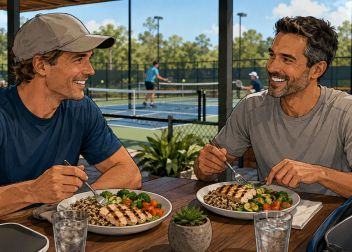
Choose something familiar and carbohydrate-heavy that will not sit heavy in your stomach once you start moving. According to Mayo Clinic, carbohydrate is the body’s main fuel during exercise, and eating or drinking carbohydrate beforehand can help you exercise longer or at a higher intensity. Mayo Clinic lists whole-grain cereal or bread, low-fat milk, juice, bananas, and yogurt as solid pre-workout choices.
Fat and fiber slow digestion, which is why a heavy, greasy plate or a large fiber-packed salad right before a match is the meal players most often regret at the kitchen line. For a normal weeknight rec session, food choice matters less than most articles suggest. Comfort and habit do most of the work.
How long before playing should you eat?
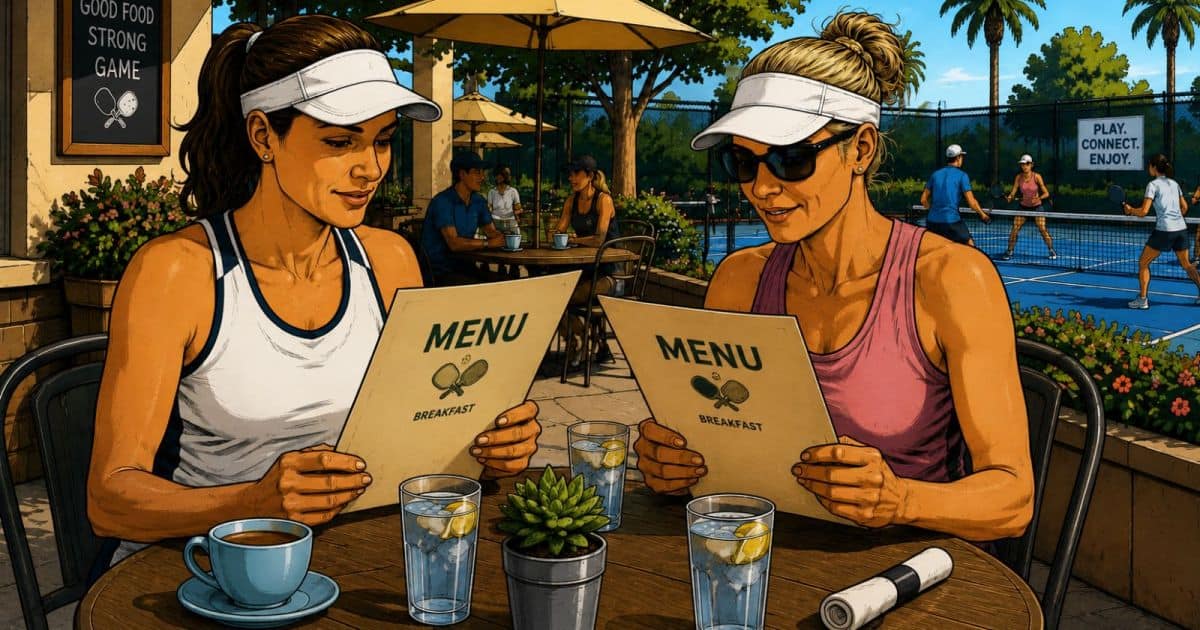
The general rule from Mayo Clinic is simple: the bigger the meal, the more time it needs. Mayo Clinic recommends finishing a large meal 3 to 4 hours before you play, eating a smaller meal or snack 1 to 3 hours beforehand, and leaving at least 1 hour before exercise if that meal is breakfast. A quick snack taken right before you start usually will not add extra energy if your session runs under 60 minutes, according to Mayo Clinic, though it can still settle pre-match hunger or nerves.
There is no single clock that fits every player. If your stomach is still working on lunch when you serve, you left too little time, or ate too much for how soon you played.
Does eating before pickleball actually improve performance?
For a typical hour of recreational play, probably less than most nutrition articles suggest. The International Society of Sports Nutrition’s 2017 position stand on nutrient timing, published in the Journal of the International Society of Sports Nutrition, found that carbohydrate given during exercise bouts under 70 minutes shows mixed results for a performance boost. That same ISSN position stand found a consistent ergogenic benefit from a carbohydrate solution only once exercise reaches 90 minutes or longer, and it ties its strongest pre-exercise carbohydrate advice to higher-intensity exercise beyond that same 90-minute mark, not a typical rec match.
Pickleball plays as a moderate-intensity, stop-and-start sport for most recreational players, closer to the short end of that range than the long end. For a sense of the energy involved, the guide to how many calories pickleball burns breaks down a typical session.
Feeling flat in game three more often traces back to skipping a meal entirely, or eating something enormous on the drive over, than to missing a specific pre-game food. A full tournament day of back-to-back matches is a different question, covered below.
What should you avoid eating before you play?
Skip anything new, anything enormous, and anything you already know disagrees with you.
- Untested foods. Tournament morning is the worst time to try a new energy bar or breakfast for the first time.
- Very large meals close to play. Digestion and hard movement compete for the same blood flow.
- Very high-fat or high-fiber meals right beforehand. Both slow stomach emptying, and the effect varies from person to person.
None of this is really about any one food being bad. It is about timing and personal tolerance, which according to Mayo Clinic’s guidance on food and exercise is where the actual evidence on pre-exercise eating points.
Does this change in the heat or for a long session?
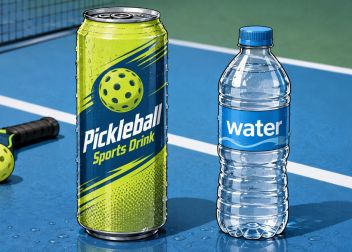
Heat shifts the question from food to fluid. The American College of Sports Medicine has linked exercise performance declines to fluid loss above roughly 2 percent of body mass, with steeper drops in hot conditions than in cool ones. On a warm court, what you drank across the whole morning tends to matter more than what you ate for breakfast. The comparison of sports drinks versus water for pickleball covers that side in more detail.
A long session or a multi-match tournament day is a separate problem, because the rest breaks between matches become your real fueling windows, not the meal you ate at home before you left. That is covered in the guide to snacks for a pickleball tournament.
Who should talk to a doctor or a dietitian first?
General guidance will not fit everyone, and this is one of those topics where that matters more than usual.
Talk to your doctor or a registered dietitian before changing how you eat around exercise if you are pregnant or nursing, if you live with diabetes, kidney disease, or a heart condition, if you have a diagnosed eating disorder or a history of one, or if you take any medication that has to be timed around meals. Insulin and other glucose-lowering medications are timed against food specifically, so changing your eating pattern without adjusting the plan around it is not something to work out on your own.
Nothing above is individual medical or nutrition advice. General patterns drawn from research on healthy adults will not be right for everyone.
Frequently asked questions
Should you eat before playing pickleball? Most people play more comfortably after eating something in the hours beforehand, but according to Mayo Clinic, there is no requirement for a specific pre-game meal before a normal recreational session under about 60 minutes.
How long before pickleball should you eat? Mayo Clinic recommends 3 to 4 hours for a large meal and 1 to 3 hours for a smaller meal or snack, with the shorter window reserved for lighter food.
Should you eat carbohydrates before pickleball? Carbohydrate is the fuel the body reaches for first during moderate and hard effort, according to Mayo Clinic, though the International Society of Sports Nutrition’s position stand found the clearest performance benefit only for exercise sessions of 90 minutes or longer.
Can you play pickleball on an empty stomach? That is a personal choice with its own tradeoffs. See the guide to playing pickleball while fasting for who should check with a doctor first.
Does coffee before a match help? Caffeine has been studied fairly widely as a performance aid, with real limits on which athletes that research covered. See the guide to caffeine and pickleball performance for details.
Do older players need to eat differently? Protein needs in older adults are an active and debated area of research. See the guide to protein for pickleball players for what that research actually covers.
Does eating before playing prevent cramps? No single food or nutrient has been shown to prevent exercise cramping, and the exact causes of cramps during play are still not fully settled in the research.
What should you eat after playing? Post-game eating follows different rules than pre-game eating. See the guide to what to eat after playing pickleball for specifics.
Eat something you have eaten before, leave enough time that you are not thinking about your stomach at the kitchen line, and put the leftover attention into your warm-up routine instead. If a health condition affects how you eat around exercise, a registered dietitian or sports medicine physician can build a plan around your specific needs. Browse the physicians and therapists directory to find one near you. This article is general information, not medical advice.
Written by the Pickler Junction Team.