Topspin in Pickleball: How It Works and When to Use It
Quick Answer: Topspin in pickleball is forward rotation you put on the ball by brushing up its back face with a low-to-high swing path. The spin pulls the ball downward in flight, so you can swing harder and still land shots in bounds, then it kicks forward and upward off the court. Drives, serves, and roll volleys all benefit from it.
Topspin is forward rotation on the ball, and it is the reason a hard-hit drive dips inside the baseline instead of sailing long.
What topspin does to the ball
Topspin changes the ball’s flight in two ways. It dips earlier than a flat shot, and it kicks forward and up off the bounce.
A ball spinning forward drags a thin layer of air around with it as it travels. That creates higher air pressure above the ball and lower pressure below it, a phenomenon known as the Magnus effect. The pressure difference pushes the ball downward while it is still in the air.
The practical payoff is margin. You can aim higher over the net and swing at real pace, and the spin still brings the ball down before it goes long. Off the bounce, the forward rotation grabs the court surface and accelerates the ball toward your opponent.
One common myth needs killing here: topspin does not make a ball skid low. The spin adds to the downward force at the bounce, so the ball tends to come up hotter and higher than a flat shot. A low, skidding bounce is the signature of backspin, not topspin.
How to hit topspin
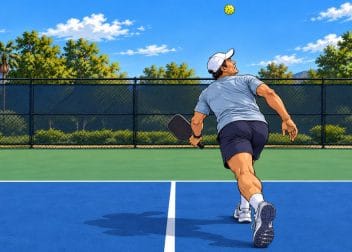
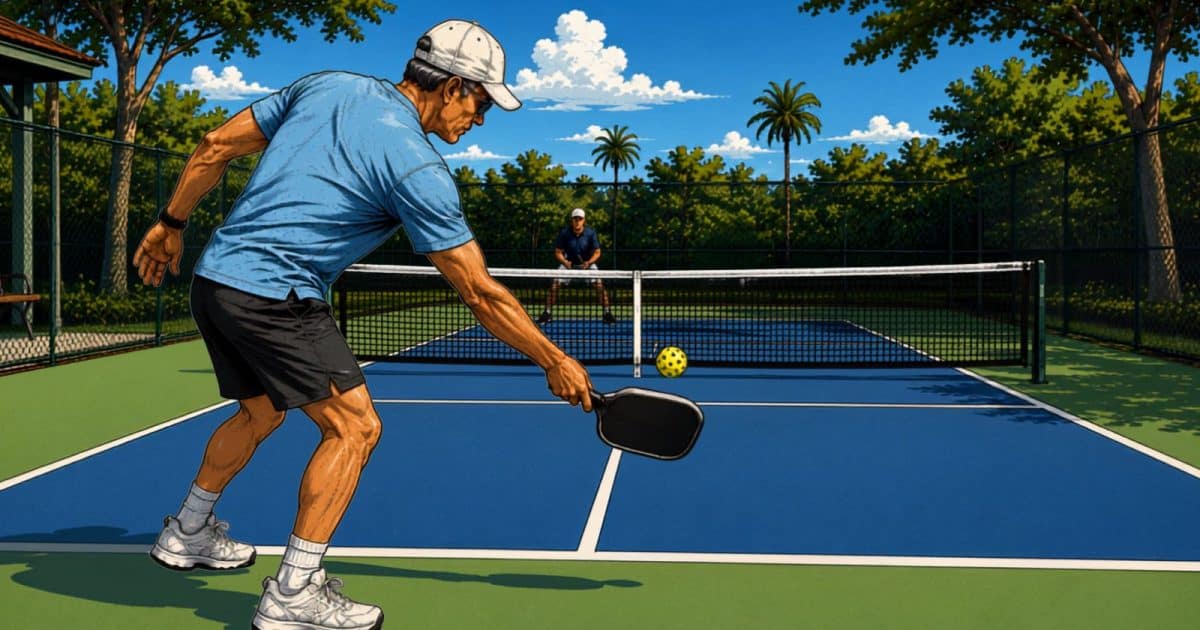
The short version is brush up the back of the ball with a low-to-high swing. A few details make that motion repeatable:
- Drop the paddle head below the ball before you start the forward swing.
- Swing upward through contact and finish with the paddle face pointing high.
- Brush the ball rather than flattening the paddle face into it.
- Keep a relaxed grip so the paddle face can roll through contact instead of staying locked flat. Working out what grip should you use in pickleball first makes this brush much easier to feel.
Think of the swing as a dial. The looser the brush, the more spin and the less pace. The flatter the contact, the more pace and the less spin. Every topspin shot, from a soft roll to a heavy drive, sits somewhere on that dial.
When to use topspin
Reach for topspin whenever you are attacking a ball below net height and need to keep it in play at speed.
- Drives. A third shot drive with topspin dips at your opponent’s feet instead of floating out the back of the court.
- Serves. A topspin serve clears the net with margin, lands deep, and kicks forward at the returner.
- Roll volleys. The topspin roll lifts a low ball safely over the net, then dives it back down on the other side.
- Passing shots. In singles especially, topspin lets you swing hard at a small target and still keep the ball in bounds.
Dinks are the exception. A dink needs to die low in the kitchen, and heavy topspin gives your opponent a ball that sits up instead. That same low-versus-high decision runs through when to speed up in pickleball, since both questions come down to reading the height of the ball before you commit.
Topspin on the serve: what is legal
Yes, as long as the paddle creates the spin. Under the 2026 USA Pickleball rulebook, Rule 7.B.2 says a server must not manipulate the ball to add spin with any part of the body or the paddle before hitting the serve, except that the ball may be allowed to roll off the paddle face by gravity. Spin applied to the ball at the moment of paddle contact is legal. In plain terms, brushing up through your serve motion is fine. Adding spin with your fingers or hand during the toss and release is what the rule outlaws.
How much the paddle matters
Less than most players expect, but not zero. Spin comes from friction between the ball and the paddle face, and the rulebook regulates how that face may be finished. Rule 3.D.5 bars hitting surfaces with rough texturing or sandpaper-like characteristics, so manufacturers work within a legal range rather than an open one. Within that legal range, a textured carbon face can still hold the ball a fraction longer than a smooth surface and produce more rotation for the same swing. The mechanics of that difference are covered in how paddle texture creates spin.
Technique still does most of the work. A clean low-to-high brush on a plain paddle out-spins a flat swing on a heavily textured face. Paddle weight plays a role too, since a paddle that matches what pickleball paddle weight a beginner should use lets you swing freely enough to brush rather than push. Training aids exist for grooving the motion, and the TopspinPro review on this site looks at one option built around that swing path.
How to practice it
Build the motion in three steps: shadow swings, wall work, then live drives.
Start with shadow swings in front of a mirror, checking that the paddle head drops below the ball line before you swing and finishes high. Then stand about ten feet from a wall and brush balls up its face, watching for the ball to tumble forward instead of skidding flat. Finally, move to a court and hit drives with a partner, starting at half pace before adding speed.
The checkpoint at every step is flight shape. If the ball rises, then dips, and kicks forward off the bounce, the spin is real. If it flies flat and sails long, the brush still is not happening and the paddle face is meeting the ball too square.
Pair the swing work with the rest of your backhand toolkit. A two-handed backhand is a common way to add topspin on that side because the second hand adds stability through the brush, and your backhand grip decides how much the paddle face can roll through contact.
FAQ
What is topspin in pickleball? Forward rotation on the ball, created by brushing up its back face with a low-to-high swing. It makes the ball dip earlier in flight and kick forward off the bounce.
Does topspin make the ball bounce lower? No, that describes backspin. Under the rulebook, spin itself is not restricted by shot type, but the physics differ: topspin tends to bounce higher and faster forward because the rotation adds to the downward force at the bounce and then grips the court.
Is a topspin serve legal? Yes. Under the rulebook, Rule 7.B.2 allows spin created by the paddle at the moment of contact. Adding spin with the hand or fingers during the release, under that same rule, is not allowed.
How do I put more topspin on my drives? Start the paddle below the ball, swing low to high, and brush the contact rather than flattening into it. A relaxed grip and a full, high finish add rotation right away.
Do I need an expensive paddle for topspin? No. Textured faces help at the margins within the limits the rulebook allows under Rule 3.D.5, but the swing path creates most of the spin. Fix the brush before shopping for a new paddle.
Should I use topspin on dinks? Sparingly. Most dinks are meant to die low in the kitchen, and heavy rotation makes them sit up instead. A topspin dink works well as an occasional attack, not a default shot.
Does paddle weight change how much topspin I can generate? Indirectly. A lighter, well-matched paddle is easier to swing freely, and a free, fast swing brushes the ball better than a slow, muscled one. Weight is a smaller factor than swing path, but it is not nothing.
Topspin is coachable, often in a single lesson. If your drives keep sailing long, a session with a coach from the Pickler Junction coaches directory can fix the brush faster than practicing the same miss on your own.
Written by the Pickler Junction Team.