
What Grip Should You Use for a Pickleball Backhand?
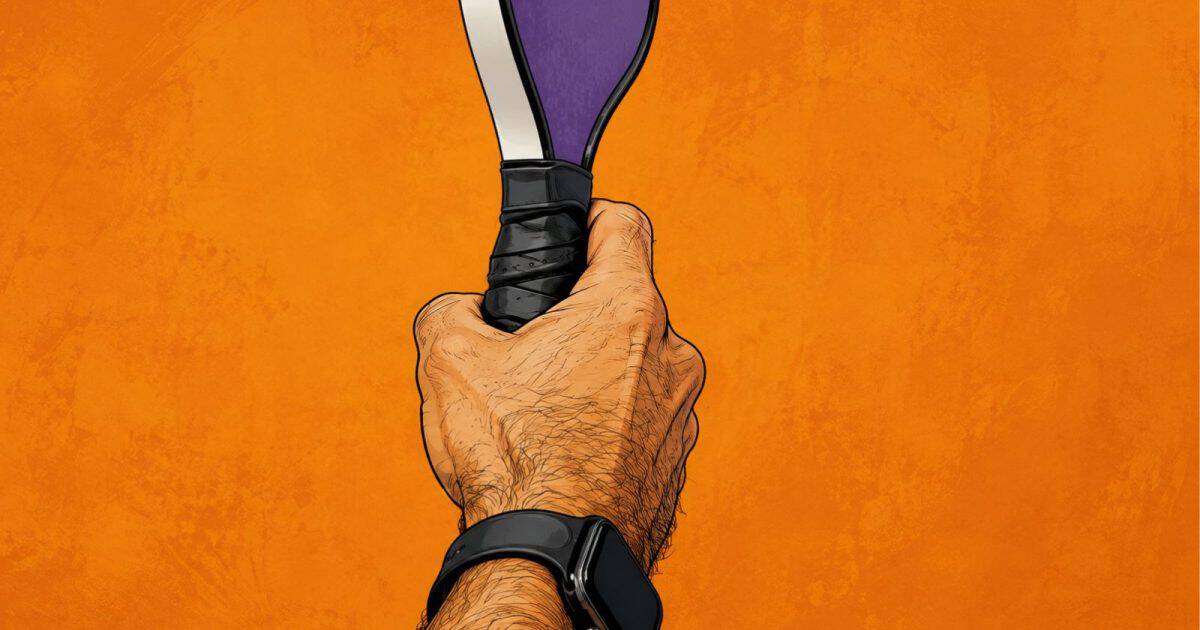
Quick Answer: The continental grip, also called the hammer grip, is the standard pickleball backhand grip. Hold the paddle like you are gripping a hammer, with the index finger’s base knuckle on the top bevel. It keeps the paddle face square for backhand dinks, volleys, blocks, and drives without switching grips between shots.
The backhand grip is simply how your hand sits on the handle for backhand shots. One grip covers nearly all of them, which is why it is worth getting right before it becomes a habit.
The continental grip
Picture gripping a hammer to drive a nail sideways into a wall. That hand position, with the base knuckle of your index finger resting on the top bevel of the handle, is the continental grip. For a right-hander the knuckle sits on the top-right bevel; for a left-hander, the top-left. The paddle face lands square to the net without any wrist twisting to get there.
The continental earns its place because it is neutral. It does not favor the forehand or the backhand, so you never have to think about which grip you are holding when a ball arrives fast at the kitchen line. Forehand volley, backhand volley, dink on either wing, overhead: one grip plays all of them.
Nothing in the rulebook dictates how you hold the paddle. Under the 2026 USA Pickleball rulebook, Section 3 regulates equipment, including allowed changes to grip wraps and grip-size inserts, but it says nothing about hand position or technique. Grip choice is entirely a playing decision, not a legal one.
Why the grip matters so much on the backhand
The forehand has a natural advantage: your palm faces the ball, and small errors in hand position are easy to feel and correct. The backhand does not get that. Unless you play a two-handed backhand, there is no second hand to rescue a bad face angle, so the grip has to be right before the swing starts.
A grip rotated too far toward the forehand side opens the backhand face. Balls that should land soft in the kitchen instead float long. Rotate too far the other way and the face closes, so backhand dinks that should clear the net catch it instead.
Here is a simple test. Take your normal grip, hold the paddle face flat against a wall on your backhand side, and look at your wrist. If the wrist has to bend awkwardly to get the face flat, the grip is wrong for that shot. A neutral continental grip should let the face sit square with the wrist relaxed, which is also the starting position for cleaning up backhand mechanics more broadly. For a longer look at the swing itself, see how to improve your backhand in pickleball.
Shots that want a different backhand grip
A few, at the margins:
- Heavy topspin drives. Rotating slightly toward an eastern backhand grip closes the face a touch, which makes the low-to-high brushing motion behind topspin easier to produce. The tradeoff and the full mechanics are covered in the guide to topspin in pickleball.
- The two-handed backhand. The bottom hand usually stays continental while the top hand, working more like a forehand for that hand, supplies most of the power. The complete grip breakdown for both hands is in the guide to the two-handed backhand.
- Slice returns. Continental already suits slice, which is one reason it is the default grip in the first place.
The mistake to avoid is optimizing for one shot at the expense of the rest. A grip tweak that adds a little pace to a topspin drive but costs you the fast exchange at the net is a bad trade, since kitchen-line exchanges decide most points. Anyone rebuilding a grip from scratch should start with the general answer to what grip to use in pickleball before layering on shot-specific adjustments.
How tight to hold it
Loose. Think of pressure on a scale of one to ten, and aim for a three or four between shots. A death grip slows your hands down, kills touch on dinks, and tires out your forearm and hand over a long session. Firm the grip briefly through contact on a hard drive, then let it go loose again immediately after.
Players who arrive from tennis tend to squeeze harder than they need to, since a firmer swing grip is normal in that sport. Players coming from table tennis tend to already hold it about right, since touch matters more there than power. If your hand or forearm feels worn out after an hour of play, grip pressure is worth checking before you blame the paddle or the schedule. Grip strength and forearm endurance also respond to off-court conditioning; see whether pickleball players should lift weights for context on building that base.
How to tell your grip is the problem
The ball tells you. Consistent misses in one direction usually point to a face-angle problem, and the grip sets the face angle before the swing even starts.
- Backhands floating long: the face is too open, which usually means the grip has rotated too far toward the forehand side.
- Backhand dinks landing in the net: the face is too closed.
- Volleys popping up weakly: the grip is too tight to absorb incoming pace, so the ball bounces off the paddle instead of dying on contact.
- Late on everything: a sign of changing grips mid-exchange, which a single continental grip is meant to eliminate.
Fixing a grip that has gone wrong feels awkward for roughly one session and then starts to feel normal. A simple drill while it settles: rally twenty soft backhand dinks without regripping once, then twenty backhand volleys the same way. If the paddle face stays square through both sets without any wrist gymnastics, the grip is right.
FAQ
What grip should I use for a pickleball backhand?
Continental, the hammer grip. It keeps the paddle face square on both wings and never needs to change during a fast exchange.
Is the continental grip good for both forehand and backhand?
Yes, that is its main advantage. One neutral grip covers volleys, dinks, blocks, and overheads on both sides of the paddle.
Should I switch grips between forehand and backhand shots?
Not at the kitchen line. There is no time to change grips mid-exchange. From the baseline, some players make a small rotation for topspin drives, and that is the most common exception.
What grip works best for a two-handed backhand?
The bottom hand stays continental. The top hand, added mostly for power, usually sits closer to an eastern forehand grip for that hand.
How tight should I grip the paddle?
About a three or four out of ten between shots, firmer only through contact on a drive. Extra tension costs touch and tires the hand for no benefit.
Why does my backhand keep sailing long?
Usually an open paddle face, and the grip is what opened it. Check that the face sits square when your wrist is relaxed, using the wall test.
Does the pickleball rulebook require a specific grip?
No. Under the USA Pickleball rulebook, the equipment section allows changes to grip wraps and grip-size inserts, but it does not specify how a player must hold the paddle. Grip is a technique choice, not a rule.
A coach can usually spot a face-angle problem within the first few balls, faster than a week of guessing on your own. Search the coaches listed in the Pickler Junction directory to find one near you.
Written by the Pickler Junction Team.