Pickleball Strategy for Beginners
Quick Answer: Beginner pickleball strategy means getting to the kitchen line quickly, serving and returning deep, choosing a smart third shot, dinking instead of forcing attacks, hitting down the middle in doubles, keeping the ball low, and communicating with a partner. These habits, built around the two-bounce rule and the non-volley zone, win more points than raw power.
Pickleball rewards patience more than power, and beginner strategy comes down to understanding two rules that shape every rally: the two-bounce rule and the non-volley zone. Once those two structures make sense, the rest of strategy is a series of small, repeatable decisions covered below.
Why does the two-bounce rule shape beginner strategy?
Under the 2026 rulebook, Rule 10.A, the two-bounce rule, requires the serve and the return of serve to each bounce before either team can volley the ball. Because neither team can volley that first exchange, the returning team gets a free window to move. Hit the return deep, then follow it straight to the non-volley zone line rather than standing and admiring the shot. The serving team has to stay back and let the return bounce, so the returners reach the line first. That single habit, moving forward immediately after your return, is the fastest way a beginner improves court position.
Why is the non-volley zone the center of beginner strategy?
Section 11 of the 2026 rulebook governs the non-volley zone, the 7-foot area on each side of the net where volleys are not allowed, commonly called the kitchen. Rule 11.A requires a volley to be initiated outside that zone, and momentum carrying a player or paddle into the zone during or after a volley is also a fault. Most beginner points are lost here through impatience rather than lack of skill. The player standing at the non-volley zone line holds the better court position, so a doubles point becomes a race for both partners to reach that line before trying to end the rally with controlled, low shots rather than hard swings from the baseline.
How should a beginner serve and return?
Depth does the work that power cannot. A serve landing deep, close to the baseline, pushes the receiver back and buys the server extra time to reach the non-volley zone line. A shallow serve gives up that time. The same logic applies to the return of serve: a deep return with some arc pins the serving team near the baseline and slows its path forward. A beginner who serves and returns deep without much pace is already ahead of one who hits short with more power. The guide to pickleball tips for beginners covers the mechanics behind a consistent, deep serve.
What is the third shot decision, and why does it matter?
Once the serve and return have each bounced, the serving team faces the third shot decision: a firm, flat drive aimed low over the net, or a soft drop meant to land in the non-volley zone. A drive with no plan behind it gives the net-positioned returners an easy ball to attack, and a drop landing short and high does the same. The right choice depends on positioning and how comfortable the hitter is with a slower, controlled shot, though a drop landing in the kitchen slows the point and buys time to reach the net, which is why many new players learn it first. The comparison of third shot drive versus third shot drop breaks down when each fits.
When should a beginner dink instead of attack?
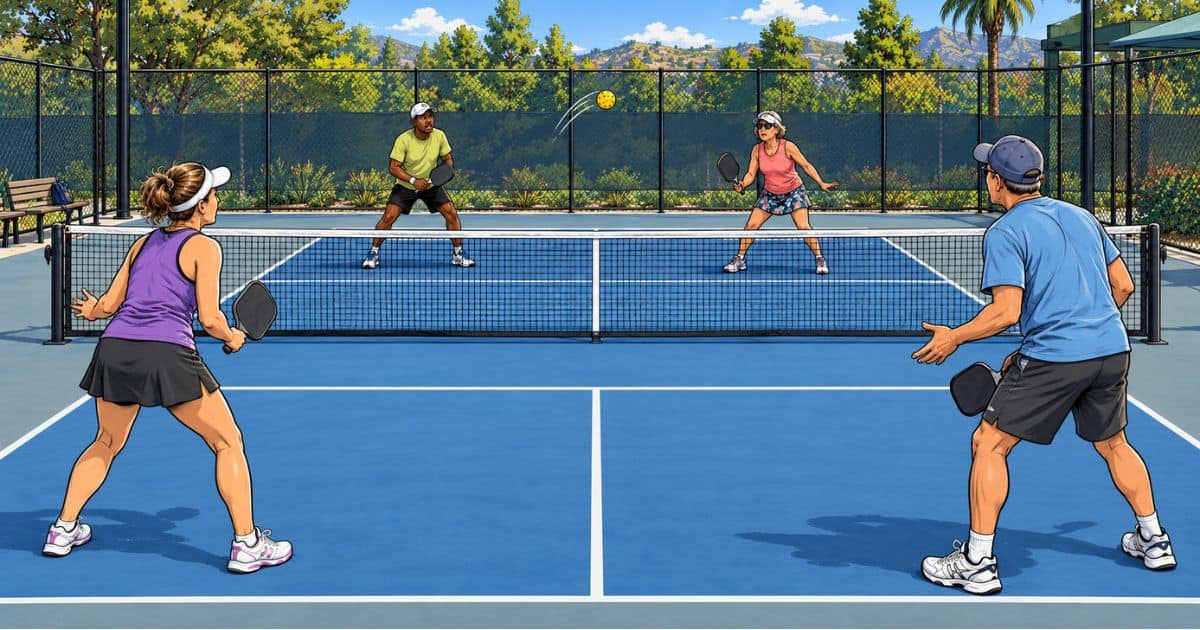
Once both teams reach the non-volley zone line, rallies usually settle into a dinking exchange, a series of soft shots landing in the kitchen. A dink is a patience shot, not a weak one, used because attacking a low or slow ball usually ends badly. The rule of thumb is to attack a ball sitting high enough to hit down on with control and to dink anything that would force a low, awkward swing. Waiting for a genuine opportunity rather than forcing one is the biggest patience habit to build early.
Why hit down the middle in doubles?
In doubles, the middle of the court removes the sharpest angles available to either opponent and creates hesitation over which partner should take the shot, producing more errors than a ball hit to either sideline. This does not mean every shot goes down the middle; it means the middle is the lower-risk default when no clear angle exists. The full explanation of why hitting down the middle works in pickleball covers the angle math behind the pattern.
Why does keeping the ball low matter so much?
Height above the net decides who attacks next. A ball crossing low cannot be driven downward with much force, while a ball sitting a foot or more above the net invites a putaway. That holds true on drives, drops, and dinks. Beginners who prioritize keeping shots low over hitting hard force more errors and give up fewer easy attacks, because a low ball limits what the opponent can do with it.
How do beginners play the percentages instead of chasing winners?
Percentage pickleball means choosing the shot most likely to keep the point alive and worsen the opponent’s position, not the shot most likely to end the rally outright. That means depth over pace, the middle over a risky sideline, and a controlled drop over a low-percentage drive when not set up to attack. Reviewing a list of common pickleball mistakes shows how often unforced errors, not opponent winners, decide beginner-level points.
How should partners communicate during a point?
Doubles strategy runs on constant, short communication, not conversations between points. Calling “mine,” “yours,” or “bounce it” the instant a ball is in the air prevents the two most common doubles errors: both partners going for the same ball, or both leaving one that lands between them. Partners also need to move together, both back or both forward, rather than leaving one at the net and one at the baseline, which opens a gap opponents can target. The detailed breakdown of pickleball doubles strategy covers positioning and communication together, and the guide on where to stand in pickleball doubles addresses that gap problem directly.
Why does patience decide most beginner points?
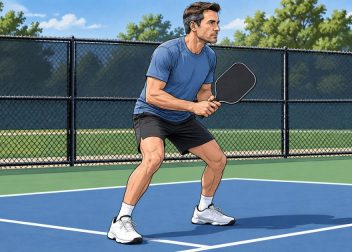
Every habit above points back to the same idea: patience beats power at the beginner level. Waiting for a ball worth attacking, reaching the non-volley zone line before trying to finish a point, and taking the higher-percentage shot on close calls all require resisting the urge to end a rally early. A ready position between shots, paddle up and weight balanced, makes that patience physically possible, since a flat-footed player cannot execute a controlled shot even when it is the right call.
Working through the fundamentals in the guide to pickleball for beginners alongside these strategy habits gives a new player a fuller picture before stepping onto the court. Strategy improves fastest with repetition against real opponents and structured feedback, which is where a qualified instructor helps most. The directory of pickleball coaches lists local options for beginners who want personalized coaching on these decisions in real match play.
Frequently Asked Questions
What is the most important strategy for pickleball beginners? Reaching the non-volley zone line quickly after the return of serve affects the most points. Under the 2026 rulebook, Rule 10.A prevents an immediate volley battle after the serve and return, and that pause is the window a beginner should use to move forward.
What is the two-bounce rule in pickleball? The two-bounce rule, Rule 10.A in the 2026 rulebook, requires the serve and the return of serve to each bounce once before either side may volley the ball.
Why can beginners not just volley the ball at the net immediately? Rule 10.A of the 2026 rulebook requires the serve and return to each bounce first, and Section 11 restricts volleys from inside the non-volley zone, so players need a moment to move into position.
What is the non-volley zone in pickleball? The non-volley zone, defined in the 2026 rulebook, is the 7-foot area on each side of the net where a player cannot volley the ball, commonly called the kitchen. Section 11 of the 2026 rulebook covers the faults that apply inside it.
Should a beginner hit a third shot drive or a third shot drop? It depends on positioning and comfort level. A drop landing in the non-volley zone slows the point and buys time to reach the net, while a drive works best hit low and hard enough that the opponent cannot attack it. Many beginners learn the drop first because it carries less risk.
Why do coaches recommend hitting down the middle in doubles? Hitting down the middle removes sharp angles and creates hesitation between partners over who takes the shot, producing more errors than a ball hit to either sideline. It is a percentage play, not a rule requirement.
How important is communication in doubles strategy? Communication prevents the two most common doubles errors: both partners going for the same ball, and both leaving one that lands between them. Short calls like “mine” or “yours” as the ball is in the air matter more than talk between points.
Do beginners need to dink to win points? No rule requires dinking, but it is the most reliable way to stay patient near the non-volley zone line until a genuine attacking chance appears. Attacking every ball near the net tends to produce more unforced errors than won points.
How can a beginner get faster feedback on strategy? Working with a coach who watches shot selection and positioning in real rallies speeds up strategy development more than solo practice. The directory of pickleball coaches lists local instructors who work with new players on these decisions.
Written by the Pickler Junction Team.