Do Chiropractors Help Pickleball Players?
Quick Answer: Chiropractic care can help pickleball players with mechanical low back pain, stiffness, and some joint restrictions, especially when spinal manipulation is combined with exercise. A 2017 American College of Physicians guideline lists spinal manipulation as an option for low back pain, but chiropractors do not treat fractures, tendon tears, or nerve damage that need imaging first.
What Conditions Do Chiropractors Treat in Pickleball Players?
Pickleball asks the low back and hips to handle a mix of demands in one rally: forward lunges toward the kitchen line, lateral shuffles, and rotational reaches for a dink or a third shot drop. That load and rotation is a common source of mechanical low back pain, sacroiliac joint irritation, and muscle strain, the complaints chiropractic care is built around. The guide to whether pickleball is hard on the back explains why the sport’s stance and swing load the spine differently than a sport with a bigger service motion.
A chiropractor evaluates joint, muscle, and nerve function around the spine and pelvis, then uses manual adjustment, mobilization, or soft tissue work to reduce pain and restore movement. That scope fits the strains, stiffness, and joint restrictions on the list of the most common pickleball injuries, particularly as more players log hours on the court. An SFIA report counted 24.3 million pickleball players in the United States in 2025, up from 4.2 million in 2020.
What Does the Research Say About Spinal Manipulation for Low Back Pain?
The evidence for spinal manipulation is real but modest. A 2017 clinical practice guideline from the American College of Physicians lists spinal manipulation alongside superficial heat, massage, and acupuncture as a first-line, non-drug option for acute and subacute low back pain, and among the recommended non-drug therapies for chronic low back pain. The guideline did not identify a clear advantage of spinal manipulation over the other options reviewed.
A 2017 systematic review and meta-analysis published in JAMA examined spinal manipulative therapy for acute low back pain and found it associated with modest improvements in pain and function, based on moderate-quality evidence. Manipulation is one reasonable tool among several, not a guaranteed fix, and the research does not support a claim that it resolves pain for every back complaint.
What Can a Chiropractor Not Treat?
Chiropractic scope stops where a diagnosis requires imaging or tissue damage goes beyond what manipulation can address. A stress fracture in the foot from court sprints or a wrist fracture from a fall needs an X-ray and often a physician referral before any manual treatment. Full or partial tendon tears, such as a ruptured Achilles tendon or a torn rotator cuff, typically need ultrasound or MRI imaging to grade the injury and decide whether surgery is warranted. Nerve compression with progressive numbness or weakness, plus unexplained fever, weight loss, or loss of bladder or bowel control, are red flags calling for urgent medical evaluation instead of a chiropractic visit.
What Is a Sports Chiropractor (CCSP or DACBSP)?
Not every chiropractor has the same training in athletic injuries. The American Chiropractic Board of Sports Physicians, the ACBSP, credentials two levels of sports chiropractic specialization. The Certified Chiropractic Sports Physician credential, CCSP, requires a minimum of 100 hours of postdoctoral sports medicine education plus a board exam. The Diplomate designation, DACBSP, sits above it and requires more than 300 postgraduate classroom hours, more than 100 hours of on-field experience, written and practical exams, and a written project.
What Happens During a Chiropractic Visit for a Pickleball Injury?
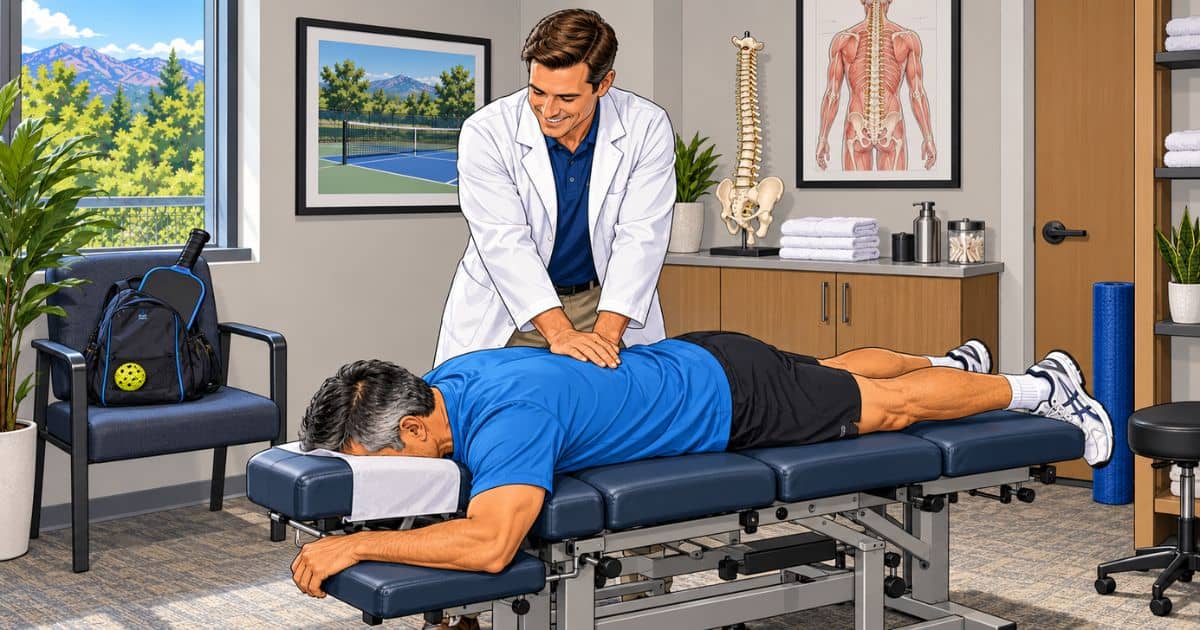
A first visit typically runs 45 minutes to an hour and starts with a health history and a description of when the pain started, which matters for a repetitive-motion sport where pain often builds over weeks. The chiropractor performs a physical exam, including orthopedic and neurological tests to screen for the red flags described above, before recommending treatment. Follow-up visits run shorter, usually 20 to 45 minutes, and may combine manipulation with soft tissue work and guidance on modifying movement on the court. A chiropractor who finds a red flag should refer the player out for imaging rather than proceeding with manipulation.
How Much Does a Chiropractic Visit Cost?
As of September 2026, a chiropractic visit without insurance typically costs $60 to $200, according to GoodRx, with the first visit priced toward the higher end because it includes the health history and exam. Medicare Part B covers 80% of spinal manipulation for a documented condition once the annual deductible is met, though it does not cover the exam or X-rays a chiropractor might order. A short course of care, such as six weeks of visits for low back pain, can run from a few hundred dollars past $1,000 depending on frequency, so asking a clinic for its fee schedule before starting a plan is worthwhile.
When Should a Pickleball Player See a Physician Instead of a Chiropractor?
Some situations call for a physician or an emergency evaluation before a chiropractic visit makes sense at all. A visible deformity, inability to bear weight, or significant swelling after a fall points toward a possible fracture and needs imaging first. Sudden, sharp pain in the heel or shoulder after a lunge or an overhead smash can signal a tendon tear, and the guide to pickleball shoulder pain and rotator cuff injuries walks through when that pain needs a physician’s evaluation rather than manual therapy. Numbness or weakness radiating down an arm or leg, and pain that worsens rather than improves over several weeks, both call for medical evaluation. The guide to knowing when to see a doctor for a pickleball injury lays out the signs that separate a strain a chiropractor can help with from an injury a physician needs to see first, and a sports medicine doctor is often the right starting point when a specialist referral looks likely.
How Does Chiropractic Care Fit Alongside Physical Therapy and Sports Medicine?
Chiropractic care, physical therapy, and sports medicine are different tools for different stages of recovery, not competing choices. A sports medicine physician diagnoses the injury, orders imaging, and rules out anything structural. A chiropractor can address joint restriction and mechanical pain directly. Physical therapy, covered in the guide to physical therapy for pickleball injuries, builds the strength that keeps a problem from returning, and the approaches frequently work in sequence. Trunk strength matters on its own: the guide to why core strength matters in pickleball explains how a stronger core reduces the load the low back absorbs during a dink rally, and the stretches to do after playing pickleball round out a routine that keeps the strain from coming back.
Frequently Asked Questions
Can a chiropractor help with pickleball-related back pain? For mechanical low back pain without red flags, a chiropractor can be part of a reasonable plan, especially paired with exercise. Pain from a specific injury, with numbness, or that does not improve within a few weeks needs a physician evaluation instead.
Do chiropractors treat pickleball elbow? Pickleball elbow is usually a tendon overload issue that typically responds better to rest, bracing, and eccentric strengthening from a physical therapist. A chiropractor can address stiffness in surrounding joints, but the tendon itself is outside core chiropractic scope once imaging shows a tear.
Is chiropractic adjustment safe for older pickleball players? Chiropractors screen for bone density concerns and prior fractures during intake before performing manipulation, and a player with osteoporosis or a recent fracture should flag that history so the approach can be adjusted or the player referred out. Any new or worsening condition should be discussed with a physician first.
How many chiropractic visits does it take to feel better? The research on spinal manipulation does not point to a fixed number of visits, since recovery depends on the injury, how long it has been present, and whether exercise is added alongside manipulation. A reasonable plan includes a reassessment point, often a few visits in, before committing to a longer course of care.
Does insurance cover chiropractic care for a pickleball injury? Medicare Part B covers 80% of spinal manipulation for a documented condition once the deductible is met, but it does not cover the exam or imaging a chiropractor might order. Commercial coverage varies by plan, so confirming benefits and visit caps before scheduling is worthwhile.
What is the difference between a chiropractor and a physical therapist for a pickleball injury? A chiropractor’s core tools are manual adjustment and mobilization aimed at joint function, while a physical therapist focuses on rehabilitation exercise and progressive strengthening. Many players use both at different points in recovery, not one instead of the other.
Can a chiropractor diagnose a stress fracture? A chiropractor can suspect a stress fracture from the history and exam, particularly with pain that worsens with impact and improves with rest, but confirming it requires an X-ray or MRI. Suspected stress fractures should not be treated with manipulation until imaging rules it out.
Should a pickleball player see a chiropractor or a sports medicine doctor first? When an injury involves a fall, sudden trauma, deformity, or symptoms suggesting nerve involvement, a sports medicine doctor is the right first stop, since that evaluation can include imaging and a broader diagnosis. For ongoing mechanical stiffness without those signs, starting with a chiropractor is reasonable.
Pickleball players dealing with low back pain, hip stiffness, or a nagging ache after a tournament weekend have sourced options rather than a single verdict on chiropractic care. For a straightforward mechanical strain, a chiropractor with sports training can be part of a reasonable plan alongside exercise and time. For anything involving a fall, sudden deformity, numbness, or pain that will not settle down, a physician needs to see the injury before manual treatment starts. The physicians and therapists directory lists local providers, including chiropractors and sports medicine physicians, so players can find someone nearby who treats pickleball-specific injuries. This article is general information, not medical advice.
Written by the Pickler Junction Team.