Are There Pickleball Shoes for Kids?
Quick Answer: Yes. Pickleball shoes for kids are usually sold as youth tennis or court shoes rather than pickleball-specific models. They matter for the same reason adult court shoes do: lateral support during side-to-side play. For casual family games, clean, grippy sneakers are fine. For regular or organized play, the court category is worth buying.
The kids version of this question has a gentler answer than the adult one. The difference is play volume, not the physics of how a young ankle and foot move on a court.
Do kids actually need court shoes for pickleball?
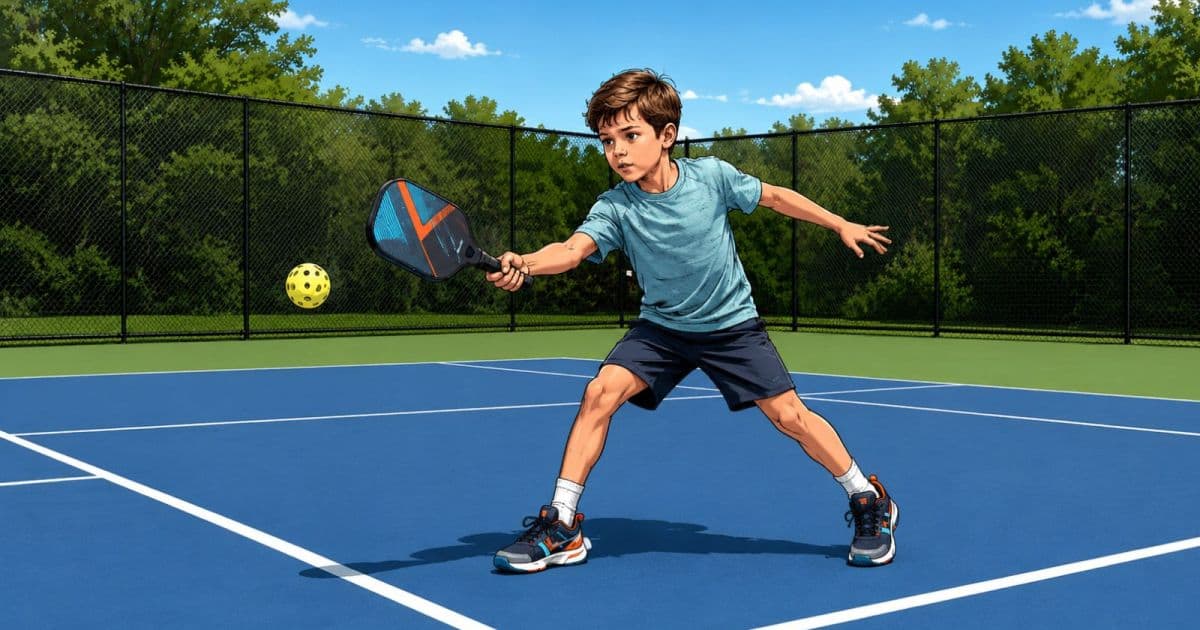
For regular players, yes. For occasional players, not yet. The sport asks a child’s feet and ankles for the same movements it asks of an adult: lateral pushes, quick stops, and lunges toward a short ball. Youth court shoes answer that with the same structural features as adult court shoes: sidewalls that resist rolling, a flatter and more stable sole, and a tread pattern built for court surfaces rather than pavement.
The answer softens for casual play because of load. A child rallying in the driveway on a Saturday is not racking up the repetitions that make shoe structure matter, so ordinary sneakers with decent grip cover that job honestly. The line to watch is regularity. Once a child is playing weekly, joining a program, or starting to chase balls into the corners the way a real game demands, the adult logic applies at kid scale. The full case for that logic, including why running shoes fall short, is in the main guide to what shoes to wear for pickleball.
What should you look for in kids court shoes?
The checklist is close to the adult one, plus a growth allowance and one honest simplification.
- Court category first. Look for youth tennis, indoor court, or multi-court shoes. The label on the box matters more than any single feature.
- Lateral structure. Firm sidewalls and a heel counter that locks the foot in place. Squeeze the heel cup; it should resist, not fold.
- Court tread. A flat, patterned outsole. If any play happens on a gym floor, which for kids programs it usually does, the sole needs to be non-marking.
- A thumb width of growth room at the toe, checked with the child standing, and no more. Sizing up two full sizes for growth room undoes the lateral fit that was the point of buying a court shoe.
- Real lacing or a firm strap. Slip-on styles give up the lockdown that side-to-side movement needs.
The simplification: at younger ages, youth court shoes are simpler and cheaper than adult models, and that is fine. A basic youth tennis shoe delivers the category’s benefits without extra technology tiers, and fit matters far more than tier. Some kids also run wide, and a wide-width youth court shoe is worth asking for by name rather than sizing up to compensate; see the guide to pickleball shoes for wide feet for how that trade-off works for adults. Try shoes on with sport socks, in the afternoon when feet are slightly larger, and have the child do a few side shuffles in the aisle. A kid who says a shoe feels weird is running the same fit test adults pay shops for.
When are sneakers fine, and when do they stop being fine?
Sneakers are fine for lawn games, driveway rallies, and a first few try-it sessions. They stop being fine once play gets organized, because organized play changes both the movement and, sometimes, the flooring rules.
The movement changes first. A clinic or camp drills side shuffles and direction changes at a volume backyard play never reaches, the same pattern covered in the guide to pickleball camps for kids, where footwear shows up on every packing list. According to OrthoInfo, published by the American Academy of Orthopaedic Surgeons, court shoes are built to provide stability in all directions, while running shoes are designed mainly for forward motion. That distinction, not marketing, is why a running shoe is the wrong tool for a kid cutting side to side at the kitchen line. It is also why youth tennis shoes double so well as youth pickleball shoes: both sports need the same multidirectional base, a point covered directly in the comparison of pickleball shoes versus tennis shoes.
The flooring rules change next, at least for indoor play. Gym floors commonly require non-marking soles for anyone stepping on them, adults and kids alike, so that requirement applies at the door of an indoor program the same way it applies to a college gym class.
Ages and starting points are their own question, covered in the guide to what age kids can start pickleball lessons. The shoe advice nests inside it neatly: whenever lessons start, that is roughly when court shoes should start too. The typical progression compresses this whole article into one line: sneakers for a summer of driveway games, youth court shoes the week a Saturday program starts, and a size up several months later, because feet keep growing.
How much should you spend, and how long do they last?
Entry-level youth court shoes sit among the cheaper pieces of real sports equipment a family buys, and for most kids, outgrowing the shoe beats wearing it out. That single fact changes the buying calculus.
Buy the basic tier of a court-category shoe. Save the premium youth models for a kid already asking for them by name because of serious, regular play. Expect size, not the sole, to end most pairs’ service life. That makes handed-down or lightly used pairs a genuinely sensible option here, in a way they are not for adult players, since a pair with a few months of light kid use still has most of its structure left. For a sense of what a full service life looks like on the adult side of the same shoe category, the guide to how long pickleball shoes last walks through the wear patterns that eventually retire a pair.
Replace on fit, checked every few months during a growth spurt: pinched toes, heel slip that lacing cannot fix, or a child quietly avoiding quick moves are all the same message in different forms. A child who plays carefully because a shoe hurts is the pattern worth watching for, since kids tend to show a shoe problem in how they move well before they say anything about it.
FAQ
Do they make pickleball shoes for kids? Not widely as pickleball-branded products. Youth tennis or court shoes cover the need, since the court category, not the sport name on the box, is what determines whether a shoe fits the movement.
Can kids play pickleball in regular sneakers? For casual family games, yes. Once play becomes regular or organized, youth court shoes add the lateral support and heel lockdown that consistent side-to-side movement calls for.
What is wrong with kids running shoes for pickleball? The same issue as adult running shoes. According to OrthoInfo from the American Academy of Orthopaedic Surgeons, running shoes are designed for forward motion, while court shoes are built for stability in all directions, which matters for a sport built on side-to-side cuts.
Do kids need non-marking soles? For gym-based programs, almost always, since most indoor facilities require non-marking soles from every player on the floor. Check the sole before the first indoor session.
How much growth room should court shoes have? About a thumb width at the toe, checked standing. More than that gives up the lateral fit that makes a court shoe worth buying over a sneaker.
Are used youth court shoes okay? Often a genuinely good buy, since kids typically outgrow shoes before wearing out the structure. Check the tread and squeeze the heel counter, and skip anything visibly compressed.
How often do kids need new court shoes? Whenever fit says so, which commonly lands every 6 to 12 months during active growth years. Fit retires youth shoes far more often than wear does.
When should a kid get a first pair of court shoes? When play becomes weekly or joins a program, which is also roughly when lessons start. Before that point, clean, grippy sneakers are honest equipment for the job.
Outfitting a young player does not have to mean guessing sizes online. The gear and accessories section of the Pickler Junction directory (https://picklerjunction.com/single-category/pickleball-gear-accessories/?directory_type=general) lists places to see and try on youth court shoes in person before buying, alongside the rest of a family’s pickleball kit.
Written by the Pickler Junction Team.