
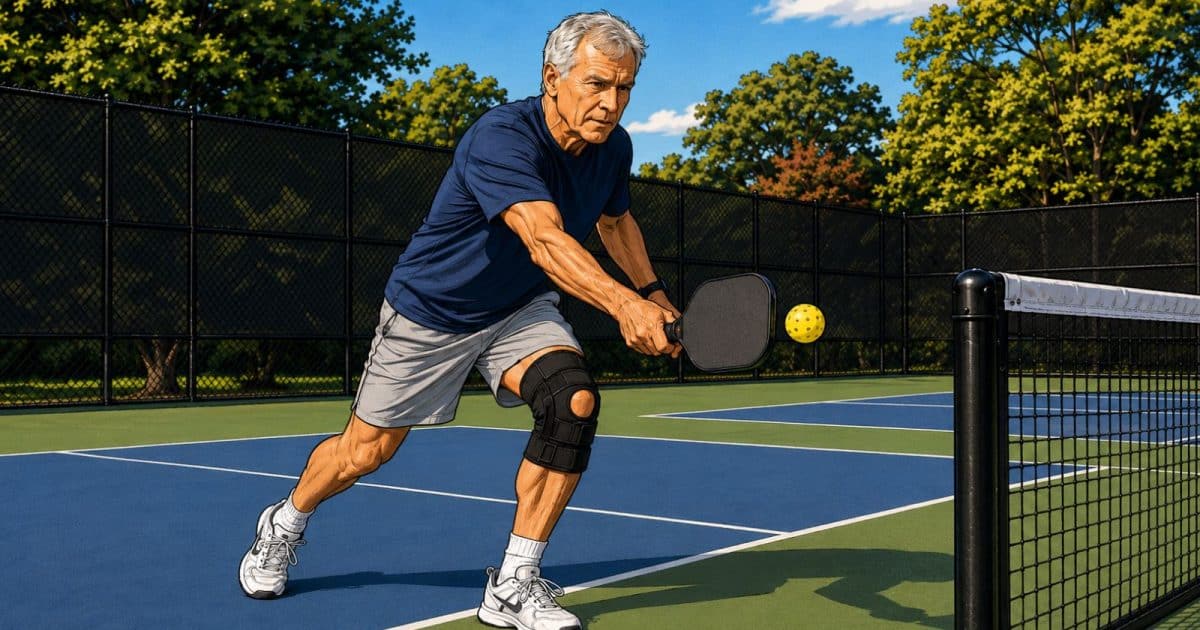
Can You Play Pickleball After a Hip or Knee Replacement
Quick Answer: Yes, many people return to pickleball after a hip or knee replacement, usually about three to six months post-surgery once their surgeon and physical therapist clear them. Return to racket sports after joint replacement is generally favourable in the published literature, though the pace of that return varies considerably from patient to patient. The keys are full rehab first, easing back in with doubles, strengthening the muscles around the joint, and following your surgeon’s specific guidance.
Pickleball after hip replacement is one of the most common comeback questions in the sport. A joint replacement swaps a worn hip or knee for an artificial one, and recovery is a gradual process. The encouraging news is that pickleball, as a lower-impact sport, is one many surgeons allow patients to return to, with the right preparation and timeline.
Can you play pickleball after a joint replacement?
Yes, for most people, once they have recovered and been cleared. Physical therapists at the Hospital for Special Surgery note that many orthopedic surgeons allow patients to return to pickleball after recovering from a hip or knee replacement, with certain precautions, typically around three to six months after surgery. The exact timeline depends on your procedure and healing.
The broader picture is reassuring too. Studies of return to sport after hip and knee replacement generally report that most patients who played a racket sport beforehand get back to it. How long that takes, and whether they reach their former standard, varies widely with the joint, the procedure, and the individual, so no single timeline applies to everyone.
Why pickleball suits post-replacement players:
- It is lower-impact than tennis, with less running.
- The smaller court means shorter distances and less strain.
- Doubles play reduces movement and load further.
- The underhand serve and shorter rallies are gentle on a new joint.
This is general guidance, though. Your surgeon knows your specific situation, so their clearance is the deciding factor.
When and how should you return to the court?
After full rehab, gradually, and starting with doubles. Returning too soon or too hard risks complications, so the path back is methodical. Your physical therapist is your guide here.
A sensible return path:
- Complete your rehab. Focus on regaining strength and range of motion in physical therapy first.
- Get cleared by your surgeon and physical therapist, usually around the three-to-six-month mark.
- Take a lesson or do drills to regain your timing and let a pro assess your movement before competitive play.
- Start with doubles, which limits lateral movement and court coverage.
- Ease in gradually, keeping early sessions short and below your old intensity.
Strong muscles around the joint make a big difference, so much so that building leg strength before surgery helps your strength after. Our off-court workouts guide covers the supporting exercises.
How do you protect your new joint while playing?
Avoid the riskiest movements and watch for warning signs. Even after clearance, a few habits protect your replacement and help it last.
Protective habits:
- Avoid aggressive net rushes, extreme lunges, and sudden stops, which stress the joint.
- Stick to doubles until your surgeon clears singles, since singles demands much more.
- Wear supportive shoes and avoid wet, slippery courts to prevent falls.
- Warm up and stretch every time, using our warm-up routine.
- Stop and check with your doctor if you notice swelling, sharp pain, or stiffness.
Some surgeons even suggest starting with table tennis before pickleball, since the smaller demands let you rebuild confidence and strength. When in doubt, your surgeon’s and physical therapist’s guidance comes first.
Frequently asked questions
Can you play pickleball after a knee or hip replacement?
Yes, most people can, typically three to six months after surgery once cleared by their surgeon and physical therapist. The published literature generally reports that most racket-sports players get back to their sport, though the timeline varies from patient to patient.
How long after joint replacement can I play pickleball?
Usually about three to six months, depending on your procedure and healing. Your surgeon and physical therapist determine the right timing for you.
Is pickleball safe for an artificial joint?
For many people, yes, as a lower-impact sport played with precautions. Doubles play, good footwear, avoiding extreme movements, and following your surgeon’s guidance all help protect the joint.
Should I play singles or doubles after a replacement?
Start with doubles, which reduces running and lateral load. Only move to singles if and when your surgeon clears it, since singles is much more demanding.
What should I avoid after a joint replacement?
Aggressive net charges, extreme lunges, sudden stops, and slippery courts. Ease back gradually and keep early play below your previous intensity.
When should I call my doctor after returning to play?
If you notice swelling, sharp or worsening pain, instability, or stiffness, stop and contact your surgeon or physical therapist before continuing.
A joint replacement does not have to end your time on the court. Rebuild safely with our off-court workouts and warm-up routine, and let your surgeon and a physical therapist or sports medicine provider guide your return.
Written by the Pickler Junction Team.
This article is general information, not medical advice. After a joint replacement, follow your surgeon’s and physical therapist’s specific guidance before returning to sport.