Are Expensive Pickleball Paddles Worth It?
Quick Answer: Up to a point, yes. Moving from a starter paddle to a mid-tier one buys a real gain in sweet spot, spin, and consistency. Past the mid-tier, the improvements get smaller and more specific to advanced players. A player whose contact is still inconsistent will not feel what the premium tier is selling.
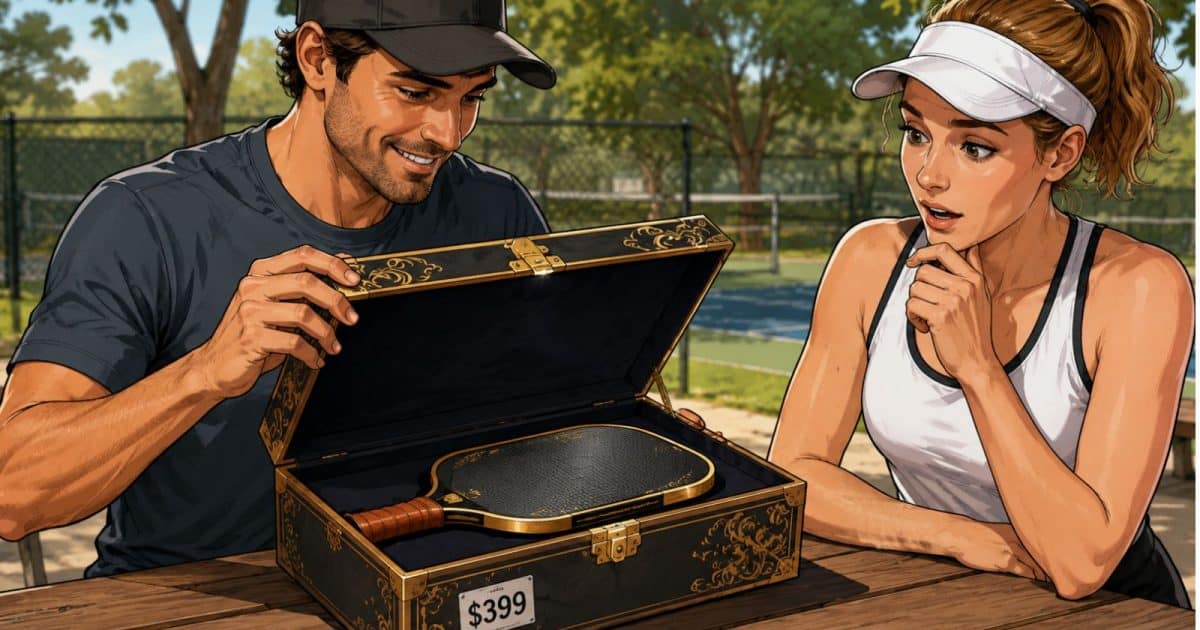
Paddle prices span an enormous range. More than 24.3 million Americans played pickleball in 2025, according to the Sports & Fitness Industry Association, up from 4.2 million in 2020, and that growth has pulled dozens of brands and price points into the market. The honest answer is that the value curve flattens well before the top of that range.
What does more money actually buy?
Four things, in roughly this order of how much they matter.
- Face material and texture. Entry paddles often use smooth composite faces. Higher tiers move to textured carbon, which grips the ball for spin. The comparison of fiberglass and carbon fiber faces covers what changes.
- Core quality and consistency. Better cores produce a larger, more uniform sweet spot and a more predictable response across the face.
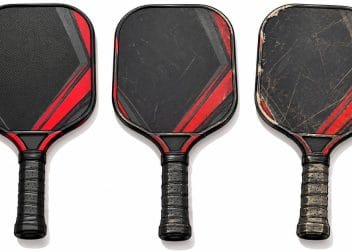
- Build quality and edge construction. Premium paddles hold their properties longer and delaminate less often.
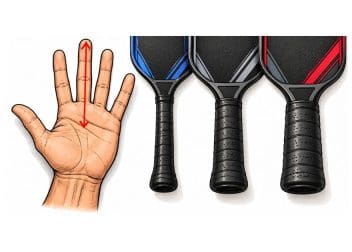
- Shape and spec variety. Cheap paddles come in one configuration. Spending more opens up weight, handle length, and shape options that let you match the paddle to your game.
Notice what is not on that list: raw power. Paddle construction and surface texture are governed by equipment standards: Section 3.D of the 2026 USA Pickleball rulebook sets a combined length and width limit for the paddle and restricts surface roughness, and Section 18.A requires a paddle to appear on the USA Pickleball approved equipment list before it can be used in sanctioned play. Within those bounds, no amount of money buys a paddle that hits meaningfully harder than a good mid-tier one. The list of USA Pickleball approved paddles tracks which models currently qualify.
Where does the curve flatten?
Around the middle of the market, and it flattens hard.
The jump from a bundled starter paddle to a competent mid-tier paddle is large and obvious. Sweet spot grows, spin becomes available, and the paddle stops feeling like a piece of plywood on off-center hits. Most players feel this change within one session.
The jump from mid-tier to premium is real but incremental: a slightly larger sweet spot, marginally better feel, and more specific spec options. It is worth paying for once you already have consistent contact and know which specs you want. It is close to invisible if you do not. The guide to how much to spend on a pickleball paddle maps the tiers in more detail.
This is where the common disappointment comes from. Buying the paddle a stronger opponent uses rarely changes results by itself, and the conclusion drawn is usually that gear does not matter. Gear does matter. That particular upgrade just happened above the part of the curve where it shows.
What is the case against spending more?
Three arguments, and all of them hold up.
The first is wear. Paddles are consumables. Textured faces smooth out and cores soften before anything looks broken from the outside. A premium paddle replaced every year costs considerably more over time than a mid-tier one on the same cycle. Storing a paddle out of direct heat and moisture slows that decline; the guide to storing pickleball paddles covers the basics.
The second is fit. A cheaper paddle that suits your weight and grip preferences outperforms an expensive one that does not. Fit beats price at every tier.
The third is opportunity cost. For a player still developing, the same money spent on lessons or court time tends to return more than a paddle upgrade does. A single clinic session, for reference, typically runs $20 to $50 per person as of September 2026, and the breakdown of what a pickleball clinic actually delivers is worth reading before deciding where the money goes. That is not a moral point about gear. It is just where the improvement is likely to show up first.
Who should buy the expensive paddle?
Players who have plateaued on gear rather than skill, which is a smaller group than the market suggests.
The practical test is whether you can name the spec you want changed. A player who says the sweet spot is too small, or who wants more spin on the roll, or who needs a longer handle for a two-handed backhand, has a reason to spend. A player who just wants to be better does not have one yet.
Competitive players also have a durability case that recreational players do not. Playing several times a week wears faces fast, and the sturdier construction at higher tiers holds up better under that volume.
The paddle worth buying at any price is the one you have swung first. Demo programs cost nothing and settle the question faster than any spec sheet, and the wider decision framework lives in the guide to choosing a pickleball paddle.
FAQ
Are expensive pickleball paddles worth it? Up to the mid-tier, clearly. Above it, the gains are small and mostly matter to players with consistent contact and specific spec preferences.
Will a better paddle make me hit harder? Not meaningfully under the rulebook, which caps paddle size and restricts surface texture for every approved model, so the difference between a good paddle and a premium one is modest.
What is the biggest upgrade for the money? Moving off a bundled starter paddle to a competent textured carbon paddle. That single step changes spin and sweet spot noticeably.
Do expensive paddles last longer? Generally yes, though all paddles are consumables. Textured faces wear smooth and cores soften with use regardless of price.
Should a beginner buy an expensive paddle? Usually not. Fit, weight, and grip matter more than tier at that stage, and lessons tend to return more than an upgrade does.
Does a pricier paddle add spin? Texture adds spin, and texture is more common at higher tiers. A smooth premium paddle grips no better than a smooth cheap one.
How do you know if you have outgrown your paddle? If you can name the specific thing you want changed, you have. If you cannot, the paddle is probably not the constraint.
Is it worth demoing before buying? Yes. Feel varies more between paddles than spec sheets suggest, and many pro shops run demo programs for exactly that reason.
Feel varies more in hand than any spec sheet shows, which is why demoing a few tiers before you buy is worth the afternoon. The gear and accessories retailers in the Pickler Junction directory are a place to start: https://picklerjunction.com/single-category/pickleball-gear-accessories/?directory_type=general.
Written by the Pickler Junction Team.