Indoor vs Outdoor Pickleball Shoes: When One Pair Is Enough
Quick Answer: Indoor vs outdoor pickleball shoes come down to the court surface more than the roof over it. A dedicated indoor facility with hard acrylic courts can play much like an outdoor court, so one good pair of court shoes often covers both. A polished gym floor is a different surface, where traction and clean soles matter more than outsole durability. Players who regularly switch between abrasive outdoor courts and smooth gym floors are the ones most likely to benefit from a second pair.
If you play pickleball both indoors and outdoors, you may have wondered whether you really need two pairs of shoes.
After all, the game is the same. You are still moving laterally, stopping quickly, changing direction, and pushing toward the kitchen line. Why should the building or court surface change what is on your feet?
Sometimes it does not.
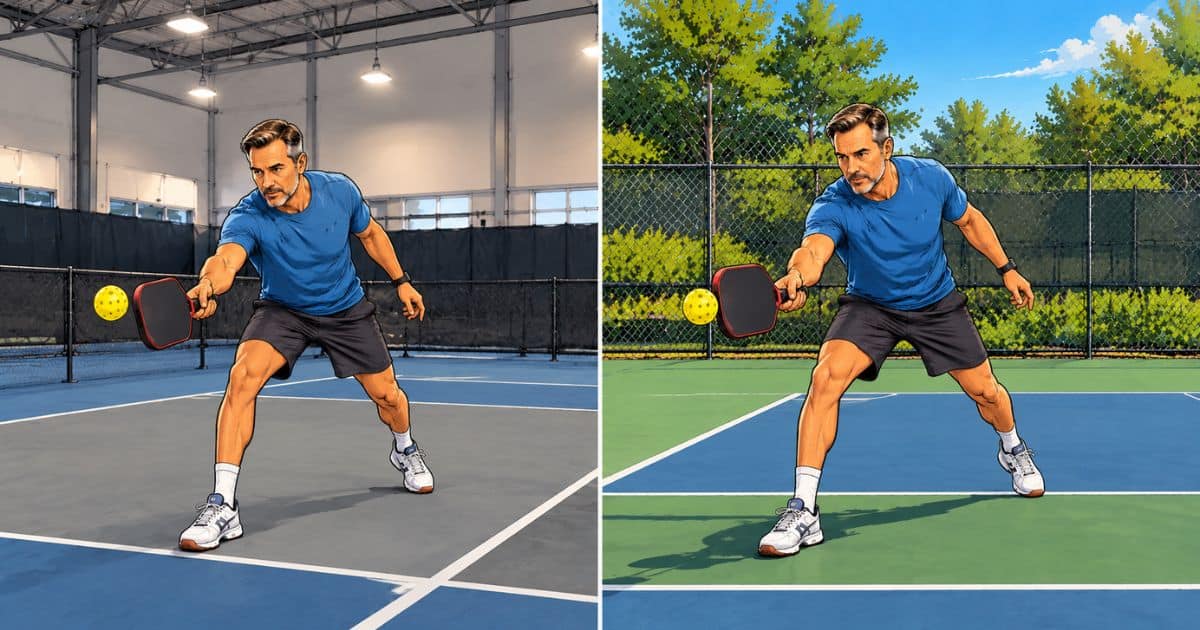
The more important distinction is not simply indoor versus outdoor. It is the surface you are playing on. An indoor facility with a hard acrylic court may play much more like an outdoor pickleball court than a gym floor. Once you start thinking about the surface rather than the roof over your head, choosing the right shoe becomes much easier.
Start With the Court, Not the Location
“Indoor pickleball” can mean very different things.
You might be playing on a hardwood basketball court, a synthetic gym floor, a temporary sport surface, or a permanent acrylic pickleball court inside a dedicated facility. The guide to finding indoor pickleball courts covers the kinds of indoor venues you are likely to walk into.
Outdoor courts can also vary, but many are hard surfaces with an acrylic coating similar to tennis courts.
That is why buying a shoe labeled “indoor” simply because you play inside is not necessarily the right approach.
The useful question is what surface you are actually playing on.
That matters more than whether you are indoors or outdoors.
Pickleball Asks More of a Shoe
Pickleball puts different demands on a shoe than walking or running.
Running shoes are primarily designed for forward movement. Pickleball requires frequent side-to-side movement, quick stops, small adjustment steps, lunges, and changes of direction.
That is why court shoes are generally the better choice. The comparison of pickleball shoes and tennis shoes goes into what separates one court shoe from another, and the guide to what shoes to wear for pickleball covers the basics.
A good pickleball or tennis court shoe should provide lateral stability, enough cushioning for the surface, a secure fit, and traction that allows you to move confidently without making the shoe feel glued to the floor.
That last part is important.
More grip is not always better.
You need enough traction to prevent unwanted slipping, but your foot also needs to tolerate all the stopping and changing direction that happens during play. The relationship between the outsole and the court surface matters.
Outdoor Courts Are Hard on Shoes
Outdoor hard courts can be abrasive.
Every time you push off, drag a toe, stop, or change direction, the court wears away a little of the outsole.
That is one reason outdoor court shoes tend to use durable rubber compounds and outsole patterns designed for hard-court play.
If you play outdoors frequently, outsole durability can become almost as important as comfort.
Look at the bottom of your shoes occasionally. Wear is not always even. Depending on how you move, you may wear through one area long before the rest of the shoe looks old.
A shoe can still look perfectly respectable from the top while the outsole underneath is telling a very different story.
Indoor Gym Floors Create a Different Problem
Traditional gym floors do not usually chew through an outsole the way an outdoor hard court does.
Instead, traction becomes a bigger consideration.
A shoe designed for indoor court sports may use an outsole intended to grip smooth gym surfaces. That can feel very different from a harder, more durable outsole built primarily for abrasive outdoor courts.
Dust also matters.
Even a shoe with good traction can become slippery on a dusty gym floor. If you are suddenly sliding more than usual, do not automatically assume the shoe is worn out. The floor may be contributing to the problem.
This is also why a shoe that feels great outdoors may not feel nearly as secure on a particular indoor floor.
Dedicated Indoor Facilities Often Play Like Outdoor Courts
This is where the indoor-outdoor rule really falls apart.
Many dedicated indoor facilities use hard court surfaces similar to those found outdoors.
If that is where you play, you may not need a special “indoor” shoe at all.
The same court shoe that works well for you outdoors may work perfectly well there, assuming the facility allows it and you are comfortable with the traction.
So if someone tells you that you automatically need one shoe for indoor pickleball and another for outdoor pickleball, that is too simple.
You need the right shoe for the court surface and for the way you move. The same thinking applies to the ball, which is why indoor and outdoor pickleballs are built differently.
One Pair Can Cover Both
If both of your regular courts are similar hard-court surfaces, one good pair of court shoes may be all you need.
The same may be true if you only occasionally play on a different surface and your shoes feel stable and comfortable there.
You do not need to create a shoe collection just because you have crossed through a doorway.
Pay attention to performance.
Do you feel secure when moving laterally? Can you stop under control? Does the shoe feel stable when you change direction? Are you slipping unexpectedly? Does the shoe feel dramatically different on one surface than another?
If the same pair performs well in both places, there may be no compelling reason to change.
The Case for Two Pairs
Separate shoes become more useful when you regularly alternate between very different surfaces.
For example, if most of your outdoor play is on abrasive acrylic courts but your indoor games are on polished hardwood, having shoes suited to each environment may give you better traction and may also preserve your indoor pair.
Some gyms and facilities also have rules about footwear or expect clean, non-marking soles. Shoes that have been collecting dirt, grit, and debris on outdoor courts may not be welcome on a gym floor.
There is also a practical advantage to having an indoor-only pair: the soles stay cleaner.
That is especially useful on smooth courts where dirt on the outsole can affect traction.
Do Not Choose Shoes Based on the Outsole Alone
Traction matters, but so do fit and stability.
Your heel should not be sliding around inside the shoe when you change direction. Your toes need enough room to be comfortable, but your foot should not be moving excessively from side to side inside the shoe. Wider feet bring their own fit problems, covered in the guide to pickleball shoes for wide feet.
Also consider how the shoe feels during the movements you actually make in pickleball.
Walk around in it. Move laterally. Stop. Change direction. If possible, mimic a small lunge.
A shoe that feels wonderfully cushioned while you are standing still is not necessarily a shoe that will feel stable during a fast lateral move.
Comfort matters, but court performance matters too. For a detailed look at how one court shoe handles these demands, see the Skechers Viper Court Pro 2 review.
Signs It Is Time to Replace Them
Do not judge court shoes only by how old they are.
Someone who plays once a week may get very different life from a pair of shoes than someone playing several days a week. The guide to how long pickleball shoes last covers this in more detail.
Instead, watch for changes.
The outsole may become smooth in high-wear areas. Cushioning may feel compressed. The upper may no longer hold your foot securely. You may notice that you are slipping more or that the shoe simply does not feel as stable as it once did.
Those are more useful clues than the calendar.
And if a shoe suddenly feels different on court, take a look at it rather than assuming your footwork mysteriously got worse overnight.
A Simple Shoe Test
The next time you play on each of your regular surfaces, pay attention to three things.
Traction. Can you push off and stop confidently without unexpected slipping?
Stability. Does your foot feel secure when you move laterally and change direction?
Condition. Is the outsole still providing an even, usable contact surface, or are important areas noticeably worn?
Do this on both your indoor and outdoor courts.
If the same pair passes all three tests on both surfaces, you may have your answer.
If it feels great on one court and noticeably worse on the other, that is when a second pair starts making sense.
Frequently Asked Questions
Do you need different shoes for indoor and outdoor pickleball?
Not necessarily. The court surface matters more than whether the court is indoors. If your indoor and outdoor courts are both hard acrylic surfaces, one good pair of court shoes may work well on both.
Can you wear outdoor pickleball shoes indoors?
Often, yes, especially at dedicated indoor facilities with hard courts similar to outdoor ones. Some gyms expect clean, non-marking soles, so check the facility’s footwear rules and make sure the soles are free of grit before playing.
What is the difference between indoor and outdoor pickleball shoes?
Outdoor court shoes tend to use durable rubber compounds built to handle abrasive hard courts. Shoes made for indoor court sports may use outsoles intended to grip smooth gym floors. The right choice depends on the surface you play on most.
Why do my pickleball shoes feel slippery on a gym floor?
Dust on the floor is a common cause, and even a shoe with good traction can slide on a dusty surface. Dirt carried in from outdoor courts can also reduce grip. A worn outsole is another possibility, so check the bottom of the shoe.
Are running shoes okay for indoor pickleball?
Running shoes are designed mainly for forward movement. Pickleball involves lateral movement, quick stops, and changes of direction, so court shoes with lateral stability are generally the better choice on any surface.
How do you know if one pair of pickleball shoes is enough?
Test the shoes on each surface you play on. If they provide confident traction, feel stable during lateral movement, and show even outsole wear on both courts, one pair may be enough.
The Bottom Line
You do not necessarily need different shoes for indoor and outdoor pickleball.
You may need different shoes for different court surfaces.
Outdoor hard courts usually put more emphasis on outsole durability. Traditional indoor gym floors can make traction and clean soles especially important. Dedicated indoor pickleball facilities may use hard courts that behave much more like outdoor courts.
Start with a quality court shoe that fits well and provides good lateral stability. Then pay attention to how it performs on the surfaces where you actually play.
The roof over the court does not determine your shoe.
The court underneath your feet does. When it is time for a new pair, the pickleball apparel and footwear directory lists retailers who carry court shoes.
Written by the Pickler Junction Team.