
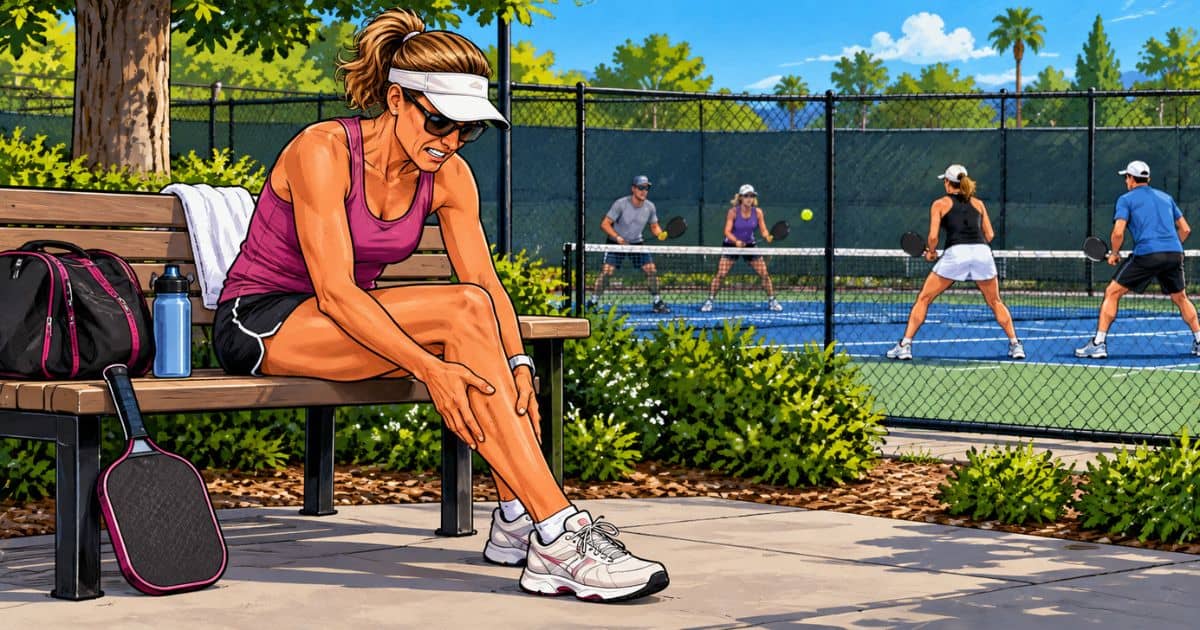
Why Your Legs Feel Heavy on the Third Day of Pickleball
Quick Answer: Legs that feel heavy after pickleball on day three usually come from stacked, not sudden, fatigue: glycogen that has not fully refilled, muscle micro-damage that peaks a day or two after it happens, and tendons and joints still processing the prior two sessions. A rest day, carbohydrate, fluids, and sleep usually settle it within a day or two.
Monday you played for two hours and felt strong. Tuesday you played again and felt almost as good, maybe better through the middle games. Wednesday you step on the court, and something is different. Your feet get to the ball two seconds late. A dink you would normally chase down just doesn’t happen. You are not sore in an obvious way. You just feel heavier, slower, and a step behind a game you know you can play.
Nothing new happened between Tuesday night and Wednesday morning. What changed is that three days of load landed on the same legs before the first two days finished settling their bill.
The Load Adds Up Even When the Days Feel Fine
Heavy legs after pickleball rarely show up because of one bad session. They show up because Monday’s work, Tuesday’s work, and Wednesday’s warm-up are all asking the same muscles, tendons, and energy stores to perform before any of them has fully recovered.
That is the pattern behind tired legs after pickleball on back-to-back days, and especially on a third straight day. Each session is a manageable dose on its own. Three in a row, with normal daily life stacked in between, is a different total than any single day suggests.
Your Muscles Are Still Settling Monday’s Fuel Bill
Muscles run on stored carbohydrate, known as glycogen, and two hours of starts, stops, and lateral movement draws that fuel down. Refilling it takes both time and carbohydrate.
A 2018 review of glycogen metabolism published in the journal Nutrition Reviews found that after a session substantial enough to meaningfully deplete muscle glycogen, restoring it fully can take close to 24 hours, even when someone eats enough carbohydrate to support the process. Play again before that window closes, and the muscles are working with a partially refilled tank. Do it two days running, and by day three the tank has never gotten close to full.
That alone can explain a lot of what “heavy” feels like. The legs are not injured. They are underfueled for the job being asked of them.
Soreness Shows Up Late, Which Is Exactly the Point
It is tempting to assume that if the legs did not feel sore Tuesday morning, Monday’s session did not do much damage. That is not how soreness works.
Cleveland Clinic notes that the muscle soreness that follows hard or unfamiliar exercise typically does not peak until one to three days afterward, since it comes from small-scale damage to muscle fibers that takes time to become noticeable. That timing lines up with a familiar pattern. Monday’s session can still be catching up to a player on Wednesday, arriving right when Tuesday’s session has added its own load on top.
Feeling fine the morning after playing does not mean the muscles finished processing what they just did.
Tendons and Joints Don’t Reset Overnight
Muscles get most of the attention, but tendons and joints are doing plenty of work too, and they do not recover on the same schedule.
Every push off the line, every low reach for a dink, and every quick stop puts a small amount of load through the Achilles tendon, the knees, and the hips. That load is normal and part of what keeps those tissues strong. It becomes a different story when a third straight day of the same movements arrives before the tissue has caught up on the first two. The knees can feel stiffer. The legs can feel like they are working through wet sand instead of moving freely.
None of that requires an injury to explain it. It just requires three days of the same demand landing closer together than the body’s usual recovery rate.
Sleep and Fluid Debt Add Up Quietly
Two factors that rarely get blamed for heavy legs are sleep and hydration, and both matter more than they seem to on the surface.
The Sleep Foundation recommends most athletes get between seven and nine hours a night, and it notes that a chronic pattern of short sleep is linked to a higher rate of injury. A late night after Monday’s session and another after Tuesday’s can leave the body trying to repair Wednesday’s demands without having fully recovered from the first two nights either.
Fluid loss works the same way across three days of play, particularly in warm weather. A player who does not fully rehydrate after Monday and Tuesday starts Wednesday already behind, which is part of why comparing sports drinks and water for pickleball is worth doing before a busy playing week rather than during it.
What Actually Helps: A Real Rest Day
The most direct fix for legs that feel heavy after several playing days in a row is an honest rest day, not just a lighter version of the same activity.
The guide to how to recover after pickleball goes into the details, but the short version is that a rest day means the legs get a break from starting, stopping, and changing direction specifically, even if walking or easy daily activity continues. A casual open-play session the next morning does not count as rest just because it feels relaxed. It is still asking the same tissues to do the same job.
Eat and Drink Like the Next Session Matters
Refueling after play is not only about the day just finished. It is preparation for the session coming up.
Carbohydrate after playing gives the body the raw material it needs to start refilling glycogen, and the guide to what to eat after playing pickleball covers timing and food choices in more detail. Skipping that step on Monday and Tuesday is part of what makes Wednesday’s legs feel behind before the first point is played.
Build the Rest In Before the Legs Ask for It
Waiting until the legs feel heavy to plan a day off works, but it means noticing the problem after it has already arrived.
A more useful approach is deciding ahead of time how many days in a row actually fit a given player’s schedule, sleep, and conditioning. The guide to how many times a week you should play pickleball without getting hurt lays out a more specific way to think about that balance, including how a jump in playing days changes the picture even when no single session feels demanding.
When It Is Not Just Heavy Legs
Ordinary pickleball fatigue from several playing days in a row should ease with a rest day, food, fluids, and sleep. It should not require guessing.
Pain that is sharp rather than heavy, swelling, a joint that will not settle down, or heaviness that lingers well past a full day of rest are different from ordinary fatigue, and stretching harder or pushing through another session is not the answer for any of them. The guide to soreness after pickleball is a useful place to check whether what is being felt fits the ordinary pattern or looks different from it.
FAQ
Is it normal for legs to feel heavier the longer a playing streak goes? Yes, within limits. Playing three or more days in a row without a break is a common way for ordinary fatigue to build, since fuel stores, tendons, and sleep have less time to catch up between sessions. It becomes worth a closer look when the heaviness does not ease after a rest day or when it comes with pain rather than general tiredness.
Does one rest day usually fix it? For ordinary accumulated fatigue, one full day away from pickleball-specific movement, along with normal eating, fluids, and sleep, is often enough to feel noticeably better. If heaviness persists after several rest days, that pattern is worth having looked at rather than repeating the same cycle.
Heavy legs on the third day of a playing streak are usually the ordinary cost of stacking good sessions without giving fuel, tendons, and sleep enough time to catch up, and a rest day, some carbohydrate, and a full night of sleep typically settle it within a day or two. If the heaviness turns into real pain, swelling, or a joint that will not calm down, that has moved past normal fatigue, and the physicians and therapists directory at https://picklerjunction.com/single-category/physicians-therapists/?directory_type=general is a reasonable place to find someone local to take a closer look. This article is general information, not medical advice.
Written by the Pickler Junction Team.