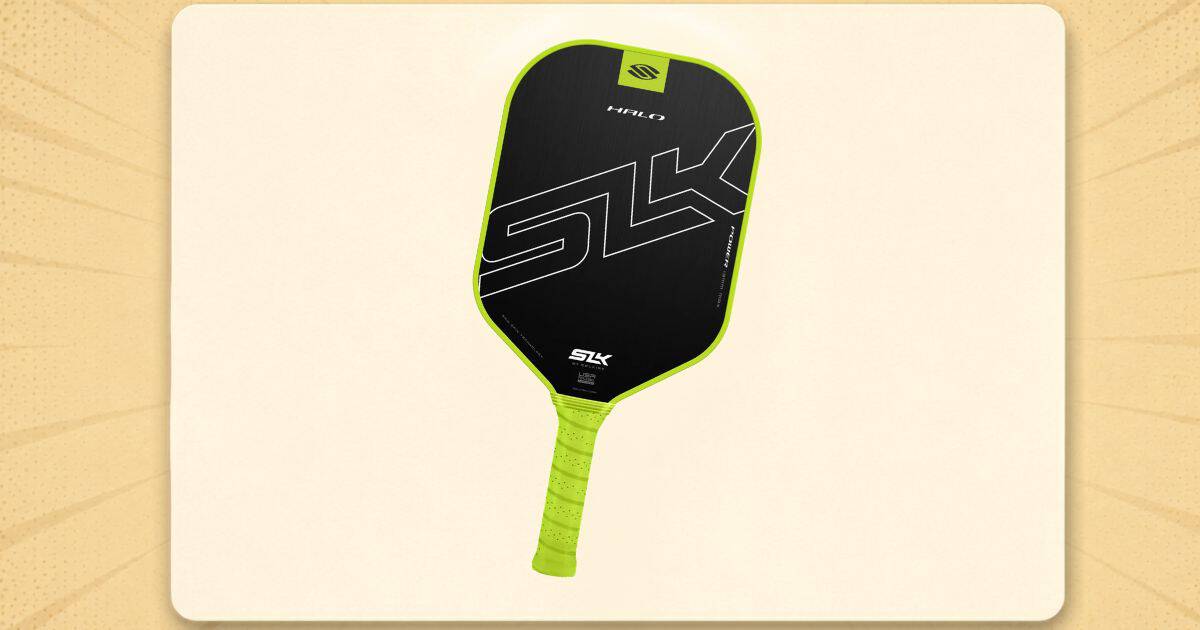
Selkirk SLK Halo Power Paddle Review
JUNCTION SCORE 4.6 / 5
★★★★★ 4.6
Review Score: 4.6 / 5 based on 183 verified ratings (Amazon 124; Dick’s Sporting Goods 26; Selkirk 12; Shop App 12; Pickleball Central 9)
Amazon combines ratings for all versions of this paddle.
Community Score: Well Regarded, based on Reddit and community threads
A raw carbon paddle built for players who want offensive pop without paying flagship prices, the Selkirk SLK Halo Power delivers on its core promise and earns consistent praise from buyers, though the surface grit’s long-term durability is a question worth weighing before you commit.
Best for: Beginner to advanced players who favor an attacking style and want a thermoformed raw carbon paddle at a mid-market price point.
Skip if: You prioritize maximum spin texture longevity above all else, or you want an elongated handle without a widebody feel.
Price: $150 MSRP
USAP Approved: Yes
Use code INF-PDOW at checkout for Sale Price or Extra Rewards.
Is the Selkirk SLK Halo Power Worth It?
Yes, for most players shopping in this price range. The SLK Halo Power is a thermoformed UniBody pickleball paddle built around a 13mm Rev-Power Polymer Honeycomb core, a T700 Raw Carbon Fiber face with Raw Spin Technology, and a FlexFoam perimeter designed to enlarge the sweet spot and absorb vibration. It sits within Selkirk’s SLK sub-brand, positioned as a value-forward alternative to the brand’s premium Vanguard line while still delivering the raw carbon surface texture that players associate with serious spin and pop. See detailed review below.
What Reviewers Like
Power and attacking capability that the 13mm core enables. The thinner 13mm core produces a stiffer, poppier feel compared to the 16mm Control variant, and players who have used both describe the difference as dramatic in terms of offensive output. The Power designation is earned: buyers who switched from the Control model specifically report a noticeable jump in power that changed how they approached the game. Field spin testing on the XL variant clocked approximately 1,400 to 1,450 RPM, a respectable figure for a paddle in this price bracket, and the Raw Spin Technology surface is credited by the manufacturer specification for generating that texture.
A sweet spot that forgives off-center contact. The Max shape’s widebody dimensions, 16 inches long by 7.85 inches wide, place the sweet spot near the center of the paddle face rather than toward the tip, which makes it more forgiving on mishits than elongated alternatives. The FlexFoam perimeter, foam injected into the paddle’s edge, is a manufacturer-specified feature designed to extend that sweet spot further and dampen vibration on contact. Buyers consistently describe the paddle as easy to adjust to, with several noting they felt comfortable from the first session without the learning curve they expected from switching paddles.
Immediate feel and game improvement reported by owners. People who bought it say the paddle improved their game considerably with little to no adjustment period from whatever they were using before. Multiple buyers describe the feel as great right out of the box, and the overall tone across verified purchase reviews is one of genuine satisfaction rather than qualified approval. A recurring theme is that the paddle simply plays well across a range of situations, which aligns with the manufacturer’s beginner-to-advanced skill range designation.
Competitive value for a raw carbon thermoformed paddle. At its MSRP, the Halo Power sits meaningfully below some competing raw carbon paddles while delivering a playing experience that reviewers describe as very similar to pricier options in the same construction category. The thermoformed UniBody build, EdgeSentry edge guard, and T700 carbon face are specifications typically associated with paddles that cost more, and that gap in price relative to performance is a point community members actively highlight when recommending the Halo line.
Spin performance that holds up against comparable paddles. The Raw Spin Technology surface generates spin numbers that reviewers who conducted field testing describe as solid for the price tier. The XL Power variant produced approximately 1,400 to 1,450 RPM in field spin testing, and while that figure trails some premium competitors, it lands in a range that players who logged extended hours describe as more than sufficient for generating heavy topspin and slice on groundstrokes and dinks alike.
Reported Limitations
Surface grit wears down with extended play. The most significant and widely noted concern about the Halo Power is the durability of the T700 carbon fiber surface texture. Verified buyers report that the grit in the sweet spot can wear smooth over time, and the standard paddle care eraser does not restore it because the texture is physically abraded away rather than dirty. This is not a cosmetic issue; a polished face loses the spin-generating capability that makes a raw carbon paddle worth choosing in the first place. Players who log heavy hours should factor this into their long-term cost calculation, particularly if spin is a central part of their game.
Cheaper build materials compared to Selkirk’s premium line. The SLK Halo Power is a mid-market product, and the construction reflects that positioning in ways players notice when handling it. The edge guard is bulkier than what appears on Selkirk’s Vanguard series, and on the XL shape the grip tape does not extend fully to the top of the handle, which creates an exposed plastic feel for players who use a two-handed backhand. These are not performance-breaking issues, but buyers who have handled premium paddles will notice the difference in fit and finish.
The XL shape’s 5.75-inch handle is longer than most players need. Reviewers who tested the XL variant specifically flag the handle length as excessive for the majority of players, noting that it makes the paddle head feel smaller and reduces the effective hitting area. A handle in the 5.25 to 5.5 inch range would suit more players without the trade-off. The Max shape’s 4.85-inch handle does not carry this criticism, so players drawn to the elongated XL shape should be aware of this before purchasing.
Which Should You Choose: Max or XL?
The Max shape is the better starting point for most players. It offers a wider face, a more centered sweet spot, and a handle length that suits the broadest range of grips and play styles.
| Spec | Max (Recommended) | XL |
| Best for | Players who want forgiveness and a large sweet spot | Players who prioritize reach and a longer handle |
| Paddle Dimensions | 16″ x 7.85″ | 16.4″ x 7.4″ |
| Handle Length | 4.85″ | 5.75″ |
| Who it suits | Beginners to advanced players; widebody feel; shorter handle | Players comfortable with elongated shapes; two-handed backhand users |
How Reviewers Compare It to Rivals
Against the CRBN 1 13mm. Field spin testing places the Halo XL Power ahead of the CRBN 1 13mm in power-oriented comparisons, with reviewers who tested both ranking the Halo favorably in that specific matchup. The CRBN 1 13mm is a legitimate competitor in the same construction category, but the Halo Power holds its own on the offensive end and does so at a price point that represents real savings for buyers who are price-sensitive.
Against the CRBN 1 16mm. The spin comparison goes the other way when the Halo is measured against the CRBN 1 16mm. Field testing clocked the CRBN 1 16mm at approximately 1,600 to 1,650 RPM versus the Halo XL’s 1,400 to 1,450 RPM, a gap that is meaningful for players who rely heavily on spin generation. Reviewers who ranked the two placed the CRBN 1 16mm ahead of the Halo XL Control in that specific category, and the Power variant’s thinner core does not close that gap.
Against the JOOLA Hyperion CFS 14. Reviewers who tested the Halo XL Power alongside the JOOLA Hyperion CFS 14 ranked the Hyperion above the Halo when price was not a constraint. The Hyperion is described as the better overall performer in that head-to-head, which is a meaningful data point for players who are deciding between the two and are willing to spend more. The Halo Power’s case rests on delivering most of that performance at a lower price, not on outperforming the Hyperion outright.
Against the Electrum Model E 13mm. The Electrum Model E 13mm also ranks above the Halo XL Power in reviewer comparisons, and the Halo XL Control is described as similar in feel to the Electrum Model E. Players who have used the Electrum and are considering the Halo should expect a comparable feel profile on the Control side, with the Power variant offering more offensive output at the cost of some of the Electrum’s refinement.
Who Is the Selkirk SLK Halo Power Best For?
The Halo Power is built for players who want to attack, whether that means driving from the baseline, finishing at the net, or generating topspin on third-shot drops. The 13mm core rewards compact, punchy swings and hand-speed exchanges more than the 16mm Control variant does, and the raw carbon face adds spin to shots that a fiberglass surface would leave flat. The beginner-to-advanced skill range on the manufacturer spec sheet is honest: the Max shape’s large sweet spot makes the paddle accessible to developing players, while the power and spin ceiling give more experienced players room to work with.
For players choosing between the two shapes, the Max is the practical choice for anyone who values forgiveness and a centered sweet spot. The XL suits players who specifically want reach and a longer handle for two-handed strokes, but reviewers who tested it flag the 5.75-inch handle as longer than most players will find comfortable. Players who are unsure should default to the Max.
Buy it if you:
- Want a raw carbon thermoformed paddle without paying flagship prices
- Play an attacking style and want a 13mm core’s pop and stiffness
- Are moving up from a beginner paddle and want a forgiving widebody shape
- Value a large sweet spot that holds up across a range of skill levels
Skip it if you:
- Rely heavily on spin and need surface grit that holds up through heavy extended use
- Are comparing it directly to premium paddles and performance is the only variable
- Want an elongated handle longer than 5 inches without the trade-offs the XL shape introduces
- Prefer a lighter, more maneuverable paddle and are not willing to adjust to the 7.7 to 8.0 oz weight range
At a Glance
| Spec | Detail |
| Price | $150 MSRP |
| Weight | 7.7 to 8.0 oz (Max); 7.7 to 8.0 oz (XL) |
| Core Thickness | 13mm |
| Core Material | Rev-Power Polymer Honeycomb |
| Face Material | T700 Raw Carbon Fiber |
| Paddle Length | 16″ (Max); 16.4″ (XL) |
| Paddle Width | 7.85″ (Max); 7.4″ (XL) |
| Handle Length | 4.85″ (Max); 5.75″ (XL) |
| Grip | SLK Ultra-Comfort Grip, 4.25″ circumference (standard) |
| Shape | Widebody/Max or Elongated/XL |
| Construction | Thermoformed UniBody Design with FlexFoam Perimeter and EdgeSentry edge guard |
| USAP Approved | Yes |
| Warranty | 1-Year Limited (registration required; US only; not transferable) |
| Review Score | 4.6 / 5 based on 183 verified ratings (Amazon 124; Dick’s Sporting Goods 26; Selkirk 12; Shop App 12; Pickleball Central 9) |
| Community Sentiment | Well Regarded |
Is It Worth the Money?
Yes, at its MSRP the Halo Power makes a strong case for players who want raw carbon performance without stepping into the premium price tier. The thermoformed UniBody construction, T700 Raw Carbon Fiber face, and 13mm Rev-Power core are specifications that typically appear on paddles priced higher, and field spin testing on the XL variant confirmed approximately 1,400 to 1,450 RPM, a respectable output for this price bracket. Buyers consistently describe the paddle as an upgrade that improved their game without requiring an extended adjustment period, which is a meaningful practical advantage.
The honest caveat is surface durability. Players who log heavy hours report that the carbon fiber grit can wear smooth in the sweet spot over time, and that degradation directly affects the spin performance that makes the paddle worth choosing. The build quality also reflects the SLK sub-brand’s mid-market positioning: the edge guard is bulkier and the grip tape finish is less refined than what Selkirk’s premium Vanguard line delivers. Buyers who are comparing the Halo Power directly to the JOOLA Hyperion CFS 14 or the Electrum Model E 13mm should know that reviewers who tested all three ranked the Halo below those options when price was not a constraint.
Players who play two to three times per week and want a capable attacking paddle without spending flagship money will find the value proposition compelling. Players who compete frequently and treat spin generation as a non-negotiable priority should think carefully about the surface durability reports before committing. The 13mm core is the right choice for offensive players; the 16mm Control variant suits those who prioritize touch and forgiveness over pop.
The Selkirk SLK Halo Power is a well-built, performance-oriented paddle that punches above its price for most players. It is not the last word in spin longevity or premium construction, but for a developing to experienced player who wants raw carbon feel, a forgiving sweet spot, and genuine power capability at a mid-market price, it delivers on its core promise.
Frequently Asked Questions
Is it good for beginners?
Yes, the Halo Power is a reasonable choice for beginners, particularly in the Max shape. The widebody face places the sweet spot near the center of the paddle, which makes off-center contact more forgiving, and the manufacturer lists the skill range as beginner to advanced. Buyers who were new to raw carbon paddles describe the adjustment period as minimal, and the FlexFoam perimeter adds additional forgiveness on mishits. That said, the 13mm core’s stiffer, poppier feel can be harder to control for players still developing their touch, and beginners who prioritize soft game and dinking may find the 16mm Control variant a more comfortable starting point.
Is it tournament approved?
Yes. The Selkirk SLK Halo Power carries USAP approval, confirmed across multiple retailer listings.
How does it compare to the Halo Control?
The Power and Control variants share the same construction platform but differ meaningfully in how they play. The 13mm Power core is stiffer and produces more pop, making it better suited to attacking play, driving, and hand-speed exchanges at the net. The 16mm Control core is softer and more forgiving, with a feel that players describe as plush and touch-oriented. Players who have used both describe the power difference as dramatic, with the Power variant offering noticeably more offensive output. The Control is the better choice for players who prioritize dinking, reset shots, and a softer touch game; the Power suits those who want to finish points.
Are there durability problems?
Surface grit wear is the most consistently reported concern. Verified buyers report that the T700 carbon fiber texture in the sweet spot can become smooth with extended use, and the standard paddle care eraser does not restore it because the grit is physically worn away rather than dirty. This is a meaningful issue for players who depend on spin generation. No recurring complaints about structural problems such as delamination or handle failure appear in the sources reviewed.
What is the spin rate?
Field spin testing on the XL variant produced approximately 1,400 to 1,450 RPM for both the 13mm Power and 16mm Control versions. For context, the same testing methodology clocked the CRBN 1 16mm at approximately 1,600 to 1,650 RPM. The Halo Power’s spin output is described as solid for a paddle in this price range, though it trails some premium competitors in raw spin generation.
Is it good for doubles?
Yes, the Halo Power suits doubles play well, particularly for players who want to be aggressive at the kitchen line. The 13mm core’s pop rewards quick hands and put-away volleys, and the Max shape’s large sweet spot helps on the fast exchanges that define doubles at the net. Players who favor a more control-oriented doubles game, built around resets and soft dinks, may prefer the Control variant’s 16mm core, which offers a more forgiving and touch-friendly response in those situations.
Does the Max or XL shape work better for two-handed backhands?
The XL shape’s 5.75-inch handle is designed to accommodate two-handed grips, but reviewers who tested it flag the handle as longer than most players will find comfortable, noting that it makes the paddle head feel smaller. The Max shape’s 4.85-inch handle is shorter and better suited to one-handed play. Players committed to a two-handed backhand and willing to adjust to the XL’s elongated dimensions may find it workable, but the length is a genuine trade-off rather than a clean advantage.
What grip options are available?
Selkirk offers several grip customization options on the Halo Power at the time of purchase through their website. The standard option is a 4.25-inch comfort grip. Additional choices include a 4.25-inch contour grip, a 4-inch thin grip that reduces average weight by 0.2 oz, a 4.5-inch double grip geo that increases average weight by 0.4 oz, and a double grip contour that also adds 0.4 oz. Custom grip orders add one to three business days to processing. A custom weight option is also available through the Selkirk website.
Use code INF-PDOW at checkout for extra rewards.
| Written by The PJ Review Team. AI-assisted, human-verified research and analysis. |
| Sources: Amazon (124 ratings, all versions of this paddle); Dick’s Sporting Goods (26 ratings); Selkirk product page (12 ratings); Shop App (12 ratings); Pickleball Central (9 ratings, product listing); Pickleball Effect (expert field testing and sub-scores for XL variants); Reddit r/Pickleball (community threads); JustPaddles (product listing, paddle specifications, warranty details). |
| Aggregated from publicly available ratings, reviews, and measurements from the sources listed above, plus qualitative community discussion on Reddit r/Pickleball. Scores and sentiment reflect data available at the time of publication and may change. |
| No brand paid for, sponsored, or influenced this review. The sources cited are independent and are not affiliated with or endorsing Pickler Junction. |
Still narrowing down your next paddle? Browse every category in the Pickler Junction gear directory. Pickler Junction may earn a commission if you purchase through links in our directory.