Why Summer Soreness Lasts Three Days When It Should Last One
Quick Answer: Heat makes soreness after pickleball last longer because sweat and fluid loss shrink blood volume, electrolytes drop, core temperature climbs, sleep suffers on hot nights, and players often stay on court longer without noticing the added load. Hydrating before and during play, cooling down properly, and shortening sessions in peak heat can bring recovery back down to a single day.
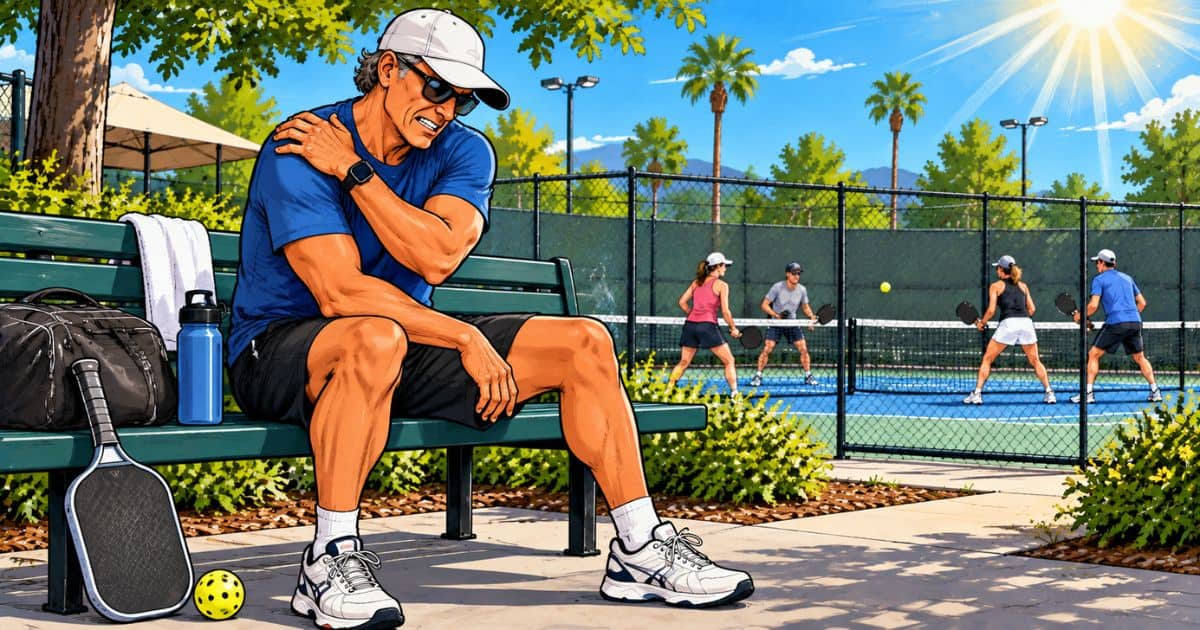
You played the same two hours of pickleball you always play. Same three games to eleven, same partner, same courts. In April, you woke up a little stiff and were back to normal by the next evening. In July, that same match leaves your legs heavy through Wednesday and your shoulder still complaining on Thursday.
Nothing about the game changed. The third-shot drops, the footwork, the number of points, all of it looked the same on paper. What changed is the environment the body had to work in while doing it, and heat adds several layers of stress that outlast the final point of the day. The result is soreness that behaves differently than usual, sticking around for days instead of clearing up overnight.
The Body Loses More Than Sweat
Sweating is how the body cools itself, and in the heat it sweats harder to do the job. During vigorous activity in hot weather, sweat losses can run from roughly one to three liters an hour, depending on the person and the conditions, according to the Korey Stringer Institute at the University of Connecticut.
Much of that fluid comes out of blood plasma. Heavy sweating temporarily shrinks blood volume, and a smaller blood volume means the heart has to work harder to send oxygen to the muscles doing the work of pickleball while also sending blood to the skin to release heat. Once fluid losses reach about two percent of body weight, the Korey Stringer Institute notes that performance is already measurably reduced, often before a player feels particularly thirsty.
Less blood volume moving through tired muscles can mean a slower cleanup of the normal byproducts of hard exercise. That slower process is part of why the same two hours of play can leave the legs feeling heavier for longer once the heat is involved.
Electrolytes Leave the Court Too
Sweat is not only water. It carries sodium and other electrolytes out with it, and those electrolytes help muscles contract properly and nerves send clear signals. A heavier sweat rate means a heavier electrolyte loss, and low electrolytes can leave muscles feeling more fatigued and prone to cramping on top of ordinary soreness.
This is one reason plain water is not always the better choice for a long, hot session. A comparison of sports drinks and water for pickleball is worth a look before deciding what to bring in the cooler on a July afternoon, since the right choice depends on how long and how hard the session runs.
Cooling the Body Is Its Own Workout
Heat adds a job the body does not have in cooler weather: getting rid of the extra heat it generates while playing. Core temperature climbs higher during a hot session than it does during the same effort on a mild day, and the body responds by routing more blood to the skin and sweating more heavily to bring that temperature back down.
That thermoregulation work happens in addition to the muscular work of playing, not instead of it. By the time the last point is over, the body has done extra hidden work beyond the actual rallies, and that hidden work still needs to be recovered from along with everything else.
Hot Nights Steal the Recovery Window
A large share of physical repair happens during sleep, which makes the quality of that night’s sleep part of the recovery equation. The Sleep Foundation puts the ideal bedroom temperature for sleep at roughly 65 to 68 degrees Fahrenheit, and notes that when a room runs warmer than that, the body struggles to move heat away from its core. That struggle is linked to less slow-wave sleep and less REM sleep, the stages most closely tied to physical recovery.
A summer night that never quite cools down can mean a player gets a full eight hours in bed and still wakes up less recovered than expected. Stack that on top of the fluid and electrolyte losses from the afternoon session, and the deficit has a way of compounding by the second or third day.
The Session Also Got Longer Without Anyone Noticing
Summer schedules stretch. More daylight, more open play slots, one more game because everyone is already there and nobody wants to be the one who leaves first. A two-hour Saturday habit can quietly become closer to three.
More time on court means more total load for the muscles, tendons, and joints to recover from, on top of everything the heat is already asking of the body. If soreness has been building for a few days in a row, why the legs can feel heavier by day three explains how repeated sessions add up even when each one feels manageable on its own, and it may be worth weighing how much pickleball a week is reasonable without getting hurt before adding another summer session to the calendar.
What Actually Shortens the Recovery
None of this means giving up summer pickleball. It means matching the routine to the conditions.
Drink before the first serve, not only during breaks between games. Add a source of sodium on the hottest, sweatiest days rather than relying on water alone. Take a real cool-down afterward instead of heading straight into a hot car, giving the body a chance to bring its temperature and heart rate back down gradually; how to recover after pickleball covers what that cool-down and the hours after it should look like. On the hottest days, shortening the session or splitting it with a shade break does more for next-day soreness than any recovery routine can undo afterward. Morning play, before the heat peaks, is often an easier trade than trying to out-recover an afternoon session in July. Refueling with fluids, carbohydrate, and protein afterward also matters more in the heat than in mild weather, and what to eat after playing pickleball is a reasonable place to start.
When It Is More Than Soreness
Ordinary heat-related soreness feels like heavy legs, tight muscles, and a dull ache in the areas that worked hardest, and it gradually improves over a day or two once fluids and rest catch up. Heat illness is a different problem and should not be waited out.
Heat exhaustion can include headache, nausea, dizziness, weakness, and heavy sweating alongside an elevated body temperature, and the CDC advises getting to a clinic or emergency room for evaluation when those symptoms appear. Heat stroke is more serious and can include confusion, slurred speech, hot or profusely sweating skin, and loss of consciousness. The CDC is clear that heat stroke calls for emergency medical care right away, since body temperature can climb to dangerous levels within minutes.
If soreness shows up alongside any of those symptoms, or simply is not easing after a couple of days of normal rest and rehydration, that pattern is worth having looked at rather than assumed to be part of playing in the heat. A physician or physical therapist can sort out whether something beyond ordinary recovery is going on, and the physicians and therapists directory is a place to start looking for one nearby. This article is general information, not medical advice.
Written by the Pickler Junction Team.