
Physical Therapy for Pickleball Injuries: What to Expect
Quick Answer: A first pickleball physical therapy visit usually includes a movement screen, a pain and strength evaluation, and a home exercise plan. Every state allows direct access to a physical therapist without a doctor referral, though rules vary, according to the American Physical Therapy Association. Visits can run from a $25 copay with insurance to $80 to $500 without it.
Pickleball has grown from 4.2 million players in the United States in 2020 to 24.3 million in 2025, according to the Sports & Fitness Industry Association, and physical therapy clinics in many cities have felt the shift. Quick direction changes, repeated overhead swings, and long dinking rallies stress the elbow, shoulder, knee, and ankle differently than tennis or running does. A physical therapist trained in racket sports can turn a vague ache into a specific diagnosis and a plan to get back on the court, covered below along with typical costs and how to find the right therapist.
What Happens at a First Physical Therapy Visit for a Pickleball Injury?
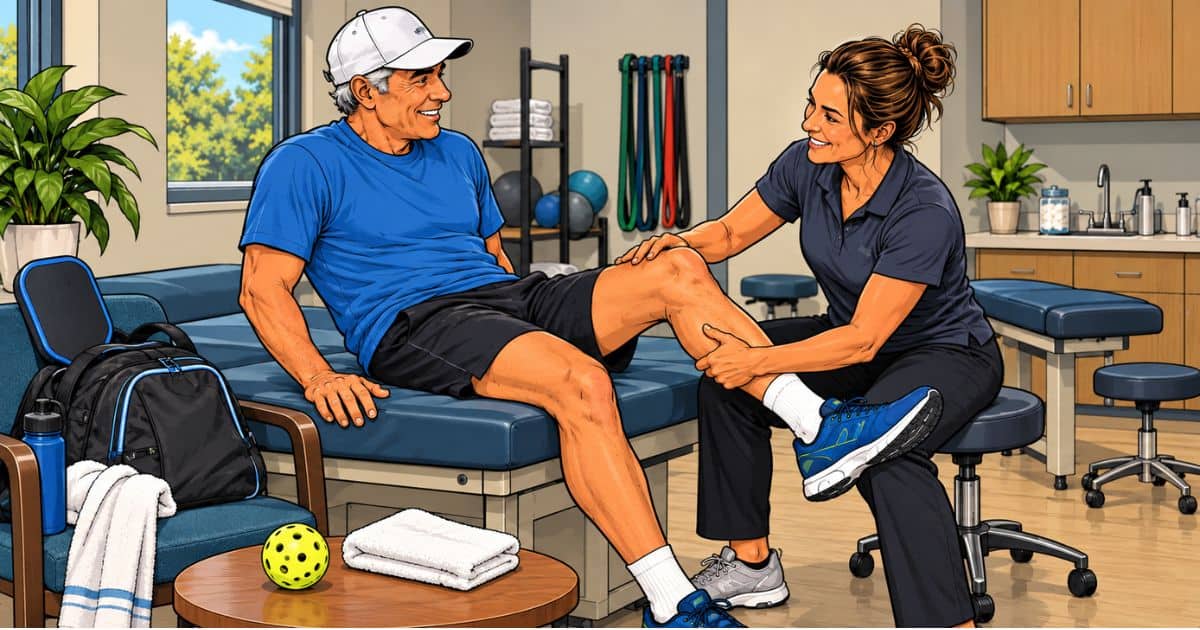
The first appointment, called an initial evaluation, usually runs 45 minutes to an hour. The therapist takes a history of the injury, including when the pain started, what movement triggered it, and how it has changed with rest or activity. The visit typically includes a movement screen: watching the patient squat, lunge, reach overhead, or swing a paddle to see where mechanics break down. The therapist checks range of motion, strength, and often grip strength for elbow complaints, plus balance and single-leg stability for ankle or knee issues.
By the end of the visit, most patients leave with a working diagnosis, a small set of exercises to start at home, and a sense of how the plan will progress. Some clinics also review paddle grip size and playing habits, since a grip that is too small or a habit of muscling shots with the wrist can feed conditions like pickleball elbow. Anyone unsure whether a symptom needs a clinical evaluation at all can start with the guide to the most common pickleball injuries and how they typically begin.
Do You Need a Referral to See a Physical Therapist?
Not in most cases. As of September 2026, every state, Washington D.C., and the U.S. Virgin Islands allow some form of direct access to a physical therapist’s evaluation and treatment without a physician referral first, according to the American Physical Therapy Association. The association also notes that some states still attach conditions to that access, such as a visit limit before a referral becomes required, so the exact rules vary by state and sometimes by insurance plan. Anyone unsure should check directly with the clinic or insurer before scheduling, since a plan’s own rules can differ from what state law allows.
How Many Physical Therapy Visits Does a Typical Course Take?
The number of visits depends on the diagnosis, how long symptoms have been present, and how the body responds early on, so no single figure applies to every case. A therapist typically reassesses progress every few visits and tapers frequency as strength and pain improve, rather than committing to a fixed number up front. A mild ankle sprain generally resolves in fewer visits than a chronic issue like long-standing tennis elbow that has been aggravated for months. Anyone comparing insurance authorizations across clinics should ask the evaluating therapist for a visit estimate specific to the diagnosis, since a generic average can be misleading for an individual case.
What Does Physical Therapy Cost, With and Without Insurance?
As of September 2026, a follow-up physical therapy visit without insurance at a private outpatient clinic commonly runs $80 to $120, while an initial evaluation without insurance runs $150 to $200, according to Forbes Health. Visits billed through a hospital-affiliated facility run higher, with an initial evaluation from $400 to $500 and a follow-up from $300 to $400. With insurance, many plans use a flat copay of $25 to $50 per visit, though a high-deductible plan may require paying the full rate until meeting a deductible that Forbes Health reports often falls between $2,000 and $7,000 for the year. Anyone paying out of pocket should ask the clinic for its self-pay rate, since prices vary by region and by whether the practice is hospital-affiliated or independent.
What Pickleball Injuries Do Physical Therapists Treat Most Often?
Clinics that see a steady stream of pickleball players tend to treat a recurring set of conditions. Pickleball elbow, a form of lateral epicondylitis from repeated wrist extension, responds to therapy focused on grip strength and forearm loading exercises, often paired with a review of paddle weight and grip size. Shoulder pain tied to the rotator cuff, common after overhead serves and smashes, is addressed with scapular stability work and a graded return to overhead motion. Achilles strain from quick stops and starts, along with ankle sprains from lateral movement in the kitchen, both call for balance and proprioception drills before a return to lateral cutting. Knee pain and lower back strain from repeated bending to dink also show up regularly.
How Do Physical Therapists Decide When a Player Can Return to Pickleball?
Return to play is typically based on function rather than a calendar date. A therapist generally wants to see pain-free range of motion, strength close to the uninjured side, and the ability to perform sport-specific movements, such as a lateral shuffle, a split step, or a simulated overhead swing, without compensating or guarding. For lower-body injuries, that often means passing single-leg balance and hop tests before returning to full-speed lateral movement. For elbow and shoulder injuries, it usually means restoring grip and rotator cuff strength before a gradual reintroduction of hitting, starting with dinking before progressing to drives and overhead shots. Rushing this stage is a common reason injuries recur, so a therapist typically builds in a graded return over one to a few weeks. A player noticing new or worsening symptoms during that return should review the guide to when to see a doctor for a pickleball injury before pushing through it.
How to Choose a Physical Therapist Who Understands Racket Sports
Not every physical therapist has deep experience with the specific demands of pickleball. It helps to ask whether the clinic regularly treats pickleball or tennis players, since a therapist familiar with the sport’s footwork and grip mechanics can build a more targeted plan than a general orthopedic evaluation would. Some therapists hold sports-certified specialist credentials or a background treating racket-sport athletes, worth asking about before booking. It is also worth confirming the plan includes a return-to-sport progression specific to pickleball movements, not generic strengthening alone. Patients who prefer to start remotely can compare the process in the guide to virtual physical therapy for pickleball, which covers how a remote evaluation differs from an in-person one.
Frequently Asked Questions
Do you need a doctor’s referral before seeing a physical therapist for a pickleball injury? In most cases, no. Every state and Washington D.C. allow some form of direct access to physical therapy evaluation and treatment without a referral, according to the American Physical Therapy Association, though some states attach conditions such as a visit limit first.
How long does a typical physical therapy session last? An initial evaluation generally runs 45 minutes to an hour. Follow-up visits are often somewhat shorter, though the exact length varies by clinic and by how much hands-on treatment is included that day.
What should someone bring to a first physical therapy appointment? Comfortable clothing that allows the therapist to see the affected joint move, a list of current medications, any imaging reports such as an X-ray, and insurance information are the basics most clinics ask for.
Can physical therapy help pickleball elbow without surgery? Yes, in most cases. Lateral epicondylitis, the clinical term for pickleball elbow, is commonly treated with a nonsurgical program of loading exercises, activity modification, and sometimes bracing before surgery is considered.
Does insurance always cover physical therapy for a sports injury? Not always, and coverage depends on the specific plan. Many plans cover physical therapy with a copay once a diagnosis is documented, but annual visit limits and prior authorization requirements are common, so confirming coverage before scheduling avoids surprises.
What is the difference between in-person and virtual physical therapy for pickleball injuries? In-person visits allow hands-on assessment and manual therapy in the clinic. Virtual visits rely on video for the evaluation and exercise coaching, which works well for some conditions and less well for others needing hands-on work.
How soon after an injury should someone see a physical therapist? For pain that limits daily activity or does not improve within a few days of rest, an evaluation sooner rather than later is generally advisable, since early guidance on activity modification can prevent a minor issue from becoming chronic.
Will a physical therapist give exercises to do outside of appointments? Yes. A home exercise program is a standard part of most physical therapy plans, and consistency with those exercises between visits is generally considered important to the pace of recovery.
Does a sore shoulder from serving always mean a rotator cuff problem? Not necessarily. Shoulder pain from repeated overhead motion can stem from the rotator cuff, the bursa, or the surrounding shoulder muscles, and a proper evaluation is needed to tell them apart before starting a targeted rehab program.
Is physical therapy useful for a chronic ankle problem, not just a fresh sprain? Yes. Recurring ankle instability from repeated sprains is a common reason players seek a physical therapist, since ongoing balance and strength work can address instability that rest alone does not fix.
Working with a physical therapist who understands pickleball turns a sore elbow or a tight shoulder into a clear plan rather than a guessing game, and starting that process early tends to shorten the time on the sideline. Anyone ready to book an evaluation can search the directory of physicians and therapists for a local option. This article is general information, not medical advice.
Written by the Pickler Junction Team.